

In their grafting-from process, Pei and coworkers employed the surface-initiated
ATRP of 2-(1-butylimidazolium-3-yl)ethyl methacrylate hexafluorophosphate for
grafting PIL chains onto CNTs [95]. Such materials were reported to be useful as
an antiwear and friction-reducing additive for IL lubricants. In a similar functionalization of graphite oxide, poly([2-(methacryloyloxy)ethyl]trimethylammonium
tetrafluoroborate) brushes were obtained by graphene-initiated ATRP [96].
In grafting-to processes, the functional groups of graphene function as chain
terminators in polymerization reactions. For example, in cationic ring-opening
polymerization of 3-ethyl-3-hydroxymethyloxetane, hyperbranched polyoxetanes
are grafted onto functionalized CNTs [97] and graphene [98, 99]. Following the
reaction pathway described above for hyperbranched nanoPILs, the hydroxy
endgroups are readily converted into tosylates, which alkylate 1-alkylmindazoles.
As illustrated in Fig. 4, tree-like PILs are grafted onto graphene [98]. In principle,
such covalent attachment of PILs to graphene greatly improves the graphene
dispersibility in various solvents. Moreover, in contrast to nonmodified graphene,
thin films were obtained. As a consequence, molecular graphene/PIL composites
represent attractive intermediates for applications in electrochemical devices,
catalysis, and even 3D printing of multifunctional carbon materials.
5 Conclusion
During recent years, a great variety of molecular PIL architectures have been
tailored by incoporating IL moieties into the backbone and side chains of polymers
and by varying the type of ion pairs. An important objective in PIL research is to
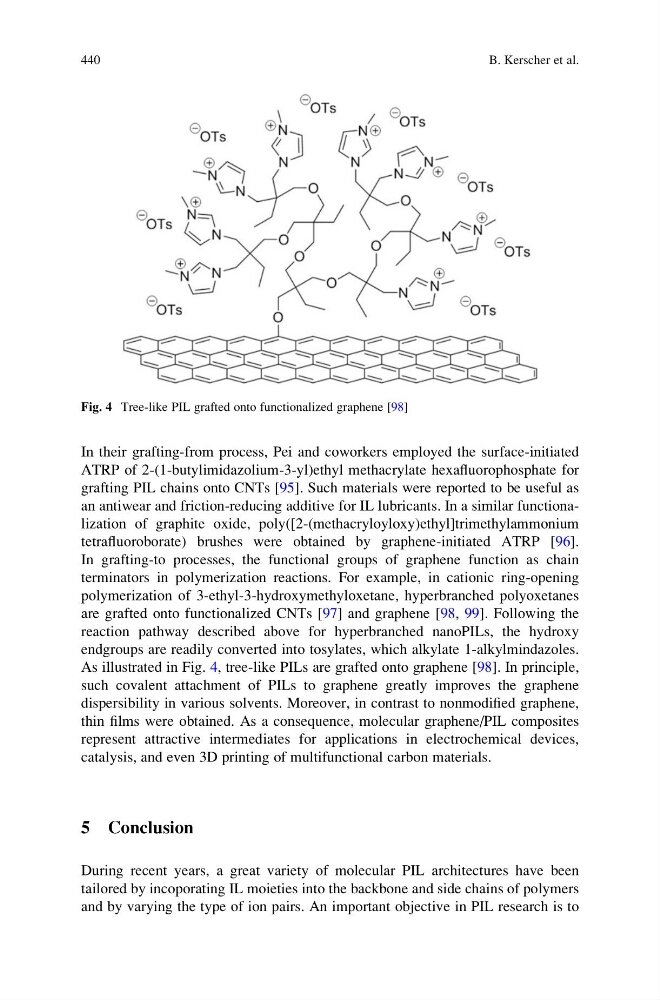
Fig. 4 Tree-like PIL grafted onto functionalized graphene [98]
440
B. Kerscher et al.
ATRP of 2-(1-butylimidazolium-3-yl)ethyl methacrylate hexafluorophosphate for
grafting PIL chains onto CNTs [95]. Such materials were reported to be useful as
an antiwear and friction-reducing additive for IL lubricants. In a similar functionalization of graphite oxide, poly([2-(methacryloyloxy)ethyl]trimethylammonium
tetrafluoroborate) brushes were obtained by graphene-initiated ATRP [96].
In grafting-to processes, the functional groups of graphene function as chain
terminators in polymerization reactions. For example, in cationic ring-opening
polymerization of 3-ethyl-3-hydroxymethyloxetane, hyperbranched polyoxetanes
are grafted onto functionalized CNTs [97] and graphene [98, 99]. Following the
reaction pathway described above for hyperbranched nanoPILs, the hydroxy
endgroups are readily converted into tosylates, which alkylate 1-alkylmindazoles.
As illustrated in Fig. 4, tree-like PILs are grafted onto graphene [98]. In principle,
such covalent attachment of PILs to graphene greatly improves the graphene
dispersibility in various solvents. Moreover, in contrast to nonmodified graphene,
thin films were obtained. As a consequence, molecular graphene/PIL composites
represent attractive intermediates for applications in electrochemical devices,
catalysis, and even 3D printing of multifunctional carbon materials.
5 Conclusion
During recent years, a great variety of molecular PIL architectures have been
tailored by incoporating IL moieties into the backbone and side chains of polymers
and by varying the type of ion pairs. An important objective in PIL research is to
Fig. 4 Tree-like PIL grafted onto functionalized graphene [98]
440
B. Kerscher et al.