

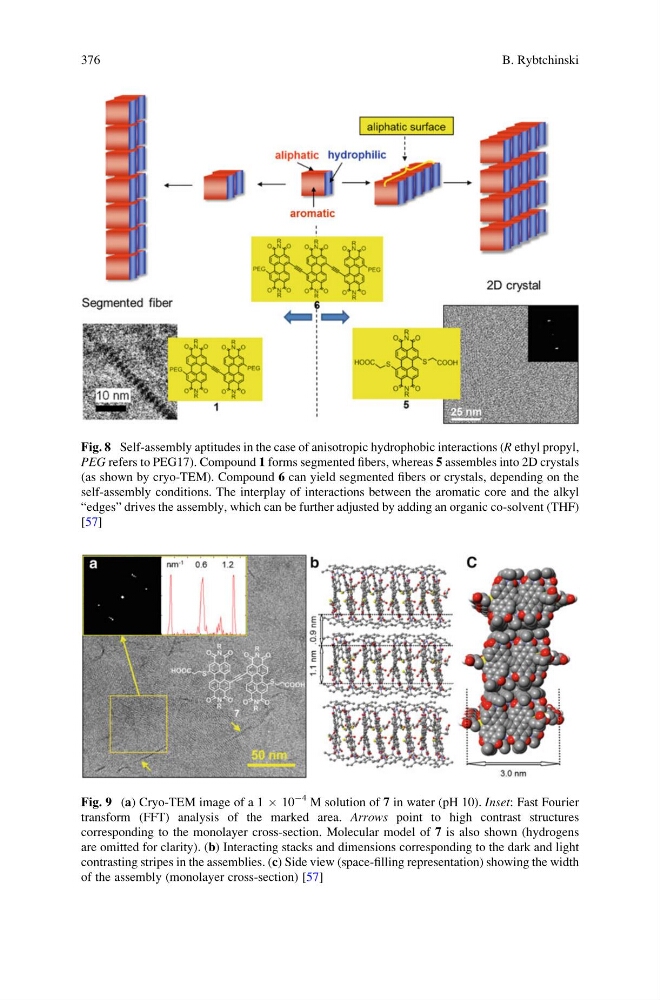
Fig. 8 Self-assembly aptitudes in the case of anisotropic hydrophobic interactions (R ethyl propyl,
PEG refers to PEG17). Compound 1 forms segmented fibers, whereas 5 assembles into 2D crystals
(as shown by cryo-TEM). Compound 6 can yield segmented fibers or crystals, depending on the
self-assembly conditions. The interplay of interactions between the aromatic core and the alkyl
“edges” drives the assembly, which can be further adjusted by adding an organic co-solvent (THF)
[57]
Fig. 9 (a) Cryo-TEM image of a 1 Â 10
À4 M solution of 7 in water (pH 10). Inset: Fast Fourier
transform (FFT) analysis of the marked area. Arrows point to high contrast structures
corresponding to the monolayer cross-section. Molecular model of 7 is also shown (hydrogens
are omitted for clarity). (b) Interacting stacks and dimensions corresponding to the dark and light
contrasting stripes in the assemblies. (c) Side view (space-filling representation) showing the width
of the assembly (monolayer cross-section) [57]
376
B. Rybtchinski
PEG refers to PEG17). Compound 1 forms segmented fibers, whereas 5 assembles into 2D crystals
(as shown by cryo-TEM). Compound 6 can yield segmented fibers or crystals, depending on the
self-assembly conditions. The interplay of interactions between the aromatic core and the alkyl
“edges” drives the assembly, which can be further adjusted by adding an organic co-solvent (THF)
[57]
Fig. 9 (a) Cryo-TEM image of a 1 Â 10
À4 M solution of 7 in water (pH 10). Inset: Fast Fourier
transform (FFT) analysis of the marked area. Arrows point to high contrast structures
corresponding to the monolayer cross-section. Molecular model of 7 is also shown (hydrogens
are omitted for clarity). (b) Interacting stacks and dimensions corresponding to the dark and light
contrasting stripes in the assemblies. (c) Side view (space-filling representation) showing the width
of the assembly (monolayer cross-section) [57]
376
B. Rybtchinski