

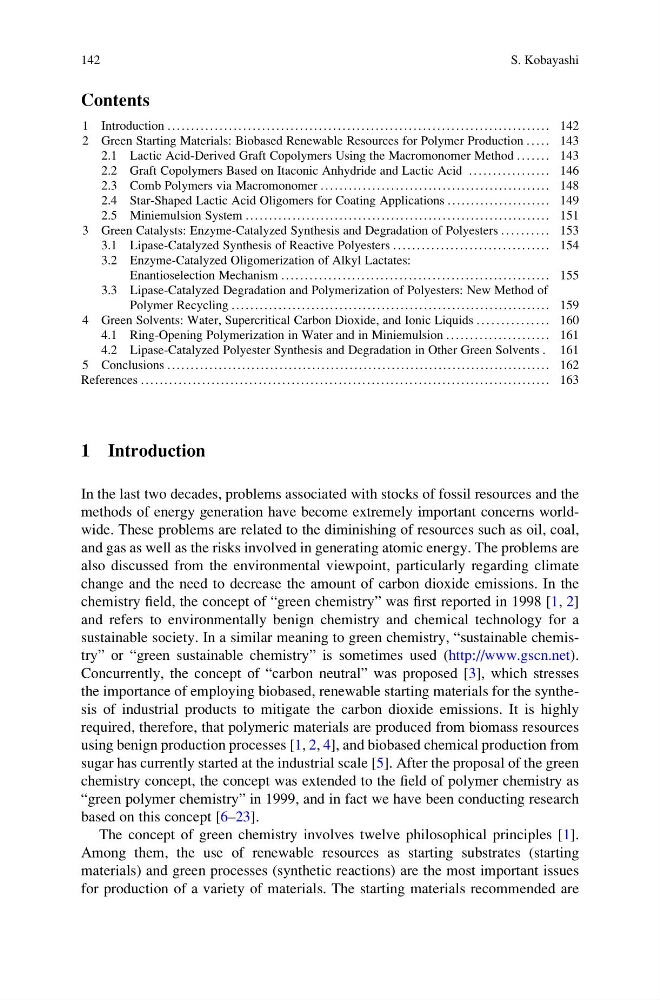
Contents
1 Introduction . . . . . . . . . . . . . . . . . . . . . . . . . . . . . . . . . . . . . . . . . . . . . . . . . . . . . . . . . . . . . . . . . . . . . . . . . . . . . . . . . 142
2 Green Starting Materials: Biobased Renewable Resources for Polymer Production . . . . . 143
2.1 Lactic Acid-Derived Graft Copolymers Using the Macromonomer Method . . . . . . . 143
2.2 Graft Copolymers Based on Itaconic Anhydride and Lactic Acid . . . . . . . . . . . . . . . . . 146
2.3 Comb Polymers via Macromonomer . . . . . . . . . . . . . . . . . . . . . . . . . . . . . . . . . . . . . . . . . . . . . . . . . 148
2.4 Star-Shaped Lactic Acid Oligomers for Coating Applications . . . . . . . . . . . . . . . . . . . . . . 149
2.5 Miniemulsion System . . . . . . . . . . . . . . . . . . . . . . . . . . . . . . . . . . . . . . . . . . . . . . . . . . . . . . . . . . . . . . . . . 151
3 Green Catalysts: Enzyme-Catalyzed Synthesis and Degradation of Polyesters . . . . . . . . . . 153
3.1 Lipase-Catalyzed Synthesis of Reactive Polyesters . . . . . . . . . . . . . . . . . . . . . . . . . . . . . . . . . 154
3.2 Enzyme-Catalyzed Oligomerization of Alkyl Lactates:
Enantioselection Mechanism . . . . . . . . . . . . . . . . . . . . . . . . . . . . . . . . . . . . . . . . . . . . . . . . . . . . . . . . . 155
3.3 Lipase-Catalyzed Degradation and Polymerization of Polyesters: New Method of
Polymer Recycling . . . . . . . . . . . . . . . . . . . . . . . . . . . . . . . . . . . . . . . . . . . . . . . . . . . . . . . . . . . . . . . . . . . . 159
4 Green Solvents: Water, Supercritical Carbon Dioxide, and Ionic Liquids . . . . . . . . . . . . . . . 160
4.1 Ring-Opening Polymerization in Water and in Miniemulsion . . . . . . . . . . . . . . . . . . . . . . 161
4.2 Lipase-Catalyzed Polyester Synthesis and Degradation in Other Green Solvents . 161
5 Conclusions . . . . . . . . . . . . . . . .. . . . . . . . . . . . . .. . . . . . . . . . . . . . .. . . . . . . . . . . . . .. . . . . . . . . . . . . .. . . . . . . . . 162
References . . . . . . . . . . . . . . . . . . . . . . . . . . . . . . . . . . . . . . . . . . . . . . . . . . . . . . . . . . . . . . . . . . . . . . . . . . . . . . . . . . . . . . . 163
1 Introduction
In the last two decades, problems associated with stocks of fossil resources and the
methods of energy generation have become extremely important concerns worldwide. These problems are related to the diminishing of resources such as oil, coal,
and gas as well as the risks involved in generating atomic energy. The problems are
also discussed from the environmental viewpoint, particularly regarding climate
change and the need to decrease the amount of carbon dioxide emissions. In the
chemistry field, the concept of “green chemistry” was first reported in 1998 [1, 2]
and refers to environmentally benign chemistry and chemical technology for a
sustainable society. In a similar meaning to green chemistry, “sustainable chemistry” or “green sustainable chemistry” is sometimes used (http://www.gscn.net).
Concurrently, the concept of “carbon neutral” was proposed [3], which stresses
the importance of employing biobased, renewable starting materials for the synthesis of industrial products to mitigate the carbon dioxide emissions. It is highly
required, therefore, that polymeric materials are produced from biomass resources
using benign production processes [1, 2, 4], and biobased chemical production from
sugar has currently started at the industrial scale [5]. After the proposal of the green
chemistry concept, the concept was extended to the field of polymer chemistry as
“green polymer chemistry” in 1999, and in fact we have been conducting research
based on this concept [6–23].
The concept of green chemistry involves twelve philosophical principles [1].
Among them, the use of renewable resources as starting substrates (starting
materials) and green processes (synthetic reactions) are the most important issues
for production of a variety of materials. The starting materials recommended are
142
S. Kobayashi
1 Introduction . . . . . . . . . . . . . . . . . . . . . . . . . . . . . . . . . . . . . . . . . . . . . . . . . . . . . . . . . . . . . . . . . . . . . . . . . . . . . . . . . 142
2 Green Starting Materials: Biobased Renewable Resources for Polymer Production . . . . . 143
2.1 Lactic Acid-Derived Graft Copolymers Using the Macromonomer Method . . . . . . . 143
2.2 Graft Copolymers Based on Itaconic Anhydride and Lactic Acid . . . . . . . . . . . . . . . . . 146
2.3 Comb Polymers via Macromonomer . . . . . . . . . . . . . . . . . . . . . . . . . . . . . . . . . . . . . . . . . . . . . . . . . 148
2.4 Star-Shaped Lactic Acid Oligomers for Coating Applications . . . . . . . . . . . . . . . . . . . . . . 149
2.5 Miniemulsion System . . . . . . . . . . . . . . . . . . . . . . . . . . . . . . . . . . . . . . . . . . . . . . . . . . . . . . . . . . . . . . . . . 151
3 Green Catalysts: Enzyme-Catalyzed Synthesis and Degradation of Polyesters . . . . . . . . . . 153
3.1 Lipase-Catalyzed Synthesis of Reactive Polyesters . . . . . . . . . . . . . . . . . . . . . . . . . . . . . . . . . 154
3.2 Enzyme-Catalyzed Oligomerization of Alkyl Lactates:
Enantioselection Mechanism . . . . . . . . . . . . . . . . . . . . . . . . . . . . . . . . . . . . . . . . . . . . . . . . . . . . . . . . . 155
3.3 Lipase-Catalyzed Degradation and Polymerization of Polyesters: New Method of
Polymer Recycling . . . . . . . . . . . . . . . . . . . . . . . . . . . . . . . . . . . . . . . . . . . . . . . . . . . . . . . . . . . . . . . . . . . . 159
4 Green Solvents: Water, Supercritical Carbon Dioxide, and Ionic Liquids . . . . . . . . . . . . . . . 160
4.1 Ring-Opening Polymerization in Water and in Miniemulsion . . . . . . . . . . . . . . . . . . . . . . 161
4.2 Lipase-Catalyzed Polyester Synthesis and Degradation in Other Green Solvents . 161
5 Conclusions . . . . . . . . . . . . . . . .. . . . . . . . . . . . . .. . . . . . . . . . . . . . .. . . . . . . . . . . . . .. . . . . . . . . . . . . .. . . . . . . . . 162
References . . . . . . . . . . . . . . . . . . . . . . . . . . . . . . . . . . . . . . . . . . . . . . . . . . . . . . . . . . . . . . . . . . . . . . . . . . . . . . . . . . . . . . . 163
1 Introduction
In the last two decades, problems associated with stocks of fossil resources and the
methods of energy generation have become extremely important concerns worldwide. These problems are related to the diminishing of resources such as oil, coal,
and gas as well as the risks involved in generating atomic energy. The problems are
also discussed from the environmental viewpoint, particularly regarding climate
change and the need to decrease the amount of carbon dioxide emissions. In the
chemistry field, the concept of “green chemistry” was first reported in 1998 [1, 2]
and refers to environmentally benign chemistry and chemical technology for a
sustainable society. In a similar meaning to green chemistry, “sustainable chemistry” or “green sustainable chemistry” is sometimes used (http://www.gscn.net).
Concurrently, the concept of “carbon neutral” was proposed [3], which stresses
the importance of employing biobased, renewable starting materials for the synthesis of industrial products to mitigate the carbon dioxide emissions. It is highly
required, therefore, that polymeric materials are produced from biomass resources
using benign production processes [1, 2, 4], and biobased chemical production from
sugar has currently started at the industrial scale [5]. After the proposal of the green
chemistry concept, the concept was extended to the field of polymer chemistry as
“green polymer chemistry” in 1999, and in fact we have been conducting research
based on this concept [6–23].
The concept of green chemistry involves twelve philosophical principles [1].
Among them, the use of renewable resources as starting substrates (starting
materials) and green processes (synthetic reactions) are the most important issues
for production of a variety of materials. The starting materials recommended are
142
S. Kobayashi