

In the case of the MPA polymers, poly-(R)-2 and poly-(S)-2, the low metal ion to
mru ratios required to achieve maximum CD responses (less than 0.1 in most cases;
see Sect. 3) implied that chiral amplification phenomena were operative, with the
polymer amplifying the effect of the complexation with the metal ion.
So, it is the selective coordination between mono- or divalent cations and MPA
pendants (the different structures and steric requirements of the complexes are
transmitted to the polymer backbone) that triggers the amplification phenomenon
on the nearby pendants by a domino effect. The predominant right- or left- handed
100
150
200
-0.3
-0.2
-0.1
0.0
Heat Flow
right-handed
helical sense
(pendants)
helical
pitch
3,2 nm
3,2 nm
Poly-(R)-2/Ba 2+
-25
25
-20
-10
0
10
20
240
500
300
400
Wavelength [nm]
positive Cotton
effect
right-handed
helix
DSC
cis-cisoid
AFM
CD
MM
Temperature
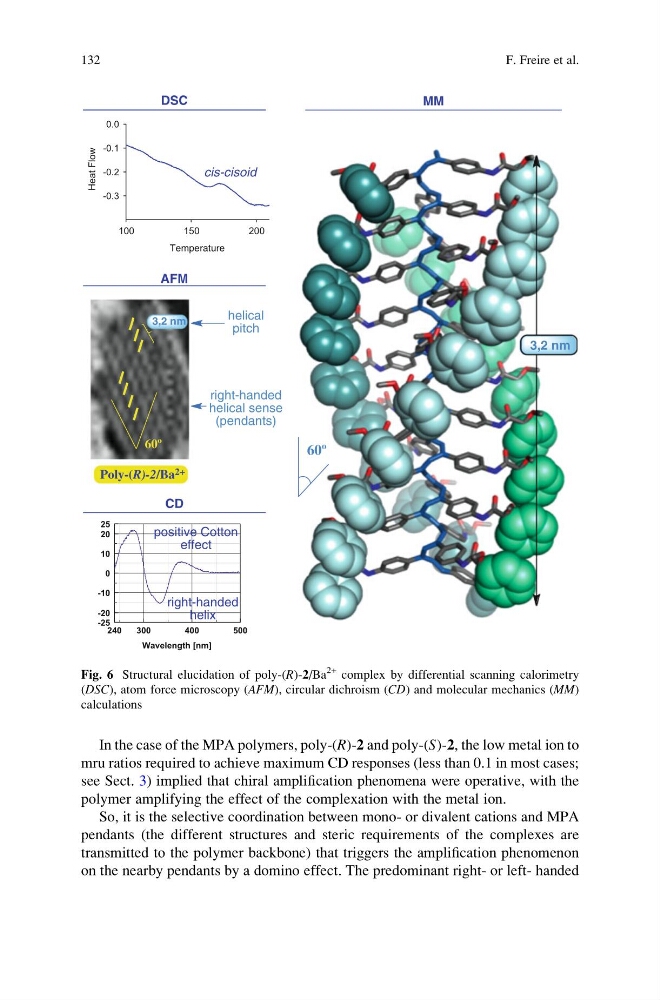
Fig. 6 Structural elucidation of poly-(R)-2/Ba
2+ complex by differential scanning calorimetry
(DSC), atom force microscopy (AFM), circular dichroism (CD) and molecular mechanics (MM)
calculations
132
F. Freire et al.
mru ratios required to achieve maximum CD responses (less than 0.1 in most cases;
see Sect. 3) implied that chiral amplification phenomena were operative, with the
polymer amplifying the effect of the complexation with the metal ion.
So, it is the selective coordination between mono- or divalent cations and MPA
pendants (the different structures and steric requirements of the complexes are
transmitted to the polymer backbone) that triggers the amplification phenomenon
on the nearby pendants by a domino effect. The predominant right- or left- handed
100
150
200
-0.3
-0.2
-0.1
0.0
Heat Flow
right-handed
helical sense
(pendants)
helical
pitch
3,2 nm
3,2 nm
Poly-(R)-2/Ba 2+
-25
25
-20
-10
0
10
20
240
500
300
400
Wavelength [nm]
positive Cotton
effect
right-handed
helix
DSC
cis-cisoid
AFM
CD
MM
Temperature
Fig. 6 Structural elucidation of poly-(R)-2/Ba
2+ complex by differential scanning calorimetry
(DSC), atom force microscopy (AFM), circular dichroism (CD) and molecular mechanics (MM)
calculations
132
F. Freire et al.