

The Grouping of Architectural Units in Clastic Rocks According to Depositional Time Scale
61
EXPLANATiON
0
D
Macroscopic heterogeneity
D
�
�
Drained reservoir
Non-reservoir
compartment
rocks
Untapped
mobile o!l
Residual oil
between grains
lntrareservoir
seals
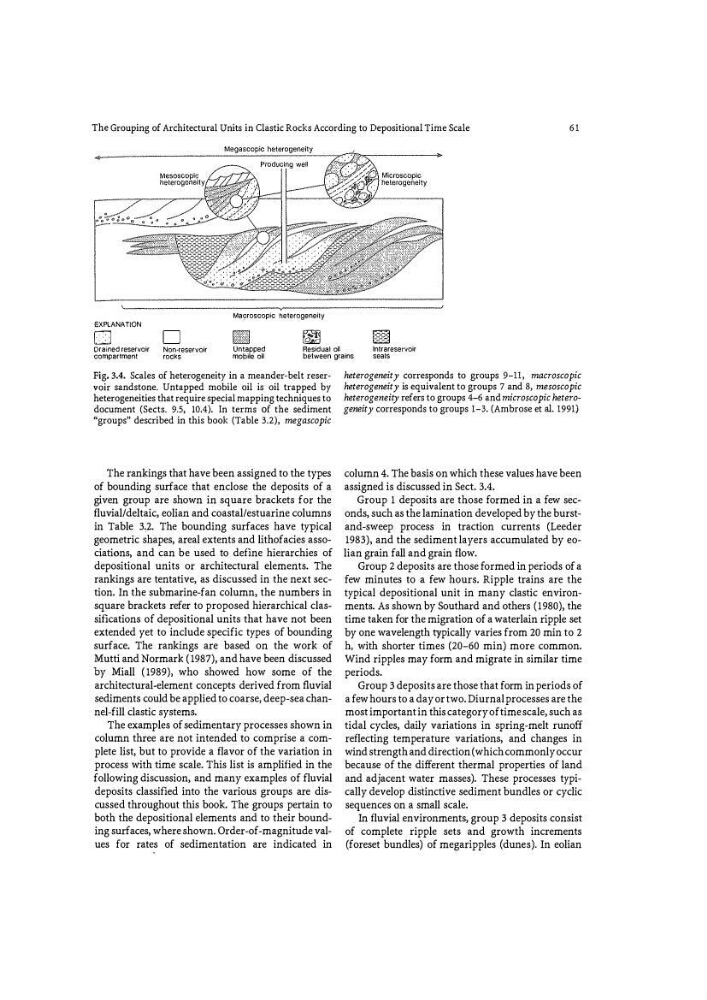
Fig. 3.4. Scales of heterogeneity in a meander-belt reser�
voir sandstone. Untapped mobile oil is oil trapped by
heterogeneities that require special mapping techniques to
document (Sects. 9.5, 10.4). In terms of the sediment
"groups" described in this book (Table 3.2), megascopic
The rankings that have been assigned to the types
of bounding surface that enclose the deposits of a
given group are shown in square brackets for the
fluvial/deltaic) eolian and coastal/estuarine columns
in Table 3,2. The bounding surfaces have typical
geometric shapes, areal extents and lithofacies associations, and can be used to define hierarchies of
depositional units or architectural elements. The
rankings are tentative, as discussed in the next section. In the submarine-fan column, the numbers in
square brackets refer to proposed hierarchical classifications of depositional units that have not been
extended yet to include specific types of bounding
surface. The rankings are based on the work of
Mutti and Normark ( 1987), and have been discussed
by Miall ( 1989), who showed how some of the
architectural-element concepts derived from fluvial
sediments could be applied to coarse) deep-sea channel-fill clastic systems.
The examples of sedimentary processes shown in
column three are not intended to comprise a complete list) but to provide a flavor of the variation in
process with time scale. This list is amplified in the
following discussion, and many examples of fluvial
deposits classified into the various groups are discussed throughout this book. The groups pertain to
both the depositional elements and to their boundw
ing surfaces, where shown. Order-of-magnitude values for rates of sedimentation are indicated in
heterogeneity corresponds to groups 9-11, macroscopic
heterogeneity is equivalent to groups 7 and 8, mesoscopic
heterogeneity refers to groups 4-6 and microscopic heterogeneity corresponds to groups 1-3. (Ambrose et al. 1991)
column 4. The basis on which these values have been
assigned is discussed in Sect. 3.4.
Group 1 deposits are those formed in a few seconds, such as the lamination developed by the burstand-sweep process in traction currents (Leeder
1983), and the sediment layers accumulated by eolian grain fall and grain flow.
Group 2 deposits are those fo rmed in periods of a
few minutes to a few hours. Ripple trains are the
typical depositional unit in many clastic environments. As shown by Southard and others (1980), the
time taken for the migration of a waterlain ripple set
by one wavelength typically varies from 20 min to 2
h, with shorter times (20-60 min) more common.
Wind ripples may form and migrate in similar time
periods.
Group 3 deposits are those that form in periods of
a few hours to a day or two. Diurnal processes are the
most important in this category of time scale, such as
tidal cycles, daily variations in spring-melt runoff
reflecting temperature variations, and changes in
wind strength and direction (which commonly occur
because of the different thermal properties of land
and adjacent water masses). These processes typically develop distinctive sediment bundles or cyclic
sequences on a small scale.
In fluvial environments, group 3 deposits consist
of complete ripple sets and growth increments
(foreset bundles) of megaripples (dunes). In eolian
61
EXPLANATiON
0
D
Macroscopic heterogeneity
D
�
�
Drained reservoir
Non-reservoir
compartment
rocks
Untapped
mobile o!l
Residual oil
between grains
lntrareservoir
seals
Fig. 3.4. Scales of heterogeneity in a meander-belt reser�
voir sandstone. Untapped mobile oil is oil trapped by
heterogeneities that require special mapping techniques to
document (Sects. 9.5, 10.4). In terms of the sediment
"groups" described in this book (Table 3.2), megascopic
The rankings that have been assigned to the types
of bounding surface that enclose the deposits of a
given group are shown in square brackets for the
fluvial/deltaic) eolian and coastal/estuarine columns
in Table 3,2. The bounding surfaces have typical
geometric shapes, areal extents and lithofacies associations, and can be used to define hierarchies of
depositional units or architectural elements. The
rankings are tentative, as discussed in the next section. In the submarine-fan column, the numbers in
square brackets refer to proposed hierarchical classifications of depositional units that have not been
extended yet to include specific types of bounding
surface. The rankings are based on the work of
Mutti and Normark ( 1987), and have been discussed
by Miall ( 1989), who showed how some of the
architectural-element concepts derived from fluvial
sediments could be applied to coarse) deep-sea channel-fill clastic systems.
The examples of sedimentary processes shown in
column three are not intended to comprise a complete list) but to provide a flavor of the variation in
process with time scale. This list is amplified in the
following discussion, and many examples of fluvial
deposits classified into the various groups are discussed throughout this book. The groups pertain to
both the depositional elements and to their boundw
ing surfaces, where shown. Order-of-magnitude values for rates of sedimentation are indicated in
heterogeneity corresponds to groups 9-11, macroscopic
heterogeneity is equivalent to groups 7 and 8, mesoscopic
heterogeneity refers to groups 4-6 and microscopic heterogeneity corresponds to groups 1-3. (Ambrose et al. 1991)
column 4. The basis on which these values have been
assigned is discussed in Sect. 3.4.
Group 1 deposits are those formed in a few seconds, such as the lamination developed by the burstand-sweep process in traction currents (Leeder
1983), and the sediment layers accumulated by eolian grain fall and grain flow.
Group 2 deposits are those fo rmed in periods of a
few minutes to a few hours. Ripple trains are the
typical depositional unit in many clastic environments. As shown by Southard and others (1980), the
time taken for the migration of a waterlain ripple set
by one wavelength typically varies from 20 min to 2
h, with shorter times (20-60 min) more common.
Wind ripples may form and migrate in similar time
periods.
Group 3 deposits are those that form in periods of
a few hours to a day or two. Diurnal processes are the
most important in this category of time scale, such as
tidal cycles, daily variations in spring-melt runoff
reflecting temperature variations, and changes in
wind strength and direction (which commonly occur
because of the different thermal properties of land
and adjacent water masses). These processes typically develop distinctive sediment bundles or cyclic
sequences on a small scale.
In fluvial environments, group 3 deposits consist
of complete ripple sets and growth increments
(foreset bundles) of megaripples (dunes). In eolian