

Main Components of the Fluvial Sequence Model
c
�
iii
..
E
E
"
•
•
�
t
ji
0:
"
"
t
t t
1: :: :1 1
("";Sl 2
£
"
.s
t
3
&-::0: 14
C:Q;}>':J 5
09
f
�
t
469
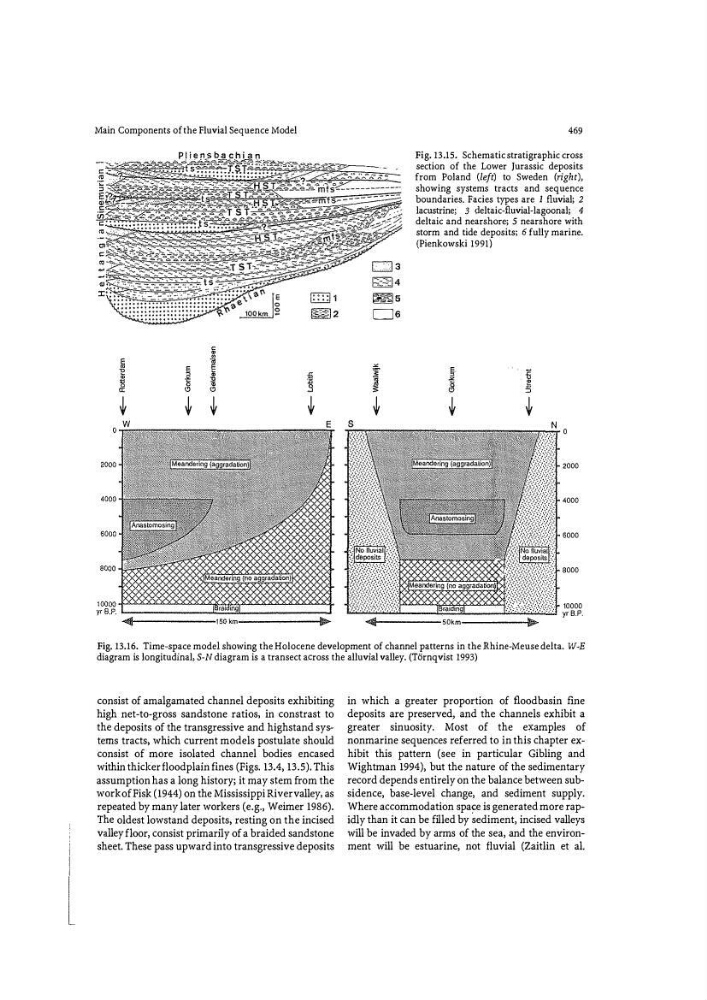
Fig. 13.15. Schematic stratigraphic cross
section of the Lower Jurassic deposits
from Poland (left) to Sweden (righ t),
showing systems tracts and sequence
boundaries. Facies types are 1 fluvial; 2
lacustrine; 3 deltaic-fluvial-lagoonal; 4
deltaic and nearshore; 5 nearshore with
storm and tide deposits; 6 fully marine.
(Pienkowski 1991}
E
0
"ll
"
ii
�
t
t
0
2000
4000
6000
8000
10000
50km
"'"
yr B.P.
Fig. 13.16. Time-space model showing the Holocene development of channel patterns in the :Rhine-Meuse delta. W-E
diagram is longitudinal1 S-N diagram is a transect across the alluvial valley. (TOrnqvist 1993)
consist of amalgamated channel deposits exhibiting
high net-to-gross sandstone ratios1 in constrast to
the deposits of the transgressive and highstand sys ...
terns tracts, which current models postulate should
consist of more isolated channel bodies encased
within thicker floodplain fines (Figs. 13.4, 13.5). This
assumption has a long history; it may stem fr om the
work of Fisk (1944) on the Mississippi River valley, as
repeated by many later workers (e.g., Weimer 1986).
The oldest lowstand deposits, resting on the incised
valley floor, consist primarily of a braided sandstone
sheet. These pass upward into transgressive deposits
in which a greater proportion of fl.oodbasin fine
deposits are preserved� and the channels exhibit a
greater sinuosity. Most of the ex:amples of
nonmarine sequences referred to in this chapter exhibit this pattern (see in particular Gibling and
Wightman 1994), but the nature of the sedimentary
record depends entirely on the balance between subsidence, base-level change, and sediment supply.
Where accommodation spa�e is generated more rapidly than it can be fil led by sediment, incised valleys
will be invaded by arms of the sea, and the environment will be estuarine, not fluvial (Zaitlin et al.
c
�
iii
..
E
E
"
•
•
�
t
ji
0:
"
"
t
t t
1: :: :1 1
("";Sl 2
£
"
.s
t
3
&-::0: 14
C:Q;}>':J 5
09
f
�
t
469
Fig. 13.15. Schematic stratigraphic cross
section of the Lower Jurassic deposits
from Poland (left) to Sweden (righ t),
showing systems tracts and sequence
boundaries. Facies types are 1 fluvial; 2
lacustrine; 3 deltaic-fluvial-lagoonal; 4
deltaic and nearshore; 5 nearshore with
storm and tide deposits; 6 fully marine.
(Pienkowski 1991}
E
0
"ll
"
ii
�
t
t
0
2000
4000
6000
8000
10000
50km
"'"
yr B.P.
Fig. 13.16. Time-space model showing the Holocene development of channel patterns in the :Rhine-Meuse delta. W-E
diagram is longitudinal1 S-N diagram is a transect across the alluvial valley. (TOrnqvist 1993)
consist of amalgamated channel deposits exhibiting
high net-to-gross sandstone ratios1 in constrast to
the deposits of the transgressive and highstand sys ...
terns tracts, which current models postulate should
consist of more isolated channel bodies encased
within thicker floodplain fines (Figs. 13.4, 13.5). This
assumption has a long history; it may stem fr om the
work of Fisk (1944) on the Mississippi River valley, as
repeated by many later workers (e.g., Weimer 1986).
The oldest lowstand deposits, resting on the incised
valley floor, consist primarily of a braided sandstone
sheet. These pass upward into transgressive deposits
in which a greater proportion of fl.oodbasin fine
deposits are preserved� and the channels exhibit a
greater sinuosity. Most of the ex:amples of
nonmarine sequences referred to in this chapter exhibit this pattern (see in particular Gibling and
Wightman 1994), but the nature of the sedimentary
record depends entirely on the balance between subsidence, base-level change, and sediment supply.
Where accommodation spa�e is generated more rapidly than it can be fil led by sediment, incised valleys
will be invaded by arms of the sea, and the environment will be estuarine, not fluvial (Zaitlin et al.