

456
13.2 Accommodation Space
The concept of accommodation space is fu ndamental in sequence stratigraphy. jervey (!988, p. 47)
defined it as ''the space made available for potential
sediment accumulation [where] in order for sediments to be preserved, there must be space available
below base level (the level above which erosion will
occur)." The word "accommodation'' implies space;
therefore, the use of the word ''space" in the term
''accommodation space" is, strictly speaking, superiluous.
Jervey was modeling marine sequences, for which
base level corresponds to sea level; the sequence
architecture of marine deposits is governed mainly
by the response of depositional systems to sea-level
change. However, this definition does not apply in
the case of the fluvial environments because fluvial
deposits, by their very nature) are deposited above
sea level. Schumm ( !993, p. 279) defined base level as
«the imaginary horizontal or level surface to which
sub-aerial erosion proceeds. It is sea level.n Shanley
EROSION : l. ..
DEPOSrt� O�_ ]
___ J \
EROSION - , i
!
,.J..
I
'
'
'
'
'
'
,
Sequence Stratigraphy
and McCabe (1994) noted some important additional local "base levels" that may be significant in
nonmarine settings, such as the deflation surface,
defined by the water table, in eolian environments.
So how does the concept of accommodation apply in
the case of nonmarine deposits?
Base level is the level to which rivers grade their
course, as discussed in Sect. 11.2.2. Rivers adjust
their slope, sinuosity, and other hydraulic characteristics to the power and efficiency necessary to transport the water and sediment supplied from the
drainage basin. Given equilibrium conditions, a
graded profile will develop, which flattens out to the
horizontal at the precise point at which base level is
reached, at the mouth of the river. Posamentier et al.
(1988, p. !35) stated:
"The fundamental principle which governs sedimentation
in fluvial environments (assuming constant sediment supply) is that a stream will aggrade if its equilibrium profile
shifts basinward or upward and incise if its equilibrium
profile shifts downward ... subaerial accommodation
occurs by basinward shifts of the stream equilibrium profile."
FLOODING
PROGRADATION:J {
FLOODINGr:t - f •
! '
'
'
PROGRADATION :3 l
f
-
+100FT
'
COMPOSITE CURVE OF 3.., , 4"',
& 5"' ORDER CYCLES
-100FT
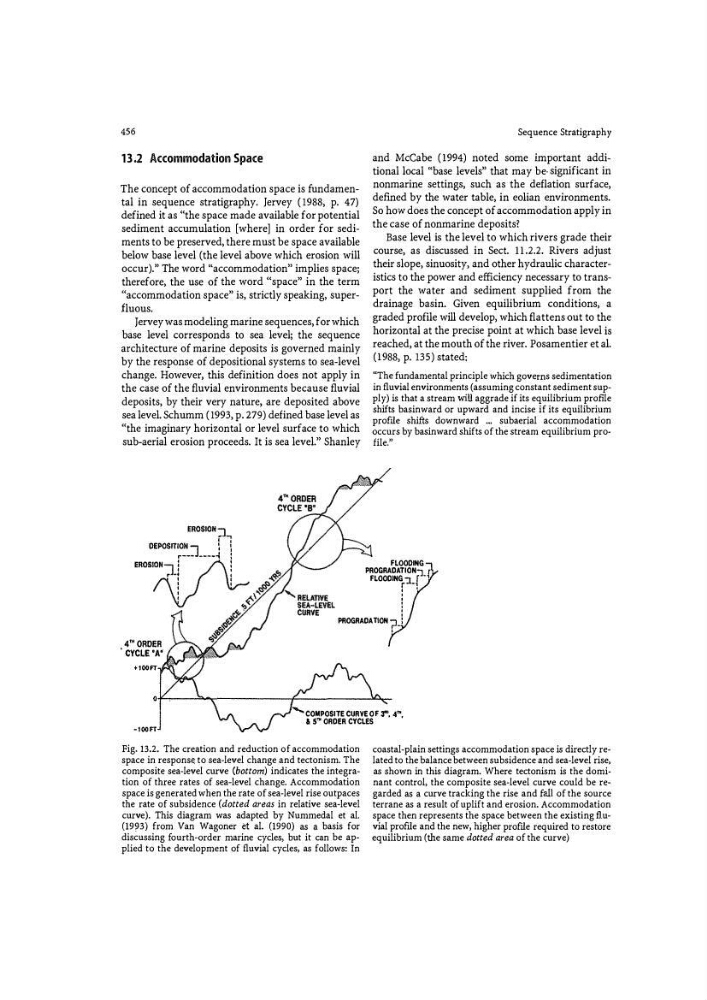
Fig. 13.2. The creation and reduction of accommodation
space in response to sea-level change and tectonism. The
composite sea-level curve (bottom) indicates the integration of three rates of sea-level change. Accommodation
space is generated when the rate of sea-level rise outpaces
the rate of subsidence (dotted areas in relative sea-level
curve). This diagram was adapted by Nummedal et al.
(19�3) from Van Wagoner et al. (1990) as a basis for
discussing fo urth-order marine cycles, but it can be applied to the development of fluvial cycles, as follows: In
coastal-plain settings accommodation space is directly related to the balance between subsidence and sea-level rise,
as shown in this diagram. Where tectonism is the dominant control, the composite sea-level curve could be regarded as a curve tracking the rise and fall of the source
terrane as a result of uplift and erosion. Accommodation
space then represents the space between the existing fluvial profile and the new, higher profile required to restore
equilibrium (the same dotted area of the curve)
13.2 Accommodation Space
The concept of accommodation space is fu ndamental in sequence stratigraphy. jervey (!988, p. 47)
defined it as ''the space made available for potential
sediment accumulation [where] in order for sediments to be preserved, there must be space available
below base level (the level above which erosion will
occur)." The word "accommodation'' implies space;
therefore, the use of the word ''space" in the term
''accommodation space" is, strictly speaking, superiluous.
Jervey was modeling marine sequences, for which
base level corresponds to sea level; the sequence
architecture of marine deposits is governed mainly
by the response of depositional systems to sea-level
change. However, this definition does not apply in
the case of the fluvial environments because fluvial
deposits, by their very nature) are deposited above
sea level. Schumm ( !993, p. 279) defined base level as
«the imaginary horizontal or level surface to which
sub-aerial erosion proceeds. It is sea level.n Shanley
EROSION : l. ..
DEPOSrt� O�_ ]
___ J \
EROSION - , i
!
,.J..
I
'
'
'
'
'
'
,
Sequence Stratigraphy
and McCabe (1994) noted some important additional local "base levels" that may be significant in
nonmarine settings, such as the deflation surface,
defined by the water table, in eolian environments.
So how does the concept of accommodation apply in
the case of nonmarine deposits?
Base level is the level to which rivers grade their
course, as discussed in Sect. 11.2.2. Rivers adjust
their slope, sinuosity, and other hydraulic characteristics to the power and efficiency necessary to transport the water and sediment supplied from the
drainage basin. Given equilibrium conditions, a
graded profile will develop, which flattens out to the
horizontal at the precise point at which base level is
reached, at the mouth of the river. Posamentier et al.
(1988, p. !35) stated:
"The fundamental principle which governs sedimentation
in fluvial environments (assuming constant sediment supply) is that a stream will aggrade if its equilibrium profile
shifts basinward or upward and incise if its equilibrium
profile shifts downward ... subaerial accommodation
occurs by basinward shifts of the stream equilibrium profile."
FLOODING
PROGRADATION:J {
FLOODINGr:t - f •
! '
'
'
PROGRADATION :3 l
f
-
+100FT
'
COMPOSITE CURVE OF 3.., , 4"',
& 5"' ORDER CYCLES
-100FT
Fig. 13.2. The creation and reduction of accommodation
space in response to sea-level change and tectonism. The
composite sea-level curve (bottom) indicates the integration of three rates of sea-level change. Accommodation
space is generated when the rate of sea-level rise outpaces
the rate of subsidence (dotted areas in relative sea-level
curve). This diagram was adapted by Nummedal et al.
(19�3) from Van Wagoner et al. (1990) as a basis for
discussing fo urth-order marine cycles, but it can be applied to the development of fluvial cycles, as follows: In
coastal-plain settings accommodation space is directly related to the balance between subsidence and sea-level rise,
as shown in this diagram. Where tectonism is the dominant control, the composite sea-level curve could be regarded as a curve tracking the rise and fall of the source
terrane as a result of uplift and erosion. Accommodation
space then represents the space between the existing fluvial profile and the new, higher profile required to restore
equilibrium (the same dotted area of the curve)