

30
Historical Background
Piedmont formed of alluvial fans
Braided stream
Low sinuosity stream
Strongly meandering stream
�Other fades
1111 Mainly topstrotum deposits
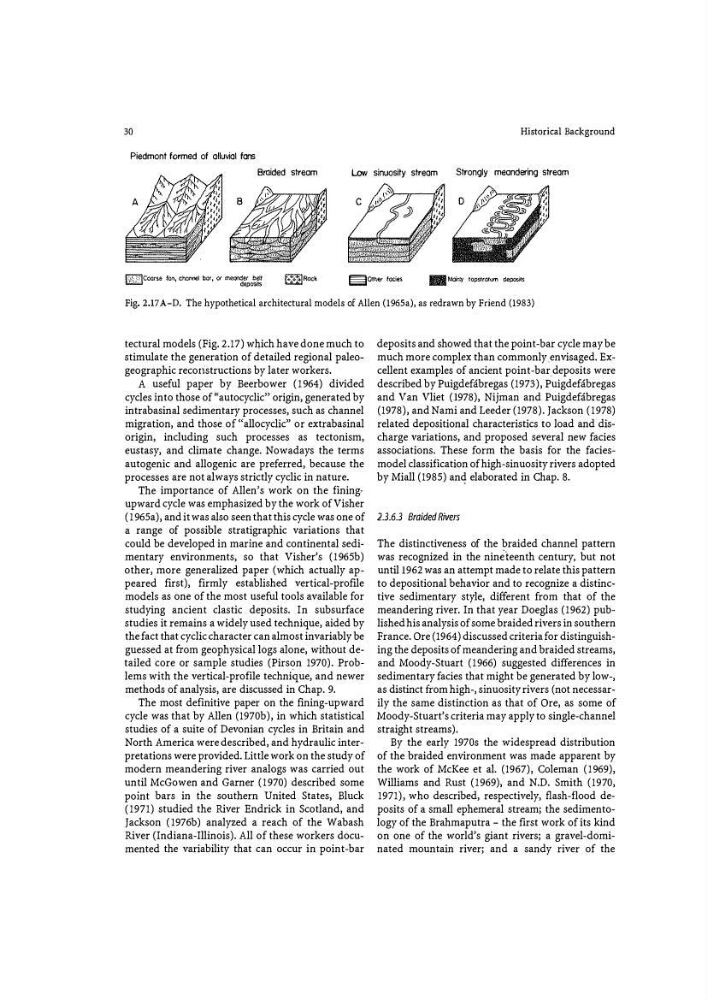
Fig. 2.17A-D. The hypothetical architectural models of Allen (1965a), as redrawn by Friend (1983)
tectural models (Fig. 2.17) which have done much to
stimulate the generation of detailed regional paleogeographic recoristructions by later workers.
A useful paper by Beerbower (1964) divided
cycles into those of "autocyclic)) origin, generated by
intrabasinal sedimentary processes, such as channel
migration, and those of <'allocyclic" or extrabasinal
origin, including such processes as tectonism,
eustasy, and climate change. Nowadays the terms
autogenic and allogenic are preferred, because the
processes are not always strictly cyclic in nature.
The importance of Allen's work on the fining,..
upward cycle was emphasized by the work of Visher
(1965a), and it was also seen that this cycle was one of
a range of possible stratigraphic variations that
could be developed in marine and continental sedi�
mentary environments, so that Visher's (1965b)
other, more generalized paper (which actually appeared first), firmly established vertical-profile
models as one of the most useful tools available for
studying ancient clastic deposits. In subsurface
studies it remains a widely used technique, aided by
the fact that cyclic character can almost invariably be
guessed at from geophysical logs alone, without detailed core or sample studies (Pirson 1970). Problems with the vertical-profile technique, and newer
methods of analysis, are discussed in Chap. 9.
The most definitive paper on the fining-upward
cycle was that by Allen (1970b), in which statistical
studies of a suite of Devonian cycles in Britain and
North America were described, and hydraulic interpretations were provided. Little work on the study of
modern meandering river analogs was carried out
until McGowen and Garner (1970) described some
point bars in the southern United States, Bluck
( 1971) studied the River Endrick in Scotland, and
jackson (1976b) analyzed a reach of the Wabash
River (Indiana-Illinois). All of these workers documented the variability that can occur in point-bar
deposits and showed that the point-bar cycle may be
much more complex than commonly _envisaged. Ex�
cellent examples of ancient point-bar_deposits were
described by Puigdefabregas (1973), Puigdefabregas
and Van Vliet (1978), Nijman and Puigdefabregas
(1978), and Nami and Leeder (1978). jackson (1978)
related depositional characteristics to load and discharge variations, and proposed several new facies
associations. These form the basis for the faciesmodel classification of high-sinuosity rivers adopted
by Miall (1985) and elaborated in Chap. 8.
2.3.6.3 Braided Rivers
The distinctiveness of the braided channel pattern
was recognized in the ninfteenth century, but not
until l962 was an attempt made to relate this pattern
to depositional behavior and to recognize a distinctive sedimentary style, different from that of the
meandering river. In that year Doeglas (1962) published his analysis of some braided rivers in southern
France. Ore (1964) discussed criteria for distinguishing the deposits of meandering and braided streams,
and Moody-Stuart (1966) suggested differences in
sedimentary facies that might be generated by low-,
as distinct from high�, sinuosity rivers (not necessarily the same distinction as that of Ore, as some of
Moody-Stuart's criteria may apply to single-channel
straight streams).
By the early 1970s the widespread distribution
of the braided environment was made apparent by
the work of McKee et al. (1967), Coleman (1969),
Williams and Rust (1969), and N.D. Smith (1970,
1971), who described, respectively, flash-flood deposits of a small ephemeral stream; the sedimentology of the Brahmaputra - the first work of its kind
on one of the world's giant rivers; a gravel-dominated mountain river; and a sandy river of the
Historical Background
Piedmont formed of alluvial fans
Braided stream
Low sinuosity stream
Strongly meandering stream
�Other fades
1111 Mainly topstrotum deposits
Fig. 2.17A-D. The hypothetical architectural models of Allen (1965a), as redrawn by Friend (1983)
tectural models (Fig. 2.17) which have done much to
stimulate the generation of detailed regional paleogeographic recoristructions by later workers.
A useful paper by Beerbower (1964) divided
cycles into those of "autocyclic)) origin, generated by
intrabasinal sedimentary processes, such as channel
migration, and those of <'allocyclic" or extrabasinal
origin, including such processes as tectonism,
eustasy, and climate change. Nowadays the terms
autogenic and allogenic are preferred, because the
processes are not always strictly cyclic in nature.
The importance of Allen's work on the fining,..
upward cycle was emphasized by the work of Visher
(1965a), and it was also seen that this cycle was one of
a range of possible stratigraphic variations that
could be developed in marine and continental sedi�
mentary environments, so that Visher's (1965b)
other, more generalized paper (which actually appeared first), firmly established vertical-profile
models as one of the most useful tools available for
studying ancient clastic deposits. In subsurface
studies it remains a widely used technique, aided by
the fact that cyclic character can almost invariably be
guessed at from geophysical logs alone, without detailed core or sample studies (Pirson 1970). Problems with the vertical-profile technique, and newer
methods of analysis, are discussed in Chap. 9.
The most definitive paper on the fining-upward
cycle was that by Allen (1970b), in which statistical
studies of a suite of Devonian cycles in Britain and
North America were described, and hydraulic interpretations were provided. Little work on the study of
modern meandering river analogs was carried out
until McGowen and Garner (1970) described some
point bars in the southern United States, Bluck
( 1971) studied the River Endrick in Scotland, and
jackson (1976b) analyzed a reach of the Wabash
River (Indiana-Illinois). All of these workers documented the variability that can occur in point-bar
deposits and showed that the point-bar cycle may be
much more complex than commonly _envisaged. Ex�
cellent examples of ancient point-bar_deposits were
described by Puigdefabregas (1973), Puigdefabregas
and Van Vliet (1978), Nijman and Puigdefabregas
(1978), and Nami and Leeder (1978). jackson (1978)
related depositional characteristics to load and discharge variations, and proposed several new facies
associations. These form the basis for the faciesmodel classification of high-sinuosity rivers adopted
by Miall (1985) and elaborated in Chap. 8.
2.3.6.3 Braided Rivers
The distinctiveness of the braided channel pattern
was recognized in the ninfteenth century, but not
until l962 was an attempt made to relate this pattern
to depositional behavior and to recognize a distinctive sedimentary style, different from that of the
meandering river. In that year Doeglas (1962) published his analysis of some braided rivers in southern
France. Ore (1964) discussed criteria for distinguishing the deposits of meandering and braided streams,
and Moody-Stuart (1966) suggested differences in
sedimentary facies that might be generated by low-,
as distinct from high�, sinuosity rivers (not necessarily the same distinction as that of Ore, as some of
Moody-Stuart's criteria may apply to single-channel
straight streams).
By the early 1970s the widespread distribution
of the braided environment was made apparent by
the work of McKee et al. (1967), Coleman (1969),
Williams and Rust (1969), and N.D. Smith (1970,
1971), who described, respectively, flash-flood deposits of a small ephemeral stream; the sedimentology of the Brahmaputra - the first work of its kind
on one of the world's giant rivers; a gravel-dominated mountain river; and a sandy river of the