

14
4. A process-response <:;lassification that relates
channel morphology to discharge and sediment
type.
The first two cl!issifications were the earliest, reflecting the preoccupation of nineteenth-century
geologists with the cycle of erosion, landscape evolution, and the power of rivers to remove and transport
large quantitites of debris (Dana 1850a,b; Davis
1899).
The morphological study and classification of rivers do not appear to have started with the work of
any single individual. The terms ('braided", «meandering", and "anastomosing", though poorly defined, were all in use in the nineteenth century (e.g.,
see Davis 1898b, Chap. IX). Knowledge of the geomorphology of alluvial fans and meandering rivers
was well advanced by the turn of the century, as
quotes from Drew (1873), Geikie (1882), and others,
earlier in this review, have indicated. The work of
Gilbert (1880) on this subject has also been much
quoted. The concept of the graded stream was beginning to be understood, and Powell (1875) introduced
the concept of "base lever' in downward erosion.
The Mississippi River has always loomed large
in the minds of alluvial sedimentologists and geo�
morphologists. Nowhere is this more obvious, in
contemporary literature, than in the book by
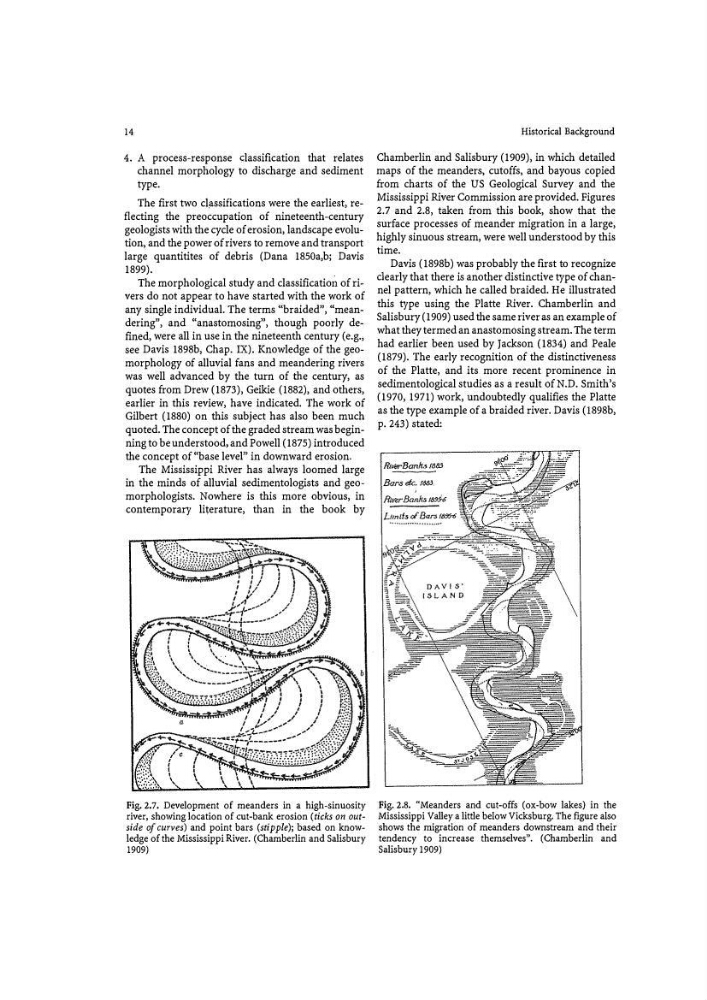
Fig. 2.7. Development of meanders in a high-sinuosity
river, showing location of cut-bank erosion (ticks on outside of curves) and point bars (stipple); based on knowledge of the Mississippi River. (Chamberlin and Salisbury
1909)
Historical Background
Chamberlin and Salisbury (1909), in which detailed
maps of the meanders, cutoffs, and bayous copied
from charts of the US Geological Survey and the
Mississippi River Commission are provided. Figures
2.7 and 2.8, taken from this book, show that the
surface processes of meander migration in a large,
highly sinuous stream, were well understood by this
time.
Davis ( 1898b) was probably the first to recognize
dearly that ther .
e is another distinctive type of channel pattern, which he called braided. He illustrated
this type using the Platte River. Chamberlin and
Salisbury (1909) used the same river as an example of
what they termed an anastomosing stream. The term
had earlier been used by jackson (1834) and Peale
(1879). The early recognition of the distinctiveness
of the Platte, and its more recent prominence in
sedimentological studies as a result of N.D. Smith's
(1970, 1971) work, undoubtedly qualifies the Platte
as the type example of a braided river. Davis (l898b,
p. 243) stated:
Fig. 2.8. "Meanders and cut-offs (ox-bow lakes) in the
Mississippi Valley a little below Vicksburg. The figure also
shows the migration of meanders downstream and their
tendency to increase themselves». (Chamberlin and
Salisbury 1909)
4. A process-response <:;lassification that relates
channel morphology to discharge and sediment
type.
The first two cl!issifications were the earliest, reflecting the preoccupation of nineteenth-century
geologists with the cycle of erosion, landscape evolution, and the power of rivers to remove and transport
large quantitites of debris (Dana 1850a,b; Davis
1899).
The morphological study and classification of rivers do not appear to have started with the work of
any single individual. The terms ('braided", «meandering", and "anastomosing", though poorly defined, were all in use in the nineteenth century (e.g.,
see Davis 1898b, Chap. IX). Knowledge of the geomorphology of alluvial fans and meandering rivers
was well advanced by the turn of the century, as
quotes from Drew (1873), Geikie (1882), and others,
earlier in this review, have indicated. The work of
Gilbert (1880) on this subject has also been much
quoted. The concept of the graded stream was beginning to be understood, and Powell (1875) introduced
the concept of "base lever' in downward erosion.
The Mississippi River has always loomed large
in the minds of alluvial sedimentologists and geo�
morphologists. Nowhere is this more obvious, in
contemporary literature, than in the book by
Fig. 2.7. Development of meanders in a high-sinuosity
river, showing location of cut-bank erosion (ticks on outside of curves) and point bars (stipple); based on knowledge of the Mississippi River. (Chamberlin and Salisbury
1909)
Historical Background
Chamberlin and Salisbury (1909), in which detailed
maps of the meanders, cutoffs, and bayous copied
from charts of the US Geological Survey and the
Mississippi River Commission are provided. Figures
2.7 and 2.8, taken from this book, show that the
surface processes of meander migration in a large,
highly sinuous stream, were well understood by this
time.
Davis ( 1898b) was probably the first to recognize
dearly that ther .
e is another distinctive type of channel pattern, which he called braided. He illustrated
this type using the Platte River. Chamberlin and
Salisbury (1909) used the same river as an example of
what they termed an anastomosing stream. The term
had earlier been used by jackson (1834) and Peale
(1879). The early recognition of the distinctiveness
of the Platte, and its more recent prominence in
sedimentological studies as a result of N.D. Smith's
(1970, 1971) work, undoubtedly qualifies the Platte
as the type example of a braided river. Davis (l898b,
p. 243) stated:
Fig. 2.8. "Meanders and cut-offs (ox-bow lakes) in the
Mississippi Valley a little below Vicksburg. The figure also
shows the migration of meanders downstream and their
tendency to increase themselves». (Chamberlin and
Salisbury 1909)