

Early Developments in the Study of Fluvial Sediments
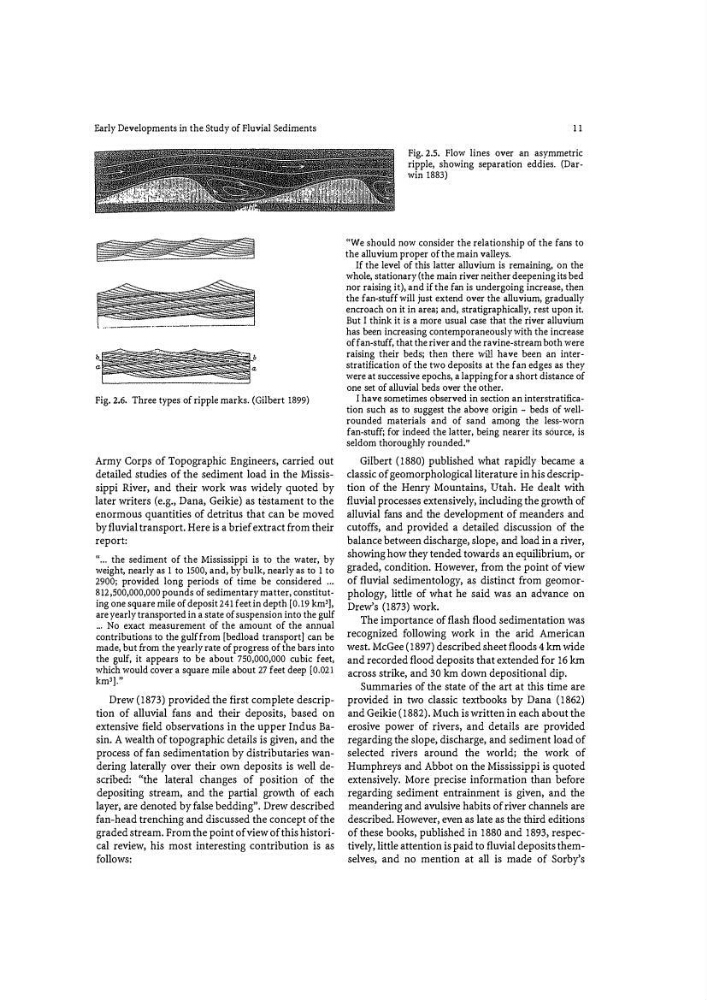
Fig. 2.6. Three types of ripple marks. (Gilbert 1899)
Army Corps of Topographic Engineers, carried out
detailed studies of the sediment load in the Mississippi River, and their work was widely quoted by
later writers (e.g., Dana, Geikie) as testament to the
enormous quantities of detritus that can be moved
by fluvial transport. Here is a brief extract from their
report:
" ... the sediment of the Mississippi is to the water, by
weight, nearly as 1 to 1500, and, by bulk, nearly as to 1 to
2900; provided long periods of time be considered ...
812,500,000,000 pounds of sedimentary matter, constitut�
ing one square mile of deposit 241 feet in depth [0.19 km3],
are yearly transported in a state of suspension into the gulf
... No exact measurement of the amount of the annual
contributions to the gulf from [bedload transport] can be
made, but fr om the yearly rate of progress of the bars into
the gulf, it appears to be about 750,000,000 cubic feet,
which would cover a square mile about 27 feet deep [0.021
km ' ] . "
Drew (1873) provided the first complete description of alluvial fans and their deposits, based on
extensive field observations in the upper Indus Basin. A wealth of topographic details is given, and the
process of fan sedimentation by distributaries wandering laterally over their own deposits is well described: «the lateral changes of position of the
depositing stream, and the partial growth of each
layer, are denoted by false bedding". Drew described
fan-head trenching and discussed the concept of the
graded stream. From the point of view of this histori�
cal review, his most interesting contribution is as
follows:
11
Fig. 2.5. Flow lines over an asymmetric
ripple, showing separation eddies. (Dar�
win 1883)
"We should now consider the relationship of the fans to
the alluvium proper of the main valleys.
If the level of this latter alluvium is remaining, on the
whole, stationary (the main river neither deepening its bed
nor raising it), and if the fan is undergoing increase, then
the fan�stuff will just extend over the alluvium, gradually
encroach on it in area; and, stratigraphically, rest upon it.
But I think it is a more usual case that the river alluvium
has been increasing contemporaneously with the increase
of fan�stuff, that the river and the ravine-stream both were
raising their beds; then there will have been an inter�
stratification of the two deposits at the fan edges as they
were at successive epochs, a lapping for a short distance of
one set of alluvial beds over the other.
I have sometimes observed in section an interstratifica�
tion such as to suggest the above origin - beds of well�
rounded materials and of sand among the less-worn
fan�stuff; for indeed the latter, being nearer its sOurce, is
seldom thoroughly rounded."
Gilbert (1880) published what rapidly became a
classic of geomorphological literature in his description of the Henry Mountains, Utah. He dealt with
fluvial processes extensively, including the growth of
alluvial fans and the development of meanders and
cutoffs, and provided a detailed discussion of the
balance between discharge, slope, and load in a river,
showing how they tended towards an equilibrium, or
graded, condition. However, from the point of view
of fluvial sedimentology, as distinct from geomorphology, little of what he said was an advance on
Drew's {1873) work.
The importance of flash flood sedimentation was
recognized following work in the arid American
west. McGee (1897) described sheet floods 4 km wide
and recorded flood deposits that extended for 16 km
across strike, and 30 km down depositional dip.
Summaries of the state of the art at this time are
provided in two classic textbooks by Dana (1862)
and Geikie (1882). Much is written in each about the
erosive power of rivers, and details are provided
regarding the slope, discharge, and sediment load of
selected rivers around the world; the work of
Humphreys and Abbot on the Mississippi is quoted
extensively. More precise information than before
regarding sediment entrainment is given, and the
meandering and avulsive habits of river channels are
described. However, even as late as the third editions
of these books, published in 1880 and 1893, respectively, little attention is paid to fluvial deposits themselves, and no mention at all is made of Sorby's
Fig. 2.6. Three types of ripple marks. (Gilbert 1899)
Army Corps of Topographic Engineers, carried out
detailed studies of the sediment load in the Mississippi River, and their work was widely quoted by
later writers (e.g., Dana, Geikie) as testament to the
enormous quantities of detritus that can be moved
by fluvial transport. Here is a brief extract from their
report:
" ... the sediment of the Mississippi is to the water, by
weight, nearly as 1 to 1500, and, by bulk, nearly as to 1 to
2900; provided long periods of time be considered ...
812,500,000,000 pounds of sedimentary matter, constitut�
ing one square mile of deposit 241 feet in depth [0.19 km3],
are yearly transported in a state of suspension into the gulf
... No exact measurement of the amount of the annual
contributions to the gulf from [bedload transport] can be
made, but fr om the yearly rate of progress of the bars into
the gulf, it appears to be about 750,000,000 cubic feet,
which would cover a square mile about 27 feet deep [0.021
km ' ] . "
Drew (1873) provided the first complete description of alluvial fans and their deposits, based on
extensive field observations in the upper Indus Basin. A wealth of topographic details is given, and the
process of fan sedimentation by distributaries wandering laterally over their own deposits is well described: «the lateral changes of position of the
depositing stream, and the partial growth of each
layer, are denoted by false bedding". Drew described
fan-head trenching and discussed the concept of the
graded stream. From the point of view of this histori�
cal review, his most interesting contribution is as
follows:
11
Fig. 2.5. Flow lines over an asymmetric
ripple, showing separation eddies. (Dar�
win 1883)
"We should now consider the relationship of the fans to
the alluvium proper of the main valleys.
If the level of this latter alluvium is remaining, on the
whole, stationary (the main river neither deepening its bed
nor raising it), and if the fan is undergoing increase, then
the fan�stuff will just extend over the alluvium, gradually
encroach on it in area; and, stratigraphically, rest upon it.
But I think it is a more usual case that the river alluvium
has been increasing contemporaneously with the increase
of fan�stuff, that the river and the ravine-stream both were
raising their beds; then there will have been an inter�
stratification of the two deposits at the fan edges as they
were at successive epochs, a lapping for a short distance of
one set of alluvial beds over the other.
I have sometimes observed in section an interstratifica�
tion such as to suggest the above origin - beds of well�
rounded materials and of sand among the less-worn
fan�stuff; for indeed the latter, being nearer its sOurce, is
seldom thoroughly rounded."
Gilbert (1880) published what rapidly became a
classic of geomorphological literature in his description of the Henry Mountains, Utah. He dealt with
fluvial processes extensively, including the growth of
alluvial fans and the development of meanders and
cutoffs, and provided a detailed discussion of the
balance between discharge, slope, and load in a river,
showing how they tended towards an equilibrium, or
graded, condition. However, from the point of view
of fluvial sedimentology, as distinct from geomorphology, little of what he said was an advance on
Drew's {1873) work.
The importance of flash flood sedimentation was
recognized following work in the arid American
west. McGee (1897) described sheet floods 4 km wide
and recorded flood deposits that extended for 16 km
across strike, and 30 km down depositional dip.
Summaries of the state of the art at this time are
provided in two classic textbooks by Dana (1862)
and Geikie (1882). Much is written in each about the
erosive power of rivers, and details are provided
regarding the slope, discharge, and sediment load of
selected rivers around the world; the work of
Humphreys and Abbot on the Mississippi is quoted
extensively. More precise information than before
regarding sediment entrainment is given, and the
meandering and avulsive habits of river channels are
described. However, even as late as the third editions
of these books, published in 1880 and 1893, respectively, little attention is paid to fluvial deposits themselves, and no mention at all is made of Sorby's