

238
Fluvial Styles and Facies Models
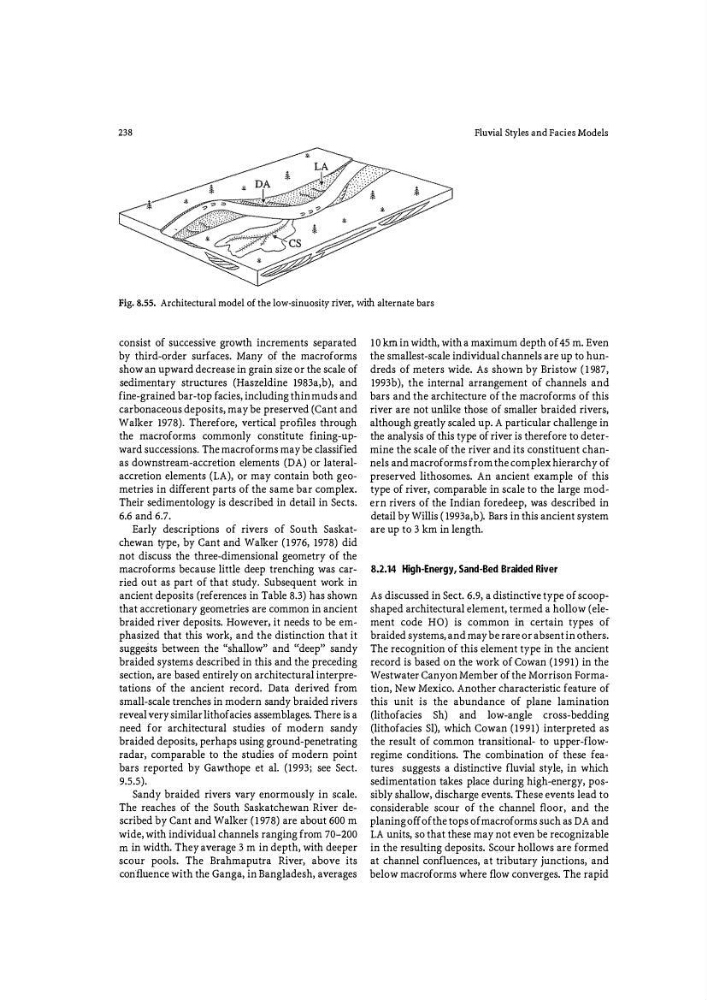
Fig. 8.55. Architectural model of the low-sinuosity river, with alternate bars
consist of successive growth increments separated
by third-order surfaces. Many of the macroforms
show an upward decrease in grain size or the scale of
sedimentary structures (Haszeldine 1983a,b), and
fine-grained bar-top facies, including thin muds and
carbonaceous deposits, may be preserved (Cant and
Walker 1978). Therefore, vertical profiles through
the macroforms commonly constitute fining-upward successions. The macroforms may be classified
as downstream-accretion elements (DA) or lateralaccretion elements (LA), or may contain both geometries in different parts of the same bar complex.
Their sedimentology is described in detail in Sects.
6.6 and 6.7.
Early descriptions of rivers of South Saskatchewan type, by Cant and Walker (1976, 1978) did
not discuss the three-dimensional geometry of the
macroforms because little deep trenching was carried out as part of that study. Subsequent work in
ancient deposits (references in Table 8.3) has shown
that accretionary geometries are common in ancient
braided river deposits. However1 it needs to be emphasized that this work, and the distinction that it
suggeSts between the "shallow'' and (
section, are based entirely on architectural interpretations of the ancient record. Data derived from
small-scale trenches in modern sandy braided rivers
reveal very similar lithofacies assemblages. There is a
need for architectural studies of modern sandy
braided deposits, perhaps using ground-penetrating
radar, comparable to the studies of modern point
bars reported by Gawthope et al. (1993; see Sect.
9.5.5).
Sandy braided rivers vary enormously in scale.
The reaches of the South Saskatchewan River described by Cant and Walker (1978) are about 600 m
wide, with individual channels ranging from 70-200
m in width. They average 3 m in depth, with deeper
scour pools. The Brahmaputra River, above its
conJluence with the Ganga, in Bangladesh, averages
10 km in width, with a maximum depth of 45 m. Even
the smallest-scale individual channels are up to hundreds of meters wide. As shown by Bristow (1987,
1993b), the internal arrangement of channels and
bars and the architecture of the macroforms of this
river are not unlil<:e those of smaller braided rivers,
although greatly scaled up. A particular challenge in
the analysis of this type of river is therefore to determine the scale of the river and its constituent channels and macroforms from the complex hierarchy of
preserved lithosomes. An ancient example of this
type of river, comparable in scale to the large modern rivers of the Indian fo redeep, was described in
detail by Willis (1993a,b ). Bars in this ancient system
are up to 3 km in length.
8.2.14 High-Energy, Sand-Bed Braided River
As discussed in Sect. 6.9, a distinctive type of scoopshaped architectural element, termed a hollow ( element code HO) is common in certain types of
braided systems, and may be rare or absent in others.
The recognition of this element type in the ancient
record is based on the work of Cowan (1991) in the
Westwater Canyon Member of the Morrison Formation, New Mexico. Another characteristic feature of
this unit is the abundance of plane lamination
(lithofacies Sh) and low-angle cross-bedding
(lithofacies Sl), which Cowan (1991) interpreted as
the result of common transitionalM to upper-flowM
regime conditions. The combination of these feaM
tures suggests a distinctive fluvial style, in which
sedimentation takes place during high-energy, possibly shallow, discharge events. These events lead to
considerable scour of the channel floor, and the
planing off of the tops of macroforms such as DA and
LA units, so that these may not even be recognizable
in the resulting deposits. Scour hollows are formed
at channel confluences, at tributary junctions, and
below macroforms where flow converges. The rapid
Fluvial Styles and Facies Models
Fig. 8.55. Architectural model of the low-sinuosity river, with alternate bars
consist of successive growth increments separated
by third-order surfaces. Many of the macroforms
show an upward decrease in grain size or the scale of
sedimentary structures (Haszeldine 1983a,b), and
fine-grained bar-top facies, including thin muds and
carbonaceous deposits, may be preserved (Cant and
Walker 1978). Therefore, vertical profiles through
the macroforms commonly constitute fining-upward successions. The macroforms may be classified
as downstream-accretion elements (DA) or lateralaccretion elements (LA), or may contain both geometries in different parts of the same bar complex.
Their sedimentology is described in detail in Sects.
6.6 and 6.7.
Early descriptions of rivers of South Saskatchewan type, by Cant and Walker (1976, 1978) did
not discuss the three-dimensional geometry of the
macroforms because little deep trenching was carried out as part of that study. Subsequent work in
ancient deposits (references in Table 8.3) has shown
that accretionary geometries are common in ancient
braided river deposits. However1 it needs to be emphasized that this work, and the distinction that it
suggeSts between the "shallow'' and (
section, are based entirely on architectural interpretations of the ancient record. Data derived from
small-scale trenches in modern sandy braided rivers
reveal very similar lithofacies assemblages. There is a
need for architectural studies of modern sandy
braided deposits, perhaps using ground-penetrating
radar, comparable to the studies of modern point
bars reported by Gawthope et al. (1993; see Sect.
9.5.5).
Sandy braided rivers vary enormously in scale.
The reaches of the South Saskatchewan River described by Cant and Walker (1978) are about 600 m
wide, with individual channels ranging from 70-200
m in width. They average 3 m in depth, with deeper
scour pools. The Brahmaputra River, above its
conJluence with the Ganga, in Bangladesh, averages
10 km in width, with a maximum depth of 45 m. Even
the smallest-scale individual channels are up to hundreds of meters wide. As shown by Bristow (1987,
1993b), the internal arrangement of channels and
bars and the architecture of the macroforms of this
river are not unlil<:e those of smaller braided rivers,
although greatly scaled up. A particular challenge in
the analysis of this type of river is therefore to determine the scale of the river and its constituent channels and macroforms from the complex hierarchy of
preserved lithosomes. An ancient example of this
type of river, comparable in scale to the large modern rivers of the Indian fo redeep, was described in
detail by Willis (1993a,b ). Bars in this ancient system
are up to 3 km in length.
8.2.14 High-Energy, Sand-Bed Braided River
As discussed in Sect. 6.9, a distinctive type of scoopshaped architectural element, termed a hollow ( element code HO) is common in certain types of
braided systems, and may be rare or absent in others.
The recognition of this element type in the ancient
record is based on the work of Cowan (1991) in the
Westwater Canyon Member of the Morrison Formation, New Mexico. Another characteristic feature of
this unit is the abundance of plane lamination
(lithofacies Sh) and low-angle cross-bedding
(lithofacies Sl), which Cowan (1991) interpreted as
the result of common transitionalM to upper-flowM
regime conditions. The combination of these feaM
tures suggests a distinctive fluvial style, in which
sedimentation takes place during high-energy, possibly shallow, discharge events. These events lead to
considerable scour of the channel floor, and the
planing off of the tops of macroforms such as DA and
LA units, so that these may not even be recognizable
in the resulting deposits. Scour hollows are formed
at channel confluences, at tributary junctions, and
below macroforms where flow converges. The rapid