

224
Fluvial Styles and Facies Models
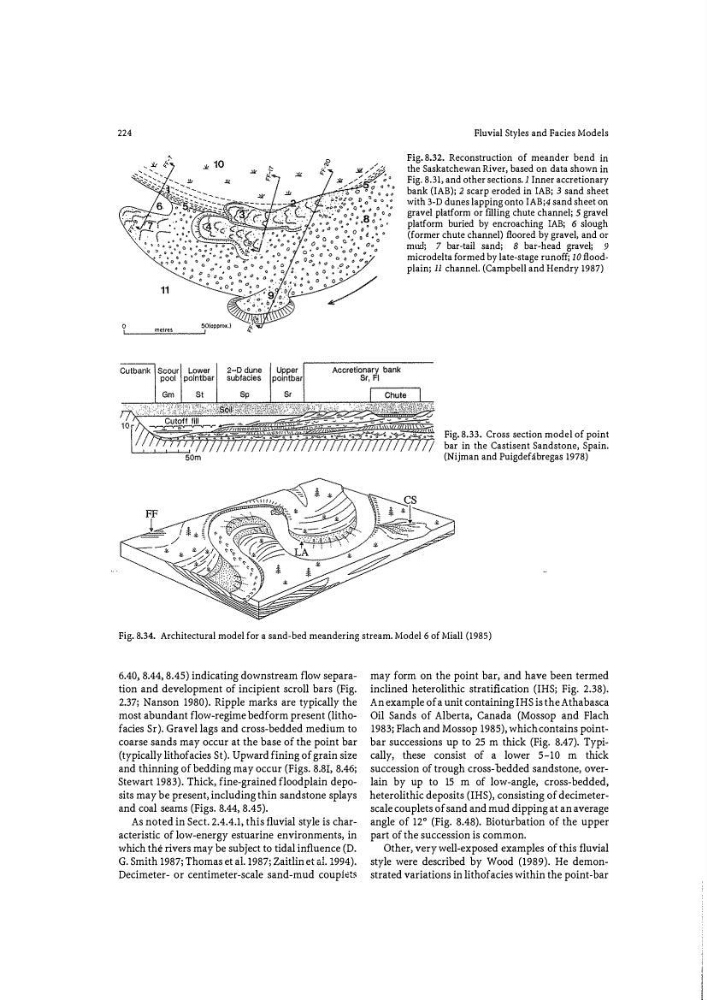
Fig. 8.32. Reconstruction of meander bend in
the Saskatchewan River, based on data shown in
Fig. 8.31, and other sections. ] Inner accretionary
bank (IAB); 2 scarp eroded in lAB; 3 sand sheet
with 3MD dunes lapping onto IAB;4 sand sheet on
gravel platform or fi lling chute channel; 5 gravel
platform buried by encroaching lAB; 6 slough
(former chute channel) floored by gravel, and or
mud; 7 bar�tail sand; 8 barMhead gravel; 9
microdelta formed by late-stage runoff; 10 floodplain; 11 channel. (Campbell and Hendry 1987)
Fig. 8.33. Cross section model of point
bar in the Castisent Sandstone, Spain.
(Nijman and Puigdef::ibregas 1978)
Fig. 8.34. Architectural model for a sand-bed meandering stream. Model 6 of Miall (1985)
6.40) 8.44, 8.45) indicating downstream flow separation and development of incipient scroll bars (Fig.
2.37; Nanson 1980). Ripple marks are typically the
most abundant flow-regime bedform present (lithofacies Sr). Gravel lags and cross-bedded medium to
coarse sands may occur at the base of the point bar
(typically lithofacies St). Upward fining of grain size
and thinning of bedding may occur (Figs. 8.8!, 8.46;
Stewart 1983). Thick, fine-grained floodplain deposits may be present, including thin sandstone splays
and coal seams (Figs. 8.44, 8.45).
As noted in Sect. 2.4.4.1, this fluvial style is characteristic of low-energy estuarine environments, in
which the rivers may be subject to tidal influence (D.
G. Smith 1987; Thomas et a1. 1987; Zaitlin et a1. 1994).
Decimeter- or centimeter-scale sand-mud couplets
may form on the point bar, and have been termed
inclined heterolithic stratification (IHS; Fig. 2.38).
An example of a unit containing IHS is the Athabasca
Oil Sands of Alberta, Canada (Mossop and Flach
1983; Flach and Mossop 1985), which contains pointbar successions up to 25 m thick (Fig. 8.47). Typically, these consist of a lower 5-10 m thick
succession of trough cross-bedded sandstone, overlain by up to 15 m of low-angle, cross-bedded,
heterolithic deposits (IHS), consisting of decimeterscale couplets of sand and mud dipping at an average
angle of 12' (Fig. 8.48). Bioturbation of the upper
part of the succession is common.
Other, very well-exposed examples of this fluvial
style were described by Wood (1989). He demonstrated variations in lithofacies within the point-bar
Fluvial Styles and Facies Models
Fig. 8.32. Reconstruction of meander bend in
the Saskatchewan River, based on data shown in
Fig. 8.31, and other sections. ] Inner accretionary
bank (IAB); 2 scarp eroded in lAB; 3 sand sheet
with 3MD dunes lapping onto IAB;4 sand sheet on
gravel platform or fi lling chute channel; 5 gravel
platform buried by encroaching lAB; 6 slough
(former chute channel) floored by gravel, and or
mud; 7 bar�tail sand; 8 barMhead gravel; 9
microdelta formed by late-stage runoff; 10 floodplain; 11 channel. (Campbell and Hendry 1987)
Fig. 8.33. Cross section model of point
bar in the Castisent Sandstone, Spain.
(Nijman and Puigdef::ibregas 1978)
Fig. 8.34. Architectural model for a sand-bed meandering stream. Model 6 of Miall (1985)
6.40) 8.44, 8.45) indicating downstream flow separation and development of incipient scroll bars (Fig.
2.37; Nanson 1980). Ripple marks are typically the
most abundant flow-regime bedform present (lithofacies Sr). Gravel lags and cross-bedded medium to
coarse sands may occur at the base of the point bar
(typically lithofacies St). Upward fining of grain size
and thinning of bedding may occur (Figs. 8.8!, 8.46;
Stewart 1983). Thick, fine-grained floodplain deposits may be present, including thin sandstone splays
and coal seams (Figs. 8.44, 8.45).
As noted in Sect. 2.4.4.1, this fluvial style is characteristic of low-energy estuarine environments, in
which the rivers may be subject to tidal influence (D.
G. Smith 1987; Thomas et a1. 1987; Zaitlin et a1. 1994).
Decimeter- or centimeter-scale sand-mud couplets
may form on the point bar, and have been termed
inclined heterolithic stratification (IHS; Fig. 2.38).
An example of a unit containing IHS is the Athabasca
Oil Sands of Alberta, Canada (Mossop and Flach
1983; Flach and Mossop 1985), which contains pointbar successions up to 25 m thick (Fig. 8.47). Typically, these consist of a lower 5-10 m thick
succession of trough cross-bedded sandstone, overlain by up to 15 m of low-angle, cross-bedded,
heterolithic deposits (IHS), consisting of decimeterscale couplets of sand and mud dipping at an average
angle of 12' (Fig. 8.48). Bioturbation of the upper
part of the succession is common.
Other, very well-exposed examples of this fluvial
style were described by Wood (1989). He demonstrated variations in lithofacies within the point-bar