

Fades Models
217
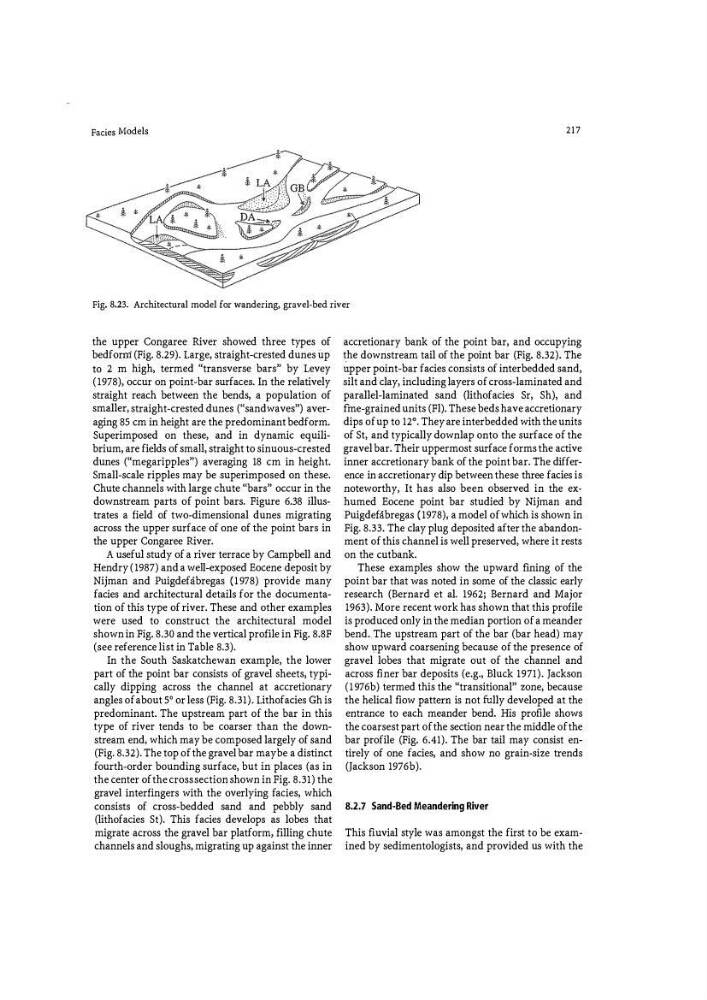
Fig. 8.23. Architectural model for wandering, gravel-bed river
the upper Congaree River showed three types of
bedform (Fig. 8.29). Large, straight-crested dunes up
to 2 m high, termed "transverse bars" by Levey
(1978), occur on point-bar surfaces. In the relatively
straight reach between the bends, a population of
smaller, straight-crested dunes («sandwaves") averaging 85 em in height are the predominant bedform.
Superimposed on these, and in dynamic equilibrium, are fields of small, straight to sinuous-crested
dunes ("megaripples") averaging 18 em in height.
Small-scale ripples may be superimposed on these.
Chute channels with large chute «bars )) occur in the
downstream parts of point bars. Figure 6.38 illustrates a field of two-dimensional dunes migrating
across the upper surface of one of the point bars in
the upper Congaree River.
A useful study of a river terrace by Campbell and
Hendry ( 1987) and a well-exposed Eocene deposit by
Nijman and Puigdefabregas {1978) provide many
facies and architectural details for the documentation of this type of river. These and other examples
were used to construct the architectural model
shown in Fig. 8.30 and the vertical profile in Fig. 8.8F
(see reference list in Table 8.3).
In the South Saskatchewan example, the lower
part of the point bar consists of gravel sheets, typically dipping across the channel at accretionary
angles of about 5' or less (Fig. 8.31). Lithofacies Gh is
predominant. The upstream part of the bar in this
type of river tends to be coarser than the downstream end, which may be composed largely of sand
(Fig. 8.32). The top of the gravel bar maybe a distinct
fourth-order bounding surface, but in places (as in
the center of the cross section shown in Fig. 8.31) the
gravel interfingers with the overlying facies, which
consists of cross-bedded sand and pebbly sand
(lithofacies St). This facies develops as lobes that
migrate across the gravel bar platform, filling chute
channels and sloughs, migrating up against the inner
accretionary bank of the point bar, and occupying
the downstream tail of the point bar (Fig. 8.32). The
u pper point-bar facies consists of interbedded sand,
silt and clay, including layers of cross-laminated and
parallel-laminated sand (lithofacies Sr, Sh), and
fm e-grained units (Fl). These beds have accretionary
dips of up to 12'. They are interbedded with the units
of St, and typically downlap onto the surface of the
gravel bar. Their uppermost surface forms the active
inner accretionary bank of the point bar. The difference in accretionary dip between these three fades is
noteworthy, It has also been observed in the exhumed Eocene point bar studied by Nijman and
Puigdefabregas {1978), a model of which is shown in
Fig. 8.33. The clay plug deposited after the abandonment of this channel is well preserved, where it rests
on the cutbank.
These examples show the upward fining of the
point bar that was noted in some of the classic early
research (Bernard et al. 1962; Bernard and Major
1963). More recent work has shown that this profile
is produced only in the median portion of a meander
bend .. The upstream part of the bar (bar head) may
show lJ.pward coarsening because of the presence of
gravel lobes that migrate out of the channel and
across finer bar deposits (e.g., Bluck 1971). jackson
(1976b) termed this the "transitional" zone, because
the helical fl ow pattern is not fully developed at the
entrance to each meander bend. His profi le shows
the coarsest part of the section near the middle of the
bar profile (Fig. 6.41). The bar tail may consist entirely of one facies, and show no grain�size trends
(Jackson 1976b).
8.2.7 Sand-Bed Meandering River
This fluvial style was amongst the first to be examined by sedimentologists, and provided us with the
217
Fig. 8.23. Architectural model for wandering, gravel-bed river
the upper Congaree River showed three types of
bedform (Fig. 8.29). Large, straight-crested dunes up
to 2 m high, termed "transverse bars" by Levey
(1978), occur on point-bar surfaces. In the relatively
straight reach between the bends, a population of
smaller, straight-crested dunes («sandwaves") averaging 85 em in height are the predominant bedform.
Superimposed on these, and in dynamic equilibrium, are fields of small, straight to sinuous-crested
dunes ("megaripples") averaging 18 em in height.
Small-scale ripples may be superimposed on these.
Chute channels with large chute «bars )) occur in the
downstream parts of point bars. Figure 6.38 illustrates a field of two-dimensional dunes migrating
across the upper surface of one of the point bars in
the upper Congaree River.
A useful study of a river terrace by Campbell and
Hendry ( 1987) and a well-exposed Eocene deposit by
Nijman and Puigdefabregas {1978) provide many
facies and architectural details for the documentation of this type of river. These and other examples
were used to construct the architectural model
shown in Fig. 8.30 and the vertical profile in Fig. 8.8F
(see reference list in Table 8.3).
In the South Saskatchewan example, the lower
part of the point bar consists of gravel sheets, typically dipping across the channel at accretionary
angles of about 5' or less (Fig. 8.31). Lithofacies Gh is
predominant. The upstream part of the bar in this
type of river tends to be coarser than the downstream end, which may be composed largely of sand
(Fig. 8.32). The top of the gravel bar maybe a distinct
fourth-order bounding surface, but in places (as in
the center of the cross section shown in Fig. 8.31) the
gravel interfingers with the overlying facies, which
consists of cross-bedded sand and pebbly sand
(lithofacies St). This facies develops as lobes that
migrate across the gravel bar platform, filling chute
channels and sloughs, migrating up against the inner
accretionary bank of the point bar, and occupying
the downstream tail of the point bar (Fig. 8.32). The
u pper point-bar facies consists of interbedded sand,
silt and clay, including layers of cross-laminated and
parallel-laminated sand (lithofacies Sr, Sh), and
fm e-grained units (Fl). These beds have accretionary
dips of up to 12'. They are interbedded with the units
of St, and typically downlap onto the surface of the
gravel bar. Their uppermost surface forms the active
inner accretionary bank of the point bar. The difference in accretionary dip between these three fades is
noteworthy, It has also been observed in the exhumed Eocene point bar studied by Nijman and
Puigdefabregas {1978), a model of which is shown in
Fig. 8.33. The clay plug deposited after the abandonment of this channel is well preserved, where it rests
on the cutbank.
These examples show the upward fining of the
point bar that was noted in some of the classic early
research (Bernard et al. 1962; Bernard and Major
1963). More recent work has shown that this profile
is produced only in the median portion of a meander
bend .. The upstream part of the bar (bar head) may
show lJ.pward coarsening because of the presence of
gravel lobes that migrate out of the channel and
across finer bar deposits (e.g., Bluck 1971). jackson
(1976b) termed this the "transitional" zone, because
the helical fl ow pattern is not fully developed at the
entrance to each meander bend. His profi le shows
the coarsest part of the section near the middle of the
bar profile (Fig. 6.41). The bar tail may consist entirely of one facies, and show no grain�size trends
(Jackson 1976b).
8.2.7 Sand-Bed Meandering River
This fluvial style was amongst the first to be examined by sedimentologists, and provided us with the