

Facies Models
201
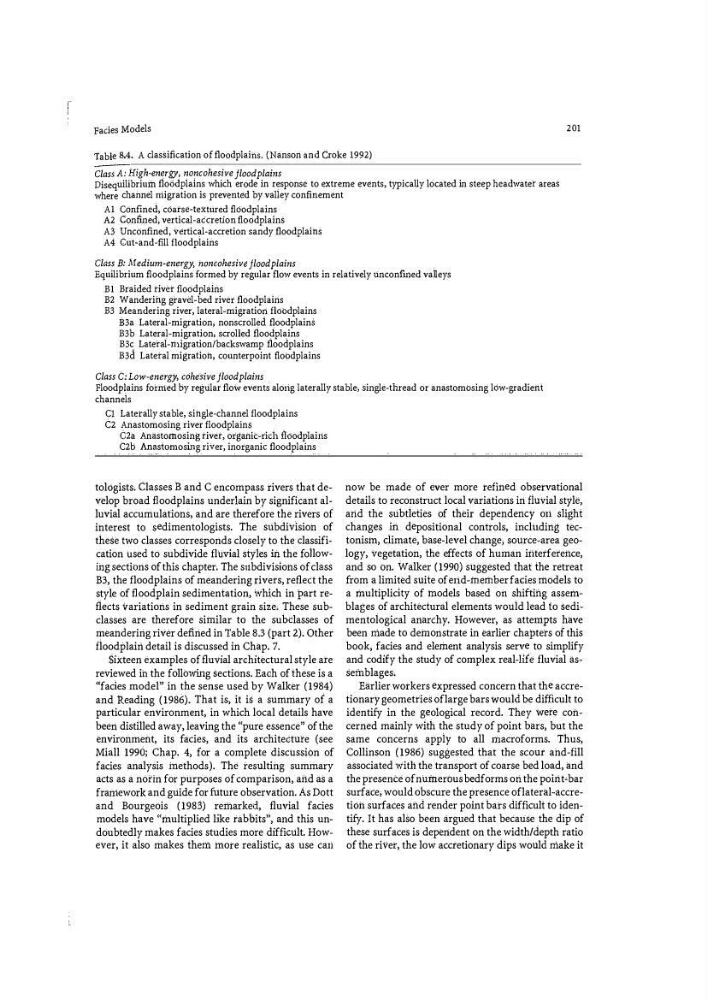
Table 8.4. A clasSification of floOdplains, (Nanson and Croke 1992)
ClasS A: Hi gh-energy, noncohesive floodplains
DiseqUilibrium floOdplains which erOde in response to extreme events, typically located in steep headwater areaS
where channel rriigration is prevented by valley confinement
Al COnfined, cOats
A3 Unconfined, vertical-accretion sandy floodplains
A4 Cut�and�flll floodplains
class B: Medium-energy, _nontohesive floodplains
Equilibrium floodplains formed by regular flow events in relatively tinconfm ed valleys
Bl Braided rivet floodplains
B2 Wanderihg gravel-bed river floodplains
B3 Meandering river, lateral-migration floodplains
:B3a Lateral-migration, nonsCrolled floodplainS
B3b Lateral-migration, scrolled floodplains
B3c Latetal-tiligration/backswamp floodplains
B3d Lateral migration, counterpoint floodplains
Class C: Low-energy, cOheSive floodplains
FloodNains formed by regular floW events alorig laterally stable; Single-thread or anastomosing lOw-gradient
channels
Cl Laterally stable, single-channel floodplains
C2 Anastomosing river floodplain$
C2a Anastomosing tivet, organk-tici1 fl6odplairts
. C2l) . � � st � mos�g .
riVer, inorganiC floodplains
toldgists. ClasseS B and C encOmpass rivers that develop broad floodplains underlain by significant alluviai accumulations) and ate therefore the rivers of
intereSt to sedimentologists. The SUbdiVision of
theSe two classes corresponds closely to the classification Used to subdivide fluvial styies iii the fo l lowing sections Of this chapter. The s-ubdivisions of class
B3, the floodplains of meandering rivets, teflec:t the
style of floodplain sedimentation, Whkh in part reflects Variations in sediment grain size; These subclasses ate therefore similar to the subclasses of
meandering river defined in Table 8.3 (part 2). Other
floodplain detail is discussed in Chap. 7.
Sixteen examples of fluVial atehitectural style ate
reviewed ih the fOllOwing Sections. Each of these is a
"facies model" in the sense used by Walker (1984)
and Reading (1986). That is, it is a summary of a
particular environment, in which local details have
beert distilled away, leaving the <
Miall 1990; Chap. 4, for a complete discussion of
facies analysis methods). The resulting summary
acts as a no tin for purposes of comparison, ahd as a
franiewotk and guide for future observation. As Dott
and Bourgeois (1983) remarked, fluvial facies
models have «multiplied l:ike rabbits", and this un�
doubtedly makes facies studies more difficult. How·
evet, it also makes them mote realistic, as use Cart
now be made of ever more refined observational
details to reconstruct local variations in fluvial style,
and the subtleties of their dependency ori siight
changes iri depositiOnal controls, iricltlding tectonism, dimate, base-level change; source-area geology, Vegetation, the effe cts of human iiitetfetertce,
and so on. Walker (1990) suggested that the retreat
fr om a limited suite of erid-inem.ber fades models to
a multiplicity of models based oh shifting assemc
blag-es of architectural elements would lead to Sedimentological anarchy. However, as attempts have
been made tO deinOri strate in earlier chapters of this
book, facies and element analysis serve tO simplify
and codify the study of complex real-Hfe fluvial assemblages.
Earlier workers expressed concern that the accretionary geometrieS oflarge bars would be difficult to
identify in the geological record. They were cOncerned mainly with the study of point bars, but the
same concerns apply to all niacroforms. Thus,
Collinson (1986) suggested that the scour and-fill
associated With the transport of coarse bed load, and
the presence of ni.IinerOus bedforms on the pohit�bar
surface; would obscure the presence oflateral-accretidh surfaces and render point bats difficult to identify. It has also been argued that because the dip of
these surfaces is dependent on the width/depth ratio
of the riVet, the low accretionary dips would make it
201
Table 8.4. A clasSification of floOdplains, (Nanson and Croke 1992)
ClasS A: Hi gh-energy, noncohesive floodplains
DiseqUilibrium floOdplains which erOde in response to extreme events, typically located in steep headwater areaS
where channel rriigration is prevented by valley confinement
Al COnfined, cOats
A3 Unconfined, vertical-accretion sandy floodplains
A4 Cut�and�flll floodplains
class B: Medium-energy, _nontohesive floodplains
Equilibrium floodplains formed by regular flow events in relatively tinconfm ed valleys
Bl Braided rivet floodplains
B2 Wanderihg gravel-bed river floodplains
B3 Meandering river, lateral-migration floodplains
:B3a Lateral-migration, nonsCrolled floodplainS
B3b Lateral-migration, scrolled floodplains
B3c Latetal-tiligration/backswamp floodplains
B3d Lateral migration, counterpoint floodplains
Class C: Low-energy, cOheSive floodplains
FloodNains formed by regular floW events alorig laterally stable; Single-thread or anastomosing lOw-gradient
channels
Cl Laterally stable, single-channel floodplains
C2 Anastomosing river floodplain$
C2a Anastomosing tivet, organk-tici1 fl6odplairts
. C2l) . � � st � mos�g .
riVer, inorganiC floodplains
toldgists. ClasseS B and C encOmpass rivers that develop broad floodplains underlain by significant alluviai accumulations) and ate therefore the rivers of
intereSt to sedimentologists. The SUbdiVision of
theSe two classes corresponds closely to the classification Used to subdivide fluvial styies iii the fo l lowing sections Of this chapter. The s-ubdivisions of class
B3, the floodplains of meandering rivets, teflec:t the
style of floodplain sedimentation, Whkh in part reflects Variations in sediment grain size; These subclasses ate therefore similar to the subclasses of
meandering river defined in Table 8.3 (part 2). Other
floodplain detail is discussed in Chap. 7.
Sixteen examples of fluVial atehitectural style ate
reviewed ih the fOllOwing Sections. Each of these is a
"facies model" in the sense used by Walker (1984)
and Reading (1986). That is, it is a summary of a
particular environment, in which local details have
beert distilled away, leaving the <
Miall 1990; Chap. 4, for a complete discussion of
facies analysis methods). The resulting summary
acts as a no tin for purposes of comparison, ahd as a
franiewotk and guide for future observation. As Dott
and Bourgeois (1983) remarked, fluvial facies
models have «multiplied l:ike rabbits", and this un�
doubtedly makes facies studies more difficult. How·
evet, it also makes them mote realistic, as use Cart
now be made of ever more refined observational
details to reconstruct local variations in fluvial style,
and the subtleties of their dependency ori siight
changes iri depositiOnal controls, iricltlding tectonism, dimate, base-level change; source-area geology, Vegetation, the effe cts of human iiitetfetertce,
and so on. Walker (1990) suggested that the retreat
fr om a limited suite of erid-inem.ber fades models to
a multiplicity of models based oh shifting assemc
blag-es of architectural elements would lead to Sedimentological anarchy. However, as attempts have
been made tO deinOri strate in earlier chapters of this
book, facies and element analysis serve tO simplify
and codify the study of complex real-Hfe fluvial assemblages.
Earlier workers expressed concern that the accretionary geometrieS oflarge bars would be difficult to
identify in the geological record. They were cOncerned mainly with the study of point bars, but the
same concerns apply to all niacroforms. Thus,
Collinson (1986) suggested that the scour and-fill
associated With the transport of coarse bed load, and
the presence of ni.IinerOus bedforms on the pohit�bar
surface; would obscure the presence oflateral-accretidh surfaces and render point bats difficult to identify. It has also been argued that because the dip of
these surfaces is dependent on the width/depth ratio
of the riVet, the low accretionary dips would make it