

162
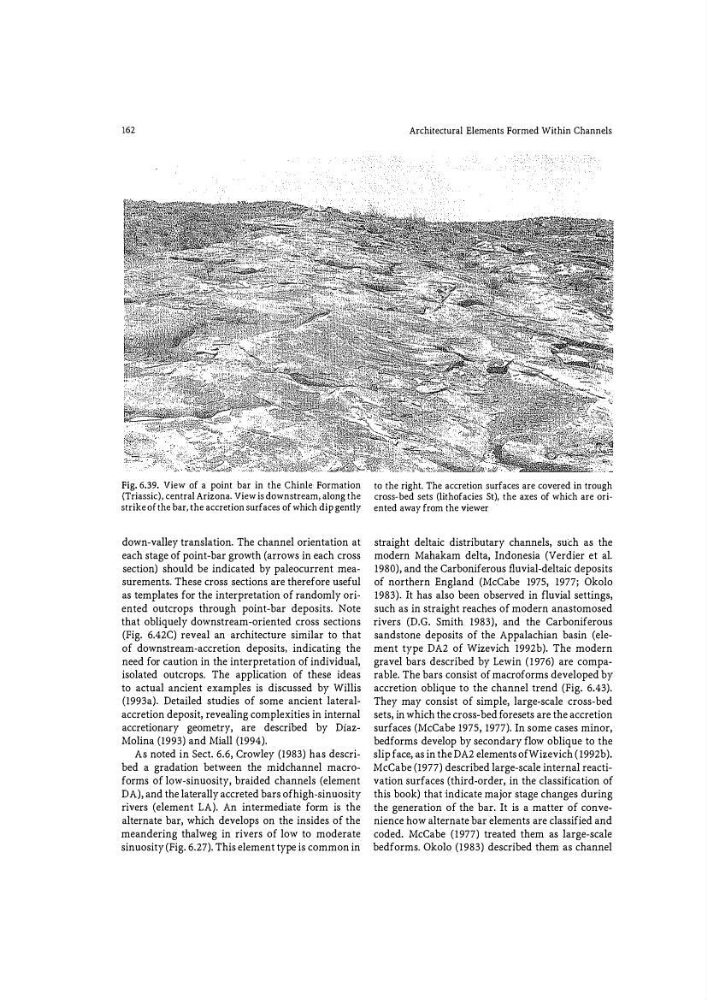
Fig. 6.39. View of a point bar in the Chinle· Formation
(Triassic), central Arizona. View is downstream, along the
strike of the bar, the accretion surfaces of which dip gently
down-valley translation. The channel orientation at
each stage of point-bar growth (arrows in each cross
section) should be indicated by paleocurrent measurements. These cross sections are therefore useful
as templates for the interpretation of randomly oriented outcrops through point-bar deposits. Note
that obliquely downstream-oriented cross sections
(Fig. 6.42C) reveal an architecture similar to that
of downstream-accretion deposits, indicating the
need for caution in the interpretation of individual,
isolated outcrops. The application of these ideas
to actual ancient examples is discussed by Willis
(1993a). Detailed studies of some ancient lateralaccretion deposit, revealing complexities in internal
accretionary geometry, are described by DiazMolina (1993) and Miall (1994).
As noted in Sect. 6.6, Crowley (1983) has described a gradation between the midchannel macroforms of low-sinuosity, braided channels (element
DA), and the laterally accreted bars ofhigh-sinuosity
rivers (element LA). An intermediate form is the
alternate bar, which develops on the insides of the
meandering thalweg in rivers of low to moderate
sinuosity (Fig. 6.27). This element type is common in
Architectural Elements Formed Within Channels
to the right. The accretion surfaces are covered in trough
cross� bed sets (lithofacies St), the axes of which are ori·
en ted away from the viewer
straight deltaic distributary channels, suCh as the
modern Mahakam delta, Indonesia (Verdier et al.
1980), and the Carboniferous fluvial-deltaic deposits
of northern England (McCabe 1975, 1977; Okolo
1983). It has also been observed in fluvial settings,
such as in straight reaches of modern anastomosed
rivers (D.G. Smith 1983), and the Carboniferous
sandstone deposits of the Appalachian basin (element type DA2 of Wizevich 1992b). The modern
gravel bars described by Lewin (1976) are compa�
rable. The bars consist of macroforms developed by
accretion oblique to the channel trend (Fig. 6.43).
They may consist of simple, large�scale cross-bed
sets, in which the cross� bed fo resets are the accretion
surfaces (McCabe 1975, 1977). In some cases minor,
bedforms develop by secondary flow oblique to the
slip face, as in the DA2 elements ofWizevich (1992b).
McCabe (1977) described large-scale internal reactivation surfaces (third�order, in the classification of
this book) that indicate major stage changes during
the generation of the bar. It is a matter of convenience how alternate bar elements are classified and
coded. McCabe (1977) treated them as large-scale
bedforms. Okolo (1983) described them as channel
Fig. 6.39. View of a point bar in the Chinle· Formation
(Triassic), central Arizona. View is downstream, along the
strike of the bar, the accretion surfaces of which dip gently
down-valley translation. The channel orientation at
each stage of point-bar growth (arrows in each cross
section) should be indicated by paleocurrent measurements. These cross sections are therefore useful
as templates for the interpretation of randomly oriented outcrops through point-bar deposits. Note
that obliquely downstream-oriented cross sections
(Fig. 6.42C) reveal an architecture similar to that
of downstream-accretion deposits, indicating the
need for caution in the interpretation of individual,
isolated outcrops. The application of these ideas
to actual ancient examples is discussed by Willis
(1993a). Detailed studies of some ancient lateralaccretion deposit, revealing complexities in internal
accretionary geometry, are described by DiazMolina (1993) and Miall (1994).
As noted in Sect. 6.6, Crowley (1983) has described a gradation between the midchannel macroforms of low-sinuosity, braided channels (element
DA), and the laterally accreted bars ofhigh-sinuosity
rivers (element LA). An intermediate form is the
alternate bar, which develops on the insides of the
meandering thalweg in rivers of low to moderate
sinuosity (Fig. 6.27). This element type is common in
Architectural Elements Formed Within Channels
to the right. The accretion surfaces are covered in trough
cross� bed sets (lithofacies St), the axes of which are ori·
en ted away from the viewer
straight deltaic distributary channels, suCh as the
modern Mahakam delta, Indonesia (Verdier et al.
1980), and the Carboniferous fluvial-deltaic deposits
of northern England (McCabe 1975, 1977; Okolo
1983). It has also been observed in fluvial settings,
such as in straight reaches of modern anastomosed
rivers (D.G. Smith 1983), and the Carboniferous
sandstone deposits of the Appalachian basin (element type DA2 of Wizevich 1992b). The modern
gravel bars described by Lewin (1976) are compa�
rable. The bars consist of macroforms developed by
accretion oblique to the channel trend (Fig. 6.43).
They may consist of simple, large�scale cross-bed
sets, in which the cross� bed fo resets are the accretion
surfaces (McCabe 1975, 1977). In some cases minor,
bedforms develop by secondary flow oblique to the
slip face, as in the DA2 elements ofWizevich (1992b).
McCabe (1977) described large-scale internal reactivation surfaces (third�order, in the classification of
this book) that indicate major stage changes during
the generation of the bar. It is a matter of convenience how alternate bar elements are classified and
coded. McCabe (1977) treated them as large-scale
bedforms. Okolo (1983) described them as channel