

Sandy Bedforms (Element SB)
succession generated during high-stage flow conditions. Not all linguoid bedforms fields seem to be
interp retable in terms of Crowley's (1983) macroform hypothesis - the distinctive meandering main
channel of Crowley (!983; his Fig. lOA) is not present
in much of the Platte River (Blodgett and Stanley
1980; their Figs. 2, 3), and even where the macroforms are present the complete sequence may not be
preserved. Miall's (1977) original Platte model may
therefore still have its uses, but clearly the search for
the rnacroform architecture should be pursued
wherever possible.
Bar-Tap Assemblages. Many workers have described the
characteristic small-scale. cross-bedding that occurs
in shallow areas of active channels, particularly on
bar tops. Various types of ripple cross-lamination
(lithofacies Sr) are the result. These small-scale
structures are typically deposited during falling water and, where preserved, their capping of larger
bedforms or bars produces local fining-upward sequences. Such sequences are almost ubiquitous in
fluvial environments and their occurrence has little
diagnostic value in terms of fluvial style.
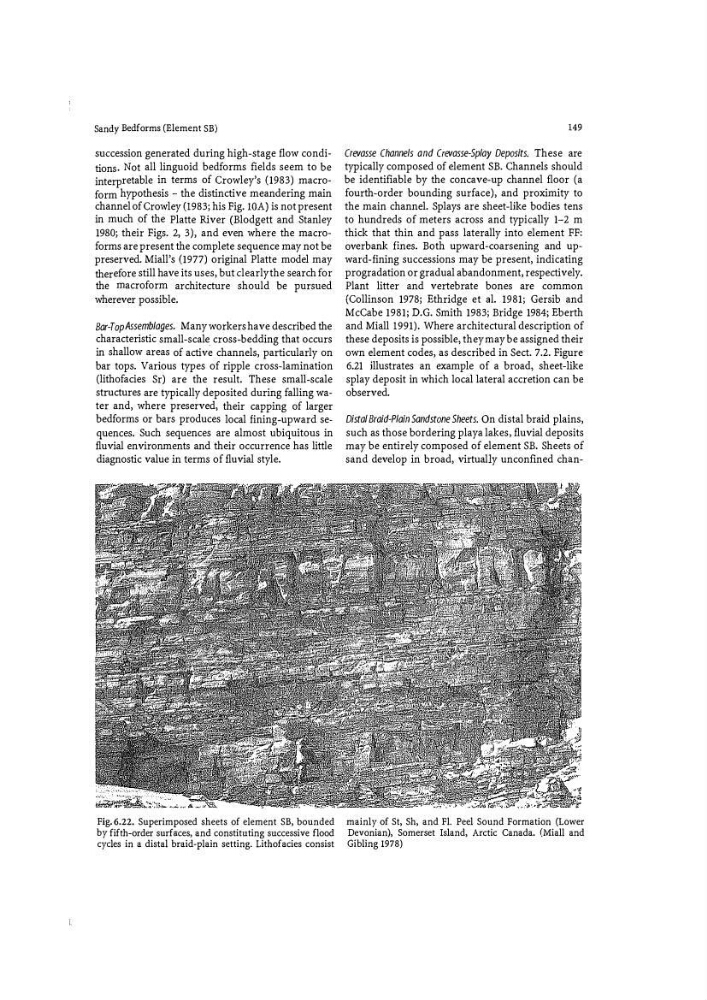
Fig. 6.22. Superimposed sheets of element SB, bounded
by fifth-order surfa:ces, and constituting successive flood
cycles in a distal braid-plain setting. Lithofacies consist
!49
Crevasse Channels and Crevasse-Splay Deposits. These are
typically composed of element SB. Channels should
be identifiable by the concave-up channel floor (a
fourth-order bounding surface), and proximity to
the main channel. Splays are sheet-like bodies tens
to hundreds of meters across and typically 1-2 m
thick that thin and pass laterally into element FF:
overbank fines. Both upward-coarsening and upward-fining successions may be present, indicating
progradation or gradual abandonment, respectively.
Plant litter and vertebrate bones are common
(Collinson 1978; Ethridge et al. 1981; Gersib and
McCabe 1981; D.G. Smith 1983; Bridge 1984; Eberth
and Miall !991). Where architectural description of
these deposits is possible, they may be assigned their
own element codes, as described in Sect. 7 .2. Figure
6.21 illustrates an example of a broad, sheet-like
splay deposit in which local lateral accretion can be
observed.
Distal Braid-Plain Sandstone Sheets. On distal braid plains,
such as those bordering playa lakes, fluvial deposits
may be entirely composed of element SB. Sheets of
sand develop in broad, virtually unconfined chanmainly of St, Sh, and Fl. Peel Sound Formation (Lower
Devonian), Somerset Island, Arctic Canada. {Miall and
Gibling 1978)
succession generated during high-stage flow conditions. Not all linguoid bedforms fields seem to be
interp retable in terms of Crowley's (1983) macroform hypothesis - the distinctive meandering main
channel of Crowley (!983; his Fig. lOA) is not present
in much of the Platte River (Blodgett and Stanley
1980; their Figs. 2, 3), and even where the macroforms are present the complete sequence may not be
preserved. Miall's (1977) original Platte model may
therefore still have its uses, but clearly the search for
the rnacroform architecture should be pursued
wherever possible.
Bar-Tap Assemblages. Many workers have described the
characteristic small-scale. cross-bedding that occurs
in shallow areas of active channels, particularly on
bar tops. Various types of ripple cross-lamination
(lithofacies Sr) are the result. These small-scale
structures are typically deposited during falling water and, where preserved, their capping of larger
bedforms or bars produces local fining-upward sequences. Such sequences are almost ubiquitous in
fluvial environments and their occurrence has little
diagnostic value in terms of fluvial style.
Fig. 6.22. Superimposed sheets of element SB, bounded
by fifth-order surfa:ces, and constituting successive flood
cycles in a distal braid-plain setting. Lithofacies consist
!49
Crevasse Channels and Crevasse-Splay Deposits. These are
typically composed of element SB. Channels should
be identifiable by the concave-up channel floor (a
fourth-order bounding surface), and proximity to
the main channel. Splays are sheet-like bodies tens
to hundreds of meters across and typically 1-2 m
thick that thin and pass laterally into element FF:
overbank fines. Both upward-coarsening and upward-fining successions may be present, indicating
progradation or gradual abandonment, respectively.
Plant litter and vertebrate bones are common
(Collinson 1978; Ethridge et al. 1981; Gersib and
McCabe 1981; D.G. Smith 1983; Bridge 1984; Eberth
and Miall !991). Where architectural description of
these deposits is possible, they may be assigned their
own element codes, as described in Sect. 7 .2. Figure
6.21 illustrates an example of a broad, sheet-like
splay deposit in which local lateral accretion can be
observed.
Distal Braid-Plain Sandstone Sheets. On distal braid plains,
such as those bordering playa lakes, fluvial deposits
may be entirely composed of element SB. Sheets of
sand develop in broad, virtually unconfined chanmainly of St, Sh, and Fl. Peel Sound Formation (Lower
Devonian), Somerset Island, Arctic Canada. {Miall and
Gibling 1978)