

c
Fine-Grained Clastic Facies
',�.·>�: · � · .- : ' -: :.
··z-.. ·.
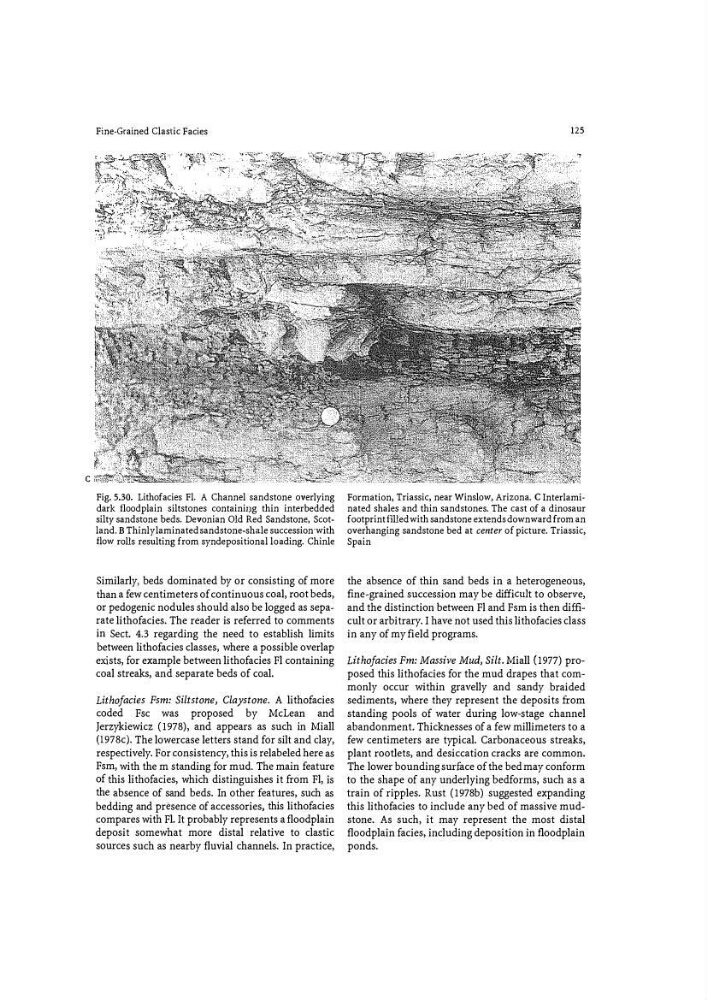
Fig. 5.30. Lithofacies Fl. A Channel sandstone overlying
dark floodplain siltstones containii;J. g thin interbedded
silty sandstone beds. Devonian Old Red Sandstone, Scot�
land. B Thinly laminated sandstone�shale succession-with
flow rolls resulting from syndepositional loading. Chinle
Similarly, beds dominated by or consisting of more
than a few centimeters of continuous coal, root beds,
or pedogenic nodules should also be logged as separate lithofacies. The reader is referred to comments
in Sect. 4.3 regarding the need to establish limits
between lithofacies classes, where a possible overlap
exists, for example between lithofacies Fl containing
coal streaks, and separate beds of coal.
Lithofacies Fs m: Siltstone, Claystone. A lithofacies
coded Fsc was proposed by McLean and
)erzykiewicz (1978), and appears as such in Miall
(1978c). The lowercase letters stand for silt and clay,
respectively. For consistency, this is relabeled here as
Fsm, with the m standing for mud. The main feature
of this lithofacies, which distinguishes it from Fl, is
the absence of sand beds. In other features, such as
bedding and presence of accessories, this lithofacies
compares with Fl. It probably represents a floodplain
deposit somewhat more distal relative to clastic
sources such as nearby fluvial channels. In practice,
125
Formation, Triassic, near Winslow, Arizona. C Interlaminated shales and thin sandstones. The cast of a dinosaur
footprint filled with sandstone extends downward from an
overhanging sandstone bed at center of picture. Triassic,
Spain
the absence of thin sand beds in a heterogeneous,
fine-grained succession may be diffiqlit to observe,
and the distinction between Fl and Fsm is then difficult or arbitrary. I have not used this lithofacies class
in any of my field programs.
Lithofa cies Fm: Massive Mud, Silt. Miall (1977) proposed this lithofacies for the mud drapes that commonly occur within gravelly and sandy braided
sediments, where they represent the deposits from
standing pools of water during low-stage channel
abandonment. Thicknesses of a few millimeters to a
few centimeters are typical. Carbonaceous streaks,
plant rootlets, and desiccation cracks are common.
The lower bounding surfuce of the bed may conform
to the shape of any underlying bedforms, such as a
train of ripples. Rust (1978b) suggested expanding
this lithofacies to include any bed of massive mudstone. As such, it may represent the most distal
floodplain facies, including deposition in floodplain
ponds.
Fine-Grained Clastic Facies
',�.·>�: · � · .- : ' -: :.
··z-.. ·.
Fig. 5.30. Lithofacies Fl. A Channel sandstone overlying
dark floodplain siltstones containii;J. g thin interbedded
silty sandstone beds. Devonian Old Red Sandstone, Scot�
land. B Thinly laminated sandstone�shale succession-with
flow rolls resulting from syndepositional loading. Chinle
Similarly, beds dominated by or consisting of more
than a few centimeters of continuous coal, root beds,
or pedogenic nodules should also be logged as separate lithofacies. The reader is referred to comments
in Sect. 4.3 regarding the need to establish limits
between lithofacies classes, where a possible overlap
exists, for example between lithofacies Fl containing
coal streaks, and separate beds of coal.
Lithofacies Fs m: Siltstone, Claystone. A lithofacies
coded Fsc was proposed by McLean and
)erzykiewicz (1978), and appears as such in Miall
(1978c). The lowercase letters stand for silt and clay,
respectively. For consistency, this is relabeled here as
Fsm, with the m standing for mud. The main feature
of this lithofacies, which distinguishes it from Fl, is
the absence of sand beds. In other features, such as
bedding and presence of accessories, this lithofacies
compares with Fl. It probably represents a floodplain
deposit somewhat more distal relative to clastic
sources such as nearby fluvial channels. In practice,
125
Formation, Triassic, near Winslow, Arizona. C Interlaminated shales and thin sandstones. The cast of a dinosaur
footprint filled with sandstone extends downward from an
overhanging sandstone bed at center of picture. Triassic,
Spain
the absence of thin sand beds in a heterogeneous,
fine-grained succession may be diffiqlit to observe,
and the distinction between Fl and Fsm is then difficult or arbitrary. I have not used this lithofacies class
in any of my field programs.
Lithofa cies Fm: Massive Mud, Silt. Miall (1977) proposed this lithofacies for the mud drapes that commonly occur within gravelly and sandy braided
sediments, where they represent the deposits from
standing pools of water during low-stage channel
abandonment. Thicknesses of a few millimeters to a
few centimeters are typical. Carbonaceous streaks,
plant rootlets, and desiccation cracks are common.
The lower bounding surfuce of the bed may conform
to the shape of any underlying bedforms, such as a
train of ripples. Rust (1978b) suggested expanding
this lithofacies to include any bed of massive mudstone. As such, it may represent the most distal
floodplain facies, including deposition in floodplain
ponds.