

10
J. Zhao et al.
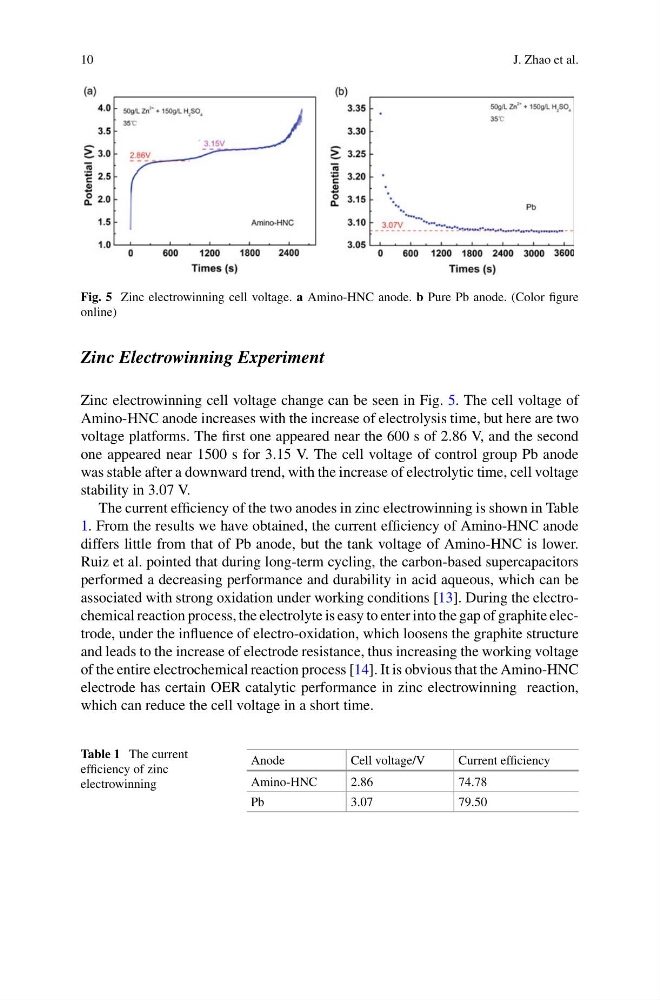
Fig. 5 Zinc electrowinning cell voltage. a Amino-HNC anode. b Pure Pb anode. (Color figure
online)
Zinc Electrowinning Experiment
Zinc electrowinning cell voltage change can be seen in Fig. 5. The cell voltage of
Amino-HNC anode increases with the increase of electrolysis time, but here are two
voltage platforms. The first one appeared near the 600 s of 2.86 V, and the second
one appeared near 1500 s for 3.15 V. The cell voltage of control group Pb anode
was stable after a downward trend, with the increase of electrolytic time, cell voltage
stability in 3.07 V.
The current efficiency of the two anodes in zinc electrowinning is shown in Table
1. From the results we have obtained, the current efficiency of Amino-HNC anode
differs little from that of Pb anode, but the tank voltage of Amino-HNC is lower.
Ruiz et al. pointed that during long-term cycling, the carbon-based supercapacitors
performed a decreasing performance and durability in acid aqueous, which can be
associated with strong oxidation under working conditions [13]. During the electrochemical reaction process, the electrolyte is easy to enter into the gap of graphite electrode, under the influence of electro-oxidation, which loosens the graphite structure
and leads to the increase of electrode resistance, thus increasing the working voltage
of the entire electrochemical reaction process [14]. It is obvious that the Amino-HNC
electrode has certain OER catalytic performance in zinc electrowinning reaction,
which can reduce the cell voltage in a short time.
Table 1 The current
efficiency of zinc
electrowinning
Anode
Cell voltage/V
Current efficiency
Amino-HNC
2.86
74.78
Pb
3.07
79.50
J. Zhao et al.
Fig. 5 Zinc electrowinning cell voltage. a Amino-HNC anode. b Pure Pb anode. (Color figure
online)
Zinc Electrowinning Experiment
Zinc electrowinning cell voltage change can be seen in Fig. 5. The cell voltage of
Amino-HNC anode increases with the increase of electrolysis time, but here are two
voltage platforms. The first one appeared near the 600 s of 2.86 V, and the second
one appeared near 1500 s for 3.15 V. The cell voltage of control group Pb anode
was stable after a downward trend, with the increase of electrolytic time, cell voltage
stability in 3.07 V.
The current efficiency of the two anodes in zinc electrowinning is shown in Table
1. From the results we have obtained, the current efficiency of Amino-HNC anode
differs little from that of Pb anode, but the tank voltage of Amino-HNC is lower.
Ruiz et al. pointed that during long-term cycling, the carbon-based supercapacitors
performed a decreasing performance and durability in acid aqueous, which can be
associated with strong oxidation under working conditions [13]. During the electrochemical reaction process, the electrolyte is easy to enter into the gap of graphite electrode, under the influence of electro-oxidation, which loosens the graphite structure
and leads to the increase of electrode resistance, thus increasing the working voltage
of the entire electrochemical reaction process [14]. It is obvious that the Amino-HNC
electrode has certain OER catalytic performance in zinc electrowinning reaction,
which can reduce the cell voltage in a short time.
Table 1 The current
efficiency of zinc
electrowinning
Anode
Cell voltage/V
Current efficiency
Amino-HNC
2.86
74.78
Pb
3.07
79.50