

Prediction Model of Converter Oxygen Consumption Based on Recursive …
109
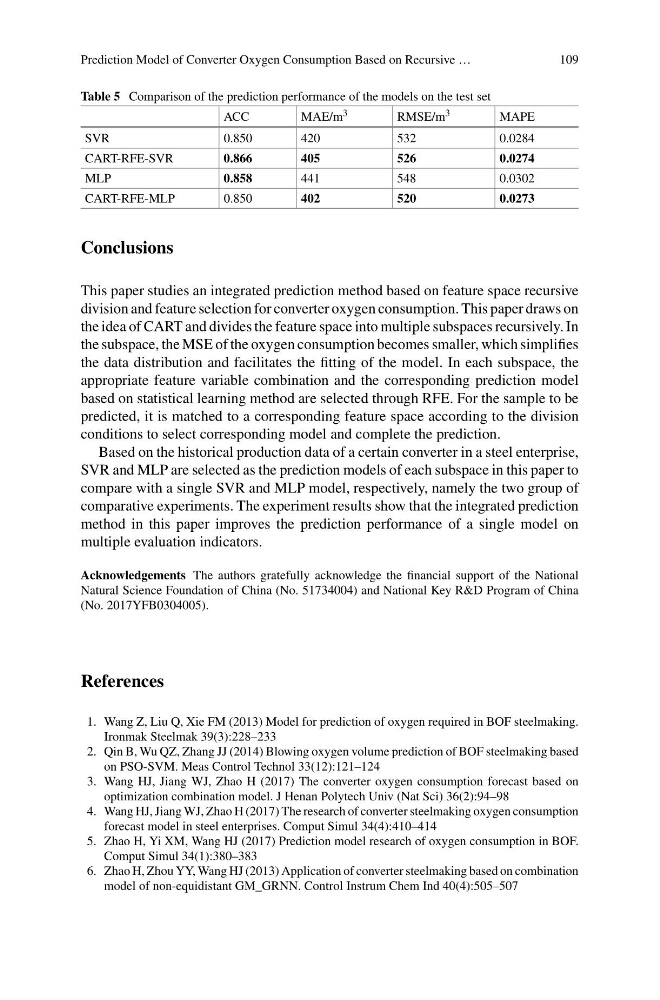
Table 5 Comparison of the prediction performance of the models on the test set
ACC
MAE/m 3
RMSE/m 3
MAPE
SVR
0.850
420
532
0.0284
CART-RFE-SVR
0.866
405
526
0.0274
MLP
0.858
441
548
0.0302
CART-RFE-MLP
0.850
402
520
0.0273
Conclusions
This paper studies an integrated prediction method based on feature space recursive
division and feature selection for converter oxygen consumption. This paper draws on
the idea of CART and divides the feature space into multiple subspaces recursively. In
the subspace, the MSE of the oxygen consumption becomes smaller, which simplifies
the data distribution and facilitates the fitting of the model. In each subspace, the
appropriate feature variable combination and the corresponding prediction model
based on statistical learning method are selected through RFE. For the sample to be
predicted, it is matched to a corresponding feature space according to the division
conditions to select corresponding model and complete the prediction.
Based on the historical production data of a certain converter in a steel enterprise,
SVR and MLP are selected as the prediction models of each subspace in this paper to
compare with a single SVR and MLP model, respectively, namely the two group of
comparative experiments. The experiment results show that the integrated prediction
method in this paper improves the prediction performance of a single model on
multiple evaluation indicators.
Acknowledgements The authors gratefully acknowledge the financial support of the National
Natural Science Foundation of China (No. 51734004) and National Key R&D Program of China
(No. 2017YFB0304005).
References
1. Wang Z, Liu Q, Xie FM (2013) Model for prediction of oxygen required in BOF steelmaking.
Ironmak Steelmak 39(3):228–233
2. Qin B, Wu QZ, Zhang JJ (2014) Blowing oxygen volume prediction of BOF steelmaking based
on PSO-SVM. Meas Control Technol 33(12):121–124
3. Wang HJ, Jiang WJ, Zhao H (2017) The converter oxygen consumption forecast based on
optimization combination model. J Henan Polytech Univ (Nat Sci) 36(2):94–98
4. Wang HJ, Jiang WJ, Zhao H (2017) The research of converter steelmaking oxygen consumption
forecast model in steel enterprises. Comput Simul 34(4):410–414
5. Zhao H, Yi XM, Wang HJ (2017) Prediction model research of oxygen consumption in BOF.
Comput Simul 34(1):380–383
6. Zhao H, Zhou YY, Wang HJ (2013) Application of converter steelmaking based on combination
model of non-equidistant GM_GRNN. Control Instrum Chem Ind 40(4):505–507
109
Table 5 Comparison of the prediction performance of the models on the test set
ACC
MAE/m 3
RMSE/m 3
MAPE
SVR
0.850
420
532
0.0284
CART-RFE-SVR
0.866
405
526
0.0274
MLP
0.858
441
548
0.0302
CART-RFE-MLP
0.850
402
520
0.0273
Conclusions
This paper studies an integrated prediction method based on feature space recursive
division and feature selection for converter oxygen consumption. This paper draws on
the idea of CART and divides the feature space into multiple subspaces recursively. In
the subspace, the MSE of the oxygen consumption becomes smaller, which simplifies
the data distribution and facilitates the fitting of the model. In each subspace, the
appropriate feature variable combination and the corresponding prediction model
based on statistical learning method are selected through RFE. For the sample to be
predicted, it is matched to a corresponding feature space according to the division
conditions to select corresponding model and complete the prediction.
Based on the historical production data of a certain converter in a steel enterprise,
SVR and MLP are selected as the prediction models of each subspace in this paper to
compare with a single SVR and MLP model, respectively, namely the two group of
comparative experiments. The experiment results show that the integrated prediction
method in this paper improves the prediction performance of a single model on
multiple evaluation indicators.
Acknowledgements The authors gratefully acknowledge the financial support of the National
Natural Science Foundation of China (No. 51734004) and National Key R&D Program of China
(No. 2017YFB0304005).
References
1. Wang Z, Liu Q, Xie FM (2013) Model for prediction of oxygen required in BOF steelmaking.
Ironmak Steelmak 39(3):228–233
2. Qin B, Wu QZ, Zhang JJ (2014) Blowing oxygen volume prediction of BOF steelmaking based
on PSO-SVM. Meas Control Technol 33(12):121–124
3. Wang HJ, Jiang WJ, Zhao H (2017) The converter oxygen consumption forecast based on
optimization combination model. J Henan Polytech Univ (Nat Sci) 36(2):94–98
4. Wang HJ, Jiang WJ, Zhao H (2017) The research of converter steelmaking oxygen consumption
forecast model in steel enterprises. Comput Simul 34(4):410–414
5. Zhao H, Yi XM, Wang HJ (2017) Prediction model research of oxygen consumption in BOF.
Comput Simul 34(1):380–383
6. Zhao H, Zhou YY, Wang HJ (2013) Application of converter steelmaking based on combination
model of non-equidistant GM_GRNN. Control Instrum Chem Ind 40(4):505–507