

30
4 Scientific Literature Review for Establishing the Status …
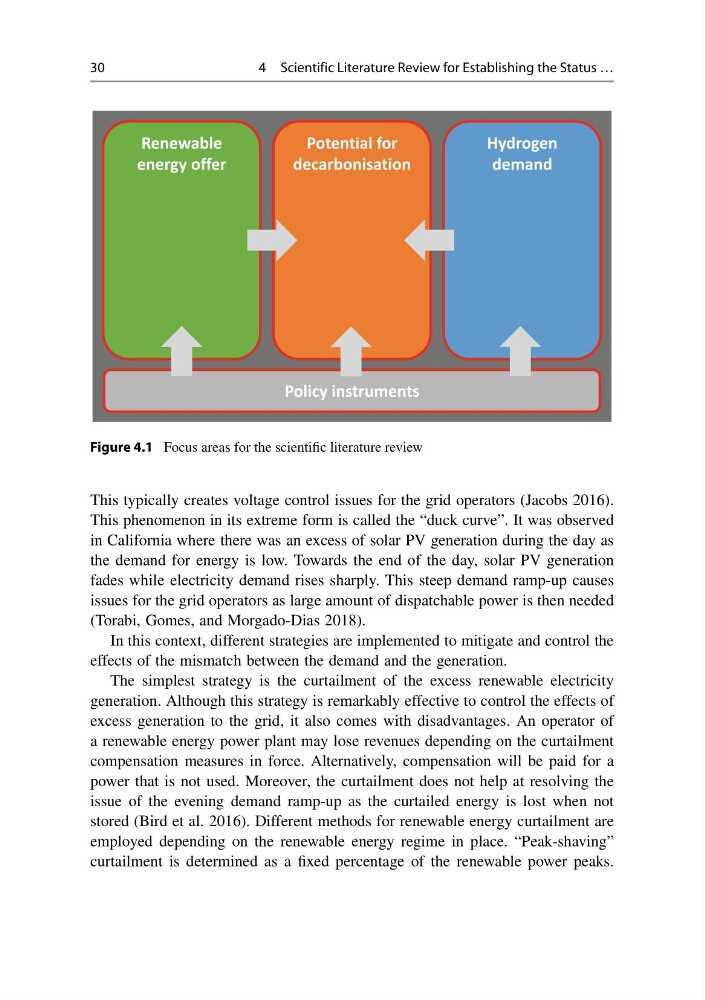
Figure 4.1 Focus areas for the scientific literature review
This typically creates voltage control issues for the grid operators (Jacobs 2016).
This phenomenon in its extreme form is called the “duck curve”. It was observed
in California where there was an excess of solar PV generation during the day as
the demand for energy is low. Towards the end of the day, solar PV generation
fades while electricity demand rises sharply. This steep demand ramp-up causes
issues for the grid operators as large amount of dispatchable power is then needed
(Torabi, Gomes, and Morgado-Dias 2018).
In this context, different strategies are implemented to mitigate and control the
effects of the mismatch between the demand and the generation.
The simplest strategy is the curtailment of the excess renewable electricity
generation. Although this strategy is remarkably effective to control the effects of
excess generation to the grid, it also comes with disadvantages. An operator of
a renewable energy power plant may lose revenues depending on the curtailment
compensation measures in force. Alternatively, compensation will be paid for a
power that is not used. Moreover, the curtailment does not help at resolving the
issue of the evening demand ramp-up as the curtailed energy is lost when not
stored (Bird et al. 2016). Different methods for renewable energy curtailment are
employed depending on the renewable energy regime in place. “Peak-shaving”
curtailment is determined as a fixed percentage of the renewable power peaks.
4 Scientific Literature Review for Establishing the Status …
Figure 4.1 Focus areas for the scientific literature review
This typically creates voltage control issues for the grid operators (Jacobs 2016).
This phenomenon in its extreme form is called the “duck curve”. It was observed
in California where there was an excess of solar PV generation during the day as
the demand for energy is low. Towards the end of the day, solar PV generation
fades while electricity demand rises sharply. This steep demand ramp-up causes
issues for the grid operators as large amount of dispatchable power is then needed
(Torabi, Gomes, and Morgado-Dias 2018).
In this context, different strategies are implemented to mitigate and control the
effects of the mismatch between the demand and the generation.
The simplest strategy is the curtailment of the excess renewable electricity
generation. Although this strategy is remarkably effective to control the effects of
excess generation to the grid, it also comes with disadvantages. An operator of
a renewable energy power plant may lose revenues depending on the curtailment
compensation measures in force. Alternatively, compensation will be paid for a
power that is not used. Moreover, the curtailment does not help at resolving the
issue of the evening demand ramp-up as the curtailed energy is lost when not
stored (Bird et al. 2016). Different methods for renewable energy curtailment are
employed depending on the renewable energy regime in place. “Peak-shaving”
curtailment is determined as a fixed percentage of the renewable power peaks.