

4.1 Selection and Evaluation of Relevant Research Approaches
69
Simulation-based
optimization of the energy
efficiency in production (IV)
Modeling &
Simulation (M&S)
Operations
Management (OM)
Operations
Research (OR)
Integration of
energy efficiency
goals in
production
M&S techniques
for model
implementation
and execution
Use of integrated
optimization
algorithms
Studies on simulation-based
modeling of the energy demand
in production systems (II)
Studies on simulation-based
optimization in the context of
production systems (III)
Studies on the optimization
of the energy demand in
production systems (I)
(II)
(III)
(I)
(IV)
(I)
(II)
(III)
(IV)
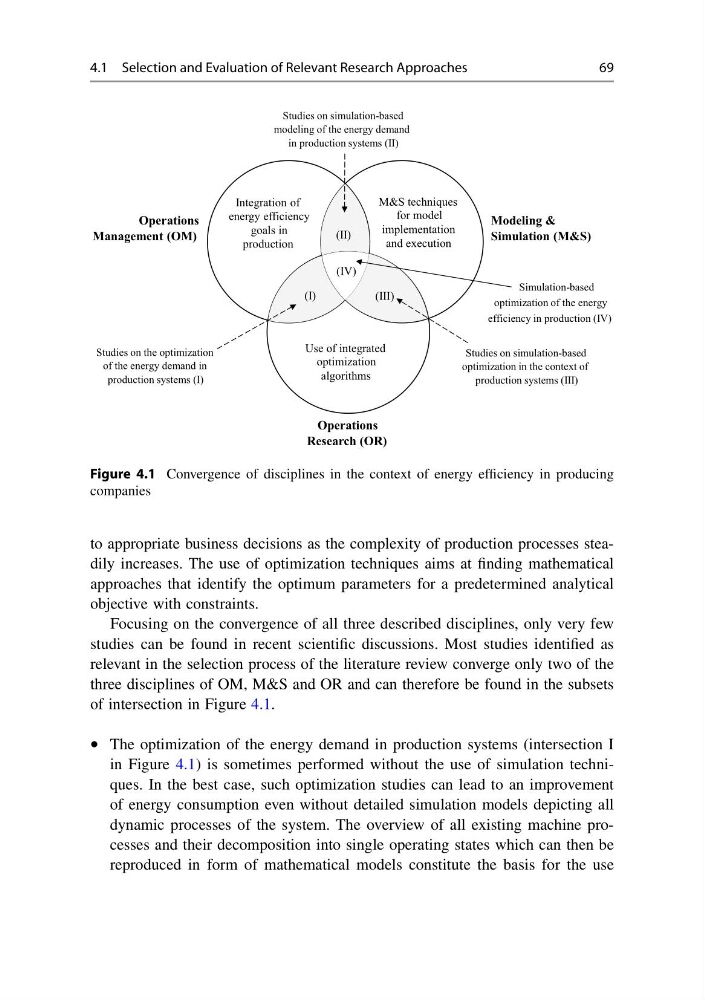
Figure 4.1 Convergence of disciplines in the context of energy efficiency in producing
companies
to appropriate business decisions as the complexity of production processes steadily increases. The use of optimization techniques aims at finding mathematical
approaches that identify the optimum parameters for a predetermined analytical
objective with constraints.
Focusing on the convergence of all three described disciplines, only very few
studies can be found in recent scientific discussions. Most studies identified as
relevant in the selection process of the literature review converge only two of the
three disciplines of OM, M&S and OR and can therefore be found in the subsets
of intersection in Figure 4.1.
• The optimization of the energy demand in production systems (intersection I
in Figure 4.1) is sometimes performed without the use of simulation techniques. In the best case, such optimization studies can lead to an improvement
of energy consumption even without detailed simulation models depicting all
dynamic processes of the system. The overview of all existing machine processes and their decomposition into single operating states which can then be
reproduced in form of mathematical models constitute the basis for the use
69
Simulation-based
optimization of the energy
efficiency in production (IV)
Modeling &
Simulation (M&S)
Operations
Management (OM)
Operations
Research (OR)
Integration of
energy efficiency
goals in
production
M&S techniques
for model
implementation
and execution
Use of integrated
optimization
algorithms
Studies on simulation-based
modeling of the energy demand
in production systems (II)
Studies on simulation-based
optimization in the context of
production systems (III)
Studies on the optimization
of the energy demand in
production systems (I)
(II)
(III)
(I)
(IV)
(I)
(II)
(III)
(IV)
Figure 4.1 Convergence of disciplines in the context of energy efficiency in producing
companies
to appropriate business decisions as the complexity of production processes steadily increases. The use of optimization techniques aims at finding mathematical
approaches that identify the optimum parameters for a predetermined analytical
objective with constraints.
Focusing on the convergence of all three described disciplines, only very few
studies can be found in recent scientific discussions. Most studies identified as
relevant in the selection process of the literature review converge only two of the
three disciplines of OM, M&S and OR and can therefore be found in the subsets
of intersection in Figure 4.1.
• The optimization of the energy demand in production systems (intersection I
in Figure 4.1) is sometimes performed without the use of simulation techniques. In the best case, such optimization studies can lead to an improvement
of energy consumption even without detailed simulation models depicting all
dynamic processes of the system. The overview of all existing machine processes and their decomposition into single operating states which can then be
reproduced in form of mathematical models constitute the basis for the use