

62
3 Energy
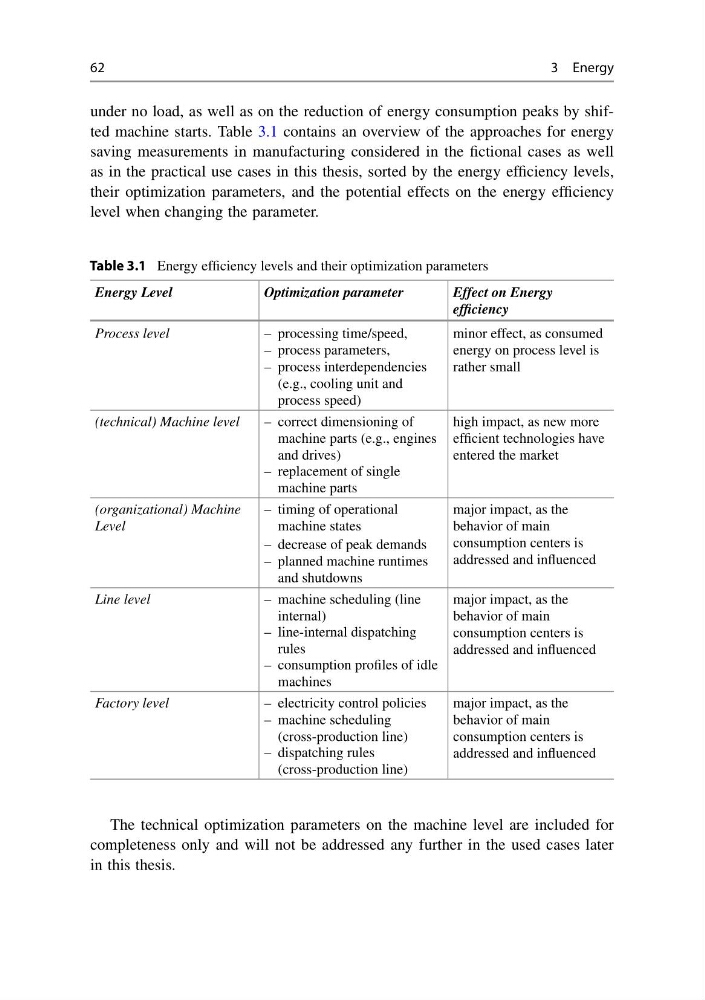
under no load, as well as on the reduction of energy consumption peaks by shifted machine starts. Table 3.1 contains an overview of the approaches for energy
saving measurements in manufacturing considered in the fictional cases as well
as in the practical use cases in this thesis, sorted by the energy efficiency levels,
their optimization parameters, and the potential effects on the energy efficiency
level when changing the parameter.
Table 3.1 Energy efficiency levels and their optimization parameters
Energy Level
Optimization parameter
Effect on Energy
efficiency
Process level
– processing time/speed,
– process parameters,
– process interdependencies
(e.g., cooling unit and
process speed)
minor effect, as consumed
energy on process level is
rather small
(technical) Machine level
– correct dimensioning of
machine parts (e.g., engines
and drives)
– replacement of single
machine parts
high impact, as new more
efficient technologies have
entered the market
(organizational) Machine
Level
– timing of operational
machine states
– decrease of peak demands
– planned machine runtimes
and shutdowns
major impact, as the
behavior of main
consumption centers is
addressed and influenced
Line level
– machine scheduling (line
internal)
– line-internal dispatching
rules
– consumption profiles of idle
machines
major impact, as the
behavior of main
consumption centers is
addressed and influenced
Factory level
– electricity control policies
– machine scheduling
(cross-production line)
– dispatching rules
(cross-production line)
major impact, as the
behavior of main
consumption centers is
addressed and influenced
The technical optimization parameters on the machine level are included for
completeness only and will not be addressed any further in the used cases later
in this thesis.
3 Energy
under no load, as well as on the reduction of energy consumption peaks by shifted machine starts. Table 3.1 contains an overview of the approaches for energy
saving measurements in manufacturing considered in the fictional cases as well
as in the practical use cases in this thesis, sorted by the energy efficiency levels,
their optimization parameters, and the potential effects on the energy efficiency
level when changing the parameter.
Table 3.1 Energy efficiency levels and their optimization parameters
Energy Level
Optimization parameter
Effect on Energy
efficiency
Process level
– processing time/speed,
– process parameters,
– process interdependencies
(e.g., cooling unit and
process speed)
minor effect, as consumed
energy on process level is
rather small
(technical) Machine level
– correct dimensioning of
machine parts (e.g., engines
and drives)
– replacement of single
machine parts
high impact, as new more
efficient technologies have
entered the market
(organizational) Machine
Level
– timing of operational
machine states
– decrease of peak demands
– planned machine runtimes
and shutdowns
major impact, as the
behavior of main
consumption centers is
addressed and influenced
Line level
– machine scheduling (line
internal)
– line-internal dispatching
rules
– consumption profiles of idle
machines
major impact, as the
behavior of main
consumption centers is
addressed and influenced
Factory level
– electricity control policies
– machine scheduling
(cross-production line)
– dispatching rules
(cross-production line)
major impact, as the
behavior of main
consumption centers is
addressed and influenced
The technical optimization parameters on the machine level are included for
completeness only and will not be addressed any further in the used cases later
in this thesis.