

50
3 Energy
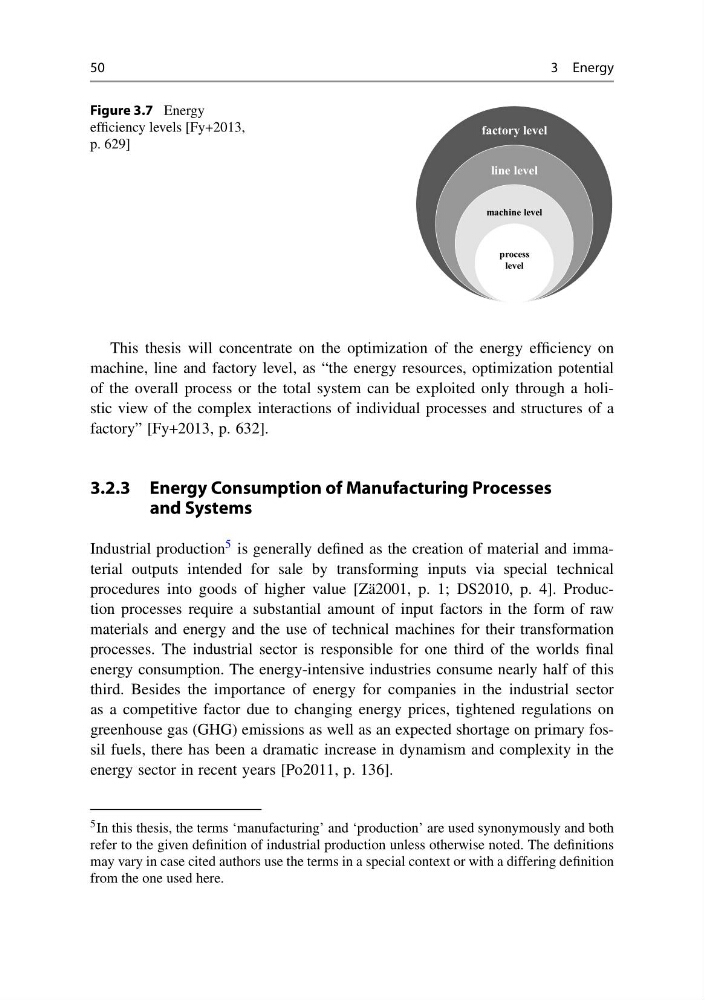
Figure 3.7 Energy
efficiency levels [Fy+2013,
p. 629]
factory level
line level
machine level
process
level
This thesis will concentrate on the optimization of the energy efficiency on
machine, line and factory level, as “the energy resources, optimization potential
of the overall process or the total system can be exploited only through a holistic view of the complex interactions of individual processes and structures of a
factory” [Fy+2013, p. 632].
3.2.3 Energy Consumption of Manufacturing Processes
and Systems
Industrial production 5 is generally defined as the creation of material and immaterial outputs intended for sale by transforming inputs via special technical
procedures into goods of higher value [Zä2001, p. 1; DS2010, p. 4]. Production processes require a substantial amount of input factors in the form of raw
materials and energy and the use of technical machines for their transformation
processes. The industrial sector is responsible for one third of the worlds final
energy consumption. The energy-intensive industries consume nearly half of this
third. Besides the importance of energy for companies in the industrial sector
as a competitive factor due to changing energy prices, tightened regulations on
greenhouse gas (GHG) emissions as well as an expected shortage on primary fossil fuels, there has been a dramatic increase in dynamism and complexity in the
energy sector in recent years [Po2011, p. 136].
5 In this thesis, the terms ‘manufacturing’ and ‘production’ are used synonymously and both
refer to the given definition of industrial production unless otherwise noted. The definitions
may vary in case cited authors use the terms in a special context or with a differing definition
from the one used here.
3 Energy
Figure 3.7 Energy
efficiency levels [Fy+2013,
p. 629]
factory level
line level
machine level
process
level
This thesis will concentrate on the optimization of the energy efficiency on
machine, line and factory level, as “the energy resources, optimization potential
of the overall process or the total system can be exploited only through a holistic view of the complex interactions of individual processes and structures of a
factory” [Fy+2013, p. 632].
3.2.3 Energy Consumption of Manufacturing Processes
and Systems
Industrial production 5 is generally defined as the creation of material and immaterial outputs intended for sale by transforming inputs via special technical
procedures into goods of higher value [Zä2001, p. 1; DS2010, p. 4]. Production processes require a substantial amount of input factors in the form of raw
materials and energy and the use of technical machines for their transformation
processes. The industrial sector is responsible for one third of the worlds final
energy consumption. The energy-intensive industries consume nearly half of this
third. Besides the importance of energy for companies in the industrial sector
as a competitive factor due to changing energy prices, tightened regulations on
greenhouse gas (GHG) emissions as well as an expected shortage on primary fossil fuels, there has been a dramatic increase in dynamism and complexity in the
energy sector in recent years [Po2011, p. 136].
5 In this thesis, the terms ‘manufacturing’ and ‘production’ are used synonymously and both
refer to the given definition of industrial production unless otherwise noted. The definitions
may vary in case cited authors use the terms in a special context or with a differing definition
from the one used here.