

170
6 Experimental Validation of the Methodology
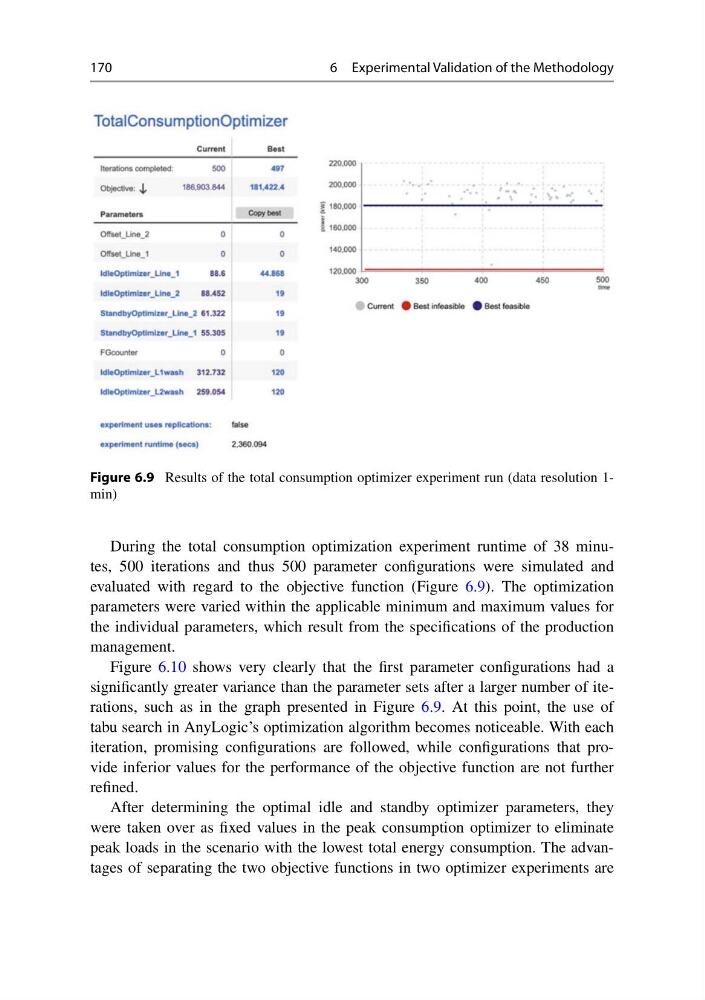
Figure 6.9 Results of the total consumption optimizer experiment run (data resolution 1min)
During the total consumption optimization experiment runtime of 38 minutes, 500 iterations and thus 500 parameter configurations were simulated and
evaluated with regard to the objective function (Figure 6.9). The optimization
parameters were varied within the applicable minimum and maximum values for
the individual parameters, which result from the specifications of the production
management.
Figure 6.10 shows very clearly that the first parameter configurations had a
significantly greater variance than the parameter sets after a larger number of iterations, such as in the graph presented in Figure 6.9. At this point, the use of
tabu search in AnyLogic’s optimization algorithm becomes noticeable. With each
iteration, promising configurations are followed, while configurations that provide inferior values for the performance of the objective function are not further
refined.
After determining the optimal idle and standby optimizer parameters, they
were taken over as fixed values in the peak consumption optimizer to eliminate
peak loads in the scenario with the lowest total energy consumption. The advantages of separating the two objective functions in two optimizer experiments are
6 Experimental Validation of the Methodology
Figure 6.9 Results of the total consumption optimizer experiment run (data resolution 1min)
During the total consumption optimization experiment runtime of 38 minutes, 500 iterations and thus 500 parameter configurations were simulated and
evaluated with regard to the objective function (Figure 6.9). The optimization
parameters were varied within the applicable minimum and maximum values for
the individual parameters, which result from the specifications of the production
management.
Figure 6.10 shows very clearly that the first parameter configurations had a
significantly greater variance than the parameter sets after a larger number of iterations, such as in the graph presented in Figure 6.9. At this point, the use of
tabu search in AnyLogic’s optimization algorithm becomes noticeable. With each
iteration, promising configurations are followed, while configurations that provide inferior values for the performance of the objective function are not further
refined.
After determining the optimal idle and standby optimizer parameters, they
were taken over as fixed values in the peak consumption optimizer to eliminate
peak loads in the scenario with the lowest total energy consumption. The advantages of separating the two objective functions in two optimizer experiments are