

5.6 Prototypical Implementation
129
raw
material
warmup duration
delay object
off
warmup
producing
idle
part waiting
= true
machine
process duration
delay type: delay until ‘stop delay’ is called
machine logic
part x
duration
setup definition
on part enter: call ‘process part function’
process part function
process time setups
process variables
call ‘stop delay’
delay calculation
start delay calculation part x
stop delay for part x
part x
material flow
simulation
paradigm change
DES
ABS
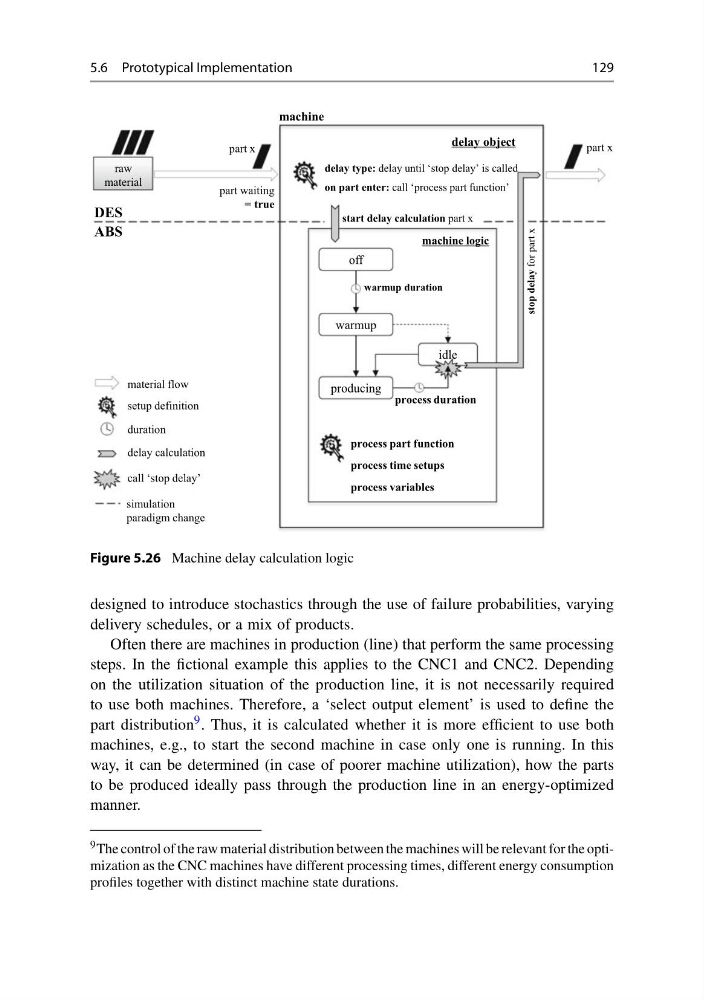
Figure 5.26 Machine delay calculation logic
designed to introduce stochastics through the use of failure probabilities, varying
delivery schedules, or a mix of products.
Often there are machines in production (line) that perform the same processing
steps. In the fictional example this applies to the CNC1 and CNC2. Depending
on the utilization situation of the production line, it is not necessarily required
to use both machines. Therefore, a ‘select output element’ is used to define the
part distribution 9 . Thus, it is calculated whether it is more efficient to use both
machines, e.g., to start the second machine in case only one is running. In this
way, it can be determined (in case of poorer machine utilization), how the parts
to be produced ideally pass through the production line in an energy-optimized
manner.
9 The control of the raw material distribution between the machines will be relevant for the optimization as the CNC machines have different processing times, different energy consumption
profiles together with distinct machine state durations.
129
raw
material
warmup duration
delay object
off
warmup
producing
idle
part waiting
= true
machine
process duration
delay type: delay until ‘stop delay’ is called
machine logic
part x
duration
setup definition
on part enter: call ‘process part function’
process part function
process time setups
process variables
call ‘stop delay’
delay calculation
start delay calculation part x
stop delay for part x
part x
material flow
simulation
paradigm change
DES
ABS
Figure 5.26 Machine delay calculation logic
designed to introduce stochastics through the use of failure probabilities, varying
delivery schedules, or a mix of products.
Often there are machines in production (line) that perform the same processing
steps. In the fictional example this applies to the CNC1 and CNC2. Depending
on the utilization situation of the production line, it is not necessarily required
to use both machines. Therefore, a ‘select output element’ is used to define the
part distribution 9 . Thus, it is calculated whether it is more efficient to use both
machines, e.g., to start the second machine in case only one is running. In this
way, it can be determined (in case of poorer machine utilization), how the parts
to be produced ideally pass through the production line in an energy-optimized
manner.
9 The control of the raw material distribution between the machines will be relevant for the optimization as the CNC machines have different processing times, different energy consumption
profiles together with distinct machine state durations.