

5.3 Description of the M&S Approach
95
Management system
Production system
ERP
Production machines
MES
target state
actual state
Energy Monitoring
Machine Component
Production Flow Component
Energy Component
Optimization Module
Visualization
Module
Production and Energy Simulation
Energy Optimizer
production related
input data
Relevant
parameters and
specific energy data
system behavior model of
machines
system model of production flow
and setups for production planning
system behavior model of the
energy consumption
objectives functions and
optimization targets for energy
efficiency optimization
Evaluation
results and key
performance
indicators,
experiment
evaluation
Visualization
visualization
for decisionsupport
modified
parameters
feedback
Optimized
planning
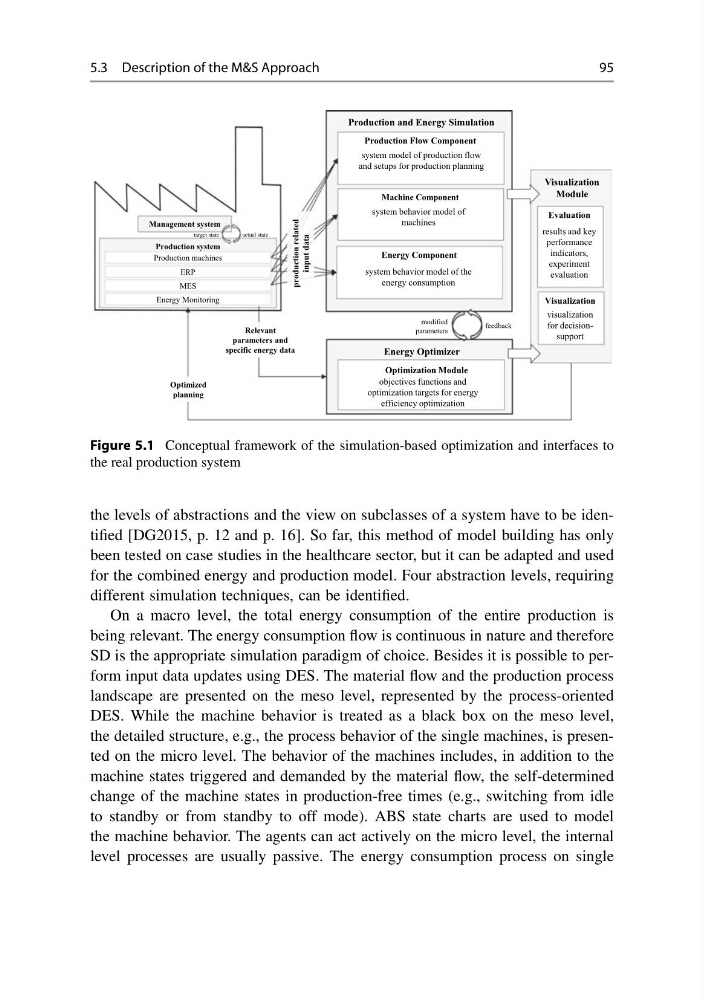
Figure 5.1 Conceptual framework of the simulation-based optimization and interfaces to
the real production system
the levels of abstractions and the view on subclasses of a system have to be identified [DG2015, p. 12 and p. 16]. So far, this method of model building has only
been tested on case studies in the healthcare sector, but it can be adapted and used
for the combined energy and production model. Four abstraction levels, requiring
different simulation techniques, can be identified.
On a macro level, the total energy consumption of the entire production is
being relevant. The energy consumption flow is continuous in nature and therefore
SD is the appropriate simulation paradigm of choice. Besides it is possible to perform input data updates using DES. The material flow and the production process
landscape are presented on the meso level, represented by the process-oriented
DES. While the machine behavior is treated as a black box on the meso level,
the detailed structure, e.g., the process behavior of the single machines, is presented on the micro level. The behavior of the machines includes, in addition to the
machine states triggered and demanded by the material flow, the self-determined
change of the machine states in production-free times (e.g., switching from idle
to standby or from standby to off mode). ABS state charts are used to model
the machine behavior. The agents can act actively on the micro level, the internal
level processes are usually passive. The energy consumption process on single
95
Management system
Production system
ERP
Production machines
MES
target state
actual state
Energy Monitoring
Machine Component
Production Flow Component
Energy Component
Optimization Module
Visualization
Module
Production and Energy Simulation
Energy Optimizer
production related
input data
Relevant
parameters and
specific energy data
system behavior model of
machines
system model of production flow
and setups for production planning
system behavior model of the
energy consumption
objectives functions and
optimization targets for energy
efficiency optimization
Evaluation
results and key
performance
indicators,
experiment
evaluation
Visualization
visualization
for decisionsupport
modified
parameters
feedback
Optimized
planning
Figure 5.1 Conceptual framework of the simulation-based optimization and interfaces to
the real production system
the levels of abstractions and the view on subclasses of a system have to be identified [DG2015, p. 12 and p. 16]. So far, this method of model building has only
been tested on case studies in the healthcare sector, but it can be adapted and used
for the combined energy and production model. Four abstraction levels, requiring
different simulation techniques, can be identified.
On a macro level, the total energy consumption of the entire production is
being relevant. The energy consumption flow is continuous in nature and therefore
SD is the appropriate simulation paradigm of choice. Besides it is possible to perform input data updates using DES. The material flow and the production process
landscape are presented on the meso level, represented by the process-oriented
DES. While the machine behavior is treated as a black box on the meso level,
the detailed structure, e.g., the process behavior of the single machines, is presented on the micro level. The behavior of the machines includes, in addition to the
machine states triggered and demanded by the material flow, the self-determined
change of the machine states in production-free times (e.g., switching from idle
to standby or from standby to off mode). ABS state charts are used to model
the machine behavior. The agents can act actively on the micro level, the internal
level processes are usually passive. The energy consumption process on single