

5.2 The Research Design
57
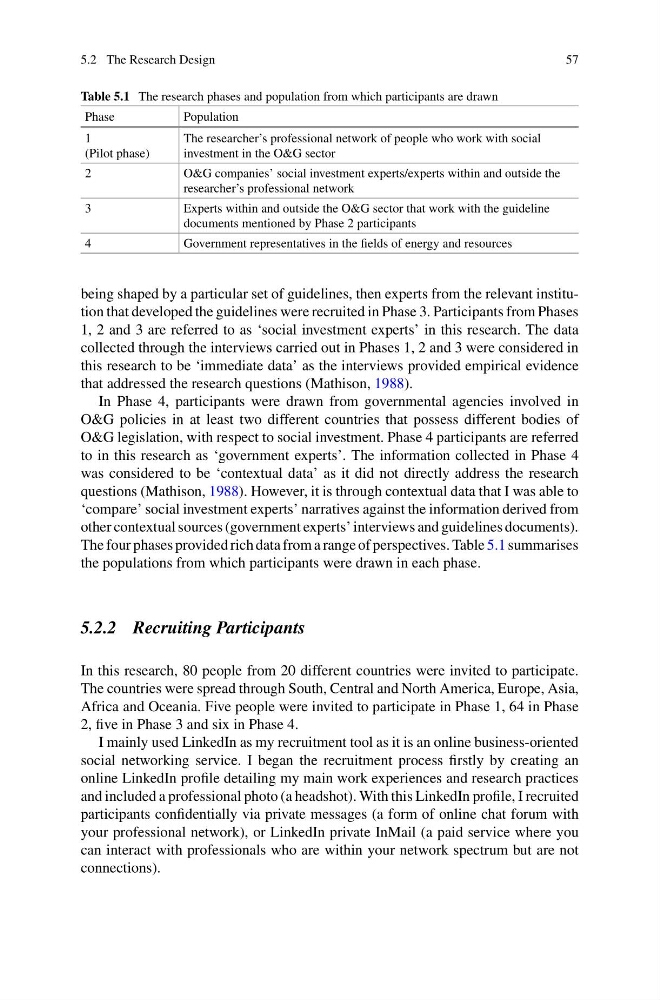
Table 5.1 The research phases and population from which participants are drawn
Phase
Population
1
(Pilot phase)
The researcher’s professional network of people who work with social
investment in the O&G sector
2
O&G companies’ social investment experts/experts within and outside the
researcher’s professional network
3
Experts within and outside the O&G sector that work with the guideline
documents mentioned by Phase 2 participants
4
Government representatives in the fields of energy and resources
being shaped by a particular set of guidelines, then experts from the relevant institution that developed the guidelines were recruited in Phase 3. Participants from Phases
1, 2 and 3 are referred to as ‘social investment experts’ in this research. The data
collected through the interviews carried out in Phases 1, 2 and 3 were considered in
this research to be ‘immediate data’ as the interviews provided empirical evidence
that addressed the research questions (Mathison, 1988).
In Phase 4, participants were drawn from governmental agencies involved in
O&G policies in at least two different countries that possess different bodies of
O&G legislation, with respect to social investment. Phase 4 participants are referred
to in this research as ‘government experts’. The information collected in Phase 4
was considered to be ‘contextual data’ as it did not directly address the research
questions (Mathison, 1988). However, it is through contextual data that I was able to
‘compare’ social investment experts’ narratives against the information derived from
other contextual sources (government experts’ interviews and guidelines documents).
The four phases provided rich data from a range of perspectives. Table 5.1 summarises
the populations from which participants were drawn in each phase.
5.2.2 Recruiting Participants
In this research, 80 people from 20 different countries were invited to participate.
The countries were spread through South, Central and North America, Europe, Asia,
Africa and Oceania. Five people were invited to participate in Phase 1, 64 in Phase
2, five in Phase 3 and six in Phase 4.
I mainly used LinkedIn as my recruitment tool as it is an online business-oriented
social networking service. I began the recruitment process firstly by creating an
online LinkedIn profile detailing my main work experiences and research practices
and included a professional photo (a headshot). With this LinkedIn profile, I recruited
participants confidentially via private messages (a form of online chat forum with
your professional network), or LinkedIn private InMail (a paid service where you
can interact with professionals who are within your network spectrum but are not
connections).
57
Table 5.1 The research phases and population from which participants are drawn
Phase
Population
1
(Pilot phase)
The researcher’s professional network of people who work with social
investment in the O&G sector
2
O&G companies’ social investment experts/experts within and outside the
researcher’s professional network
3
Experts within and outside the O&G sector that work with the guideline
documents mentioned by Phase 2 participants
4
Government representatives in the fields of energy and resources
being shaped by a particular set of guidelines, then experts from the relevant institution that developed the guidelines were recruited in Phase 3. Participants from Phases
1, 2 and 3 are referred to as ‘social investment experts’ in this research. The data
collected through the interviews carried out in Phases 1, 2 and 3 were considered in
this research to be ‘immediate data’ as the interviews provided empirical evidence
that addressed the research questions (Mathison, 1988).
In Phase 4, participants were drawn from governmental agencies involved in
O&G policies in at least two different countries that possess different bodies of
O&G legislation, with respect to social investment. Phase 4 participants are referred
to in this research as ‘government experts’. The information collected in Phase 4
was considered to be ‘contextual data’ as it did not directly address the research
questions (Mathison, 1988). However, it is through contextual data that I was able to
‘compare’ social investment experts’ narratives against the information derived from
other contextual sources (government experts’ interviews and guidelines documents).
The four phases provided rich data from a range of perspectives. Table 5.1 summarises
the populations from which participants were drawn in each phase.
5.2.2 Recruiting Participants
In this research, 80 people from 20 different countries were invited to participate.
The countries were spread through South, Central and North America, Europe, Asia,
Africa and Oceania. Five people were invited to participate in Phase 1, 64 in Phase
2, five in Phase 3 and six in Phase 4.
I mainly used LinkedIn as my recruitment tool as it is an online business-oriented
social networking service. I began the recruitment process firstly by creating an
online LinkedIn profile detailing my main work experiences and research practices
and included a professional photo (a headshot). With this LinkedIn profile, I recruited
participants confidentially via private messages (a form of online chat forum with
your professional network), or LinkedIn private InMail (a paid service where you
can interact with professionals who are within your network spectrum but are not
connections).