

Pre-synthesized T3SS effectors
Binding and invasion
Establishing the inclusion
Transition of elementary
to reticulate body
Transition of reticulate
to elementary body
Microtubule
trafficking
MTOC or centrosome
Host cell
lysis
Extrusion
Late-cycle
effectors
Mid-cycle
effectors
Reactivation
Stress
Stress
Golgi
apparatus
Elementary body
Inc
T3SS
Effectors
Dynein-dynactin complex
Reticulate body
HSPC
Receptor
Aberrant body
Persistence
Early effectors
Replication
Transition of reticulate
body to aberrant body
Inclusion
Lysosomes
Redirection
of exocytic
vesicles
Host cell exit
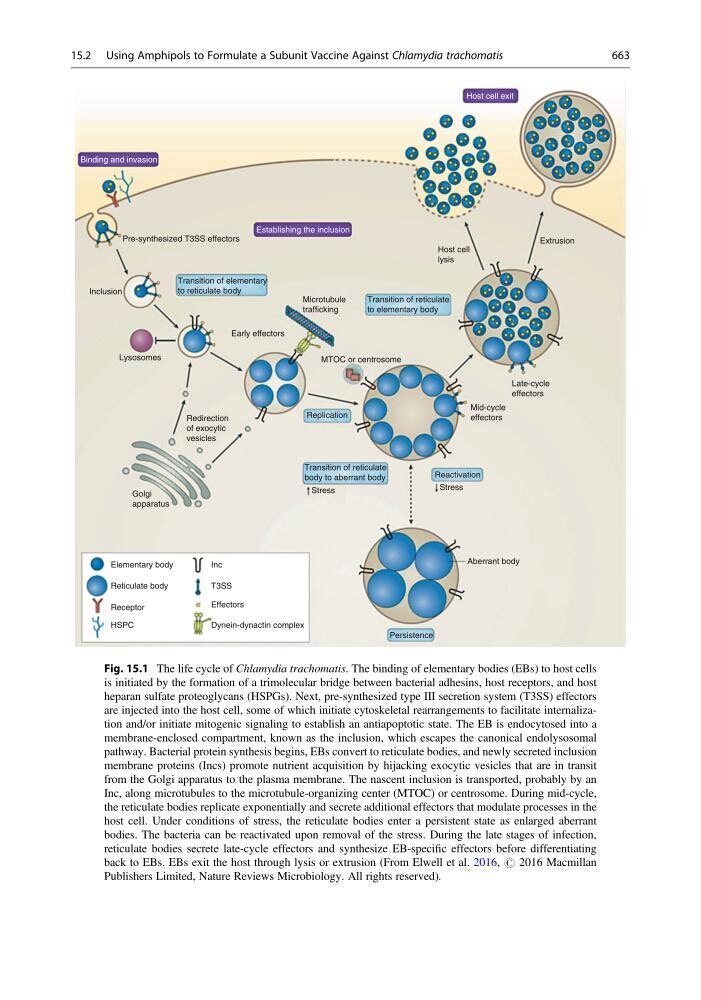
Fig. 15.1 The life cycle of Chlamydia trachomatis. The binding of elementary bodies (EBs) to host cells
is initiated by the formation of a trimolecular bridge between bacterial adhesins, host receptors, and host
heparan sulfate proteoglycans (HSPGs). Next, pre-synthesized type III secretion system (T3SS) effectors
are injected into the host cell, some of which initiate cytoskeletal rearrangements to facilitate internalization and/or initiate mitogenic signaling to establish an antiapoptotic state. The EB is endocytosed into a
membrane-enclosed compartment, known as the inclusion, which escapes the canonical endolysosomal
pathway. Bacterial protein synthesis begins, EBs convert to reticulate bodies, and newly secreted inclusion
membrane proteins (Incs) promote nutrient acquisition by hijacking exocytic vesicles that are in transit
from the Golgi apparatus to the plasma membrane. The nascent inclusion is transported, probably by an
Inc, along microtubules to the microtubule-organizing center (MTOC) or centrosome. During mid-cycle,
the reticulate bodies replicate exponentially and secrete additional effectors that modulate processes in the
host cell. Under conditions of stress, the reticulate bodies enter a persistent state as enlarged aberrant
bodies. The bacteria can be reactivated upon removal of the stress. During the late stages of infection,
reticulate bodies secrete late-cycle effectors and synthesize EB-specific effectors before differentiating
back to EBs. EBs exit the host through lysis or extrusion (From Elwell et al. 2016, # 2016 Macmillan
Publishers Limited, Nature Reviews Microbiology. All rights reserved).
15.2 Using Amphipols to Formulate a Subunit Vaccine Against Chlamydia trachomatis
663