

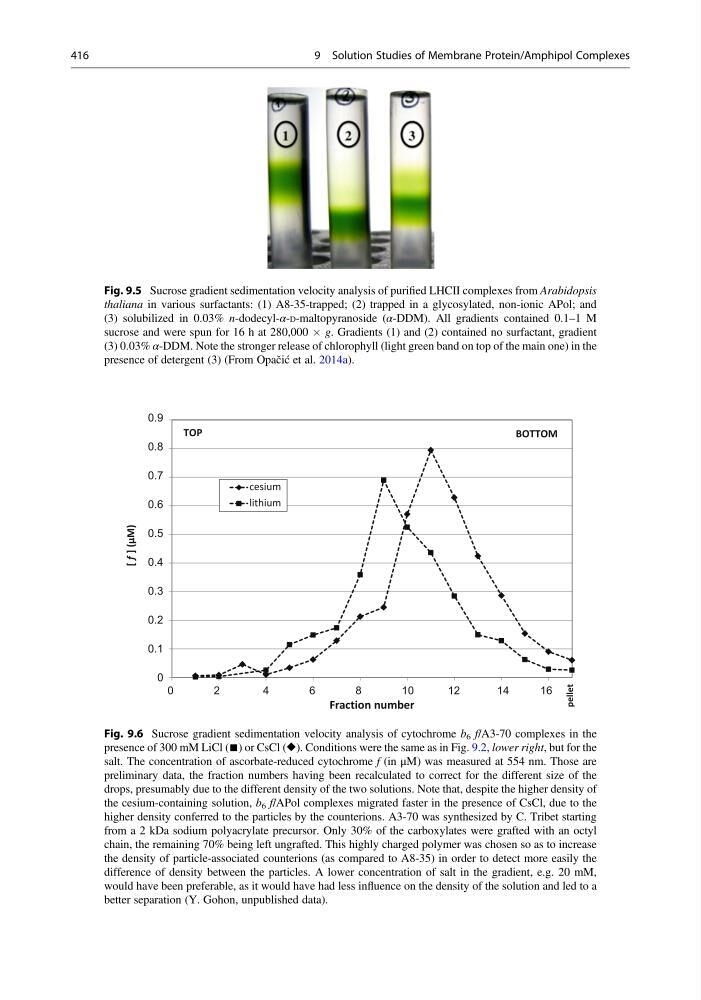
Fig. 9.5 Sucrose gradient sedimentation velocity analysis of purified LHCII complexes from Arabidopsis
thaliana in various surfactants: (1) A8-35-trapped; (2) trapped in a glycosylated, non-ionic APol; and
(3) solubilized in 0.03% n-dodecyl-α-D-maltopyranoside (α-DDM). All gradients contained 0.1–1 M
sucrose and were spun for 16 h at 280,000 Â g. Gradients (1) and (2) contained no surfactant, gradient
(3) 0.03% α-DDM. Note the stronger release of chlorophyll (light green band on top of the main one) in the
presence of detergent (3) (From Opačić et al. 2014a).
[ f ] (µM)
Fraction number
cesium
lithium
pellet
TOP
BOTTOM
0.9
0.8
0.7
0.6
0.5
0.4
0.3
0.2
0.1
0
0
2
4
6
8
10
12
14
16
Fig. 9.6 Sucrose gradient sedimentation velocity analysis of cytochrome b 6 f/A3-70 complexes in the
presence of 300 mM LiCl (■) or CsCl (r). Conditions were the same as in Fig. 9.2, lower right, but for the
salt. The concentration of ascorbate-reduced cytochrome f (in μM) was measured at 554 nm. Those are
preliminary data, the fraction numbers having been recalculated to correct for the different size of the
drops, presumably due to the different density of the two solutions. Note that, despite the higher density of
the cesium-containing solution, b 6 f/APol complexes migrated faster in the presence of CsCl, due to the
higher density conferred to the particles by the counterions. A3-70 was synthesized by C. Tribet starting
from a 2 kDa sodium polyacrylate precursor. Only 30% of the carboxylates were grafted with an octyl
chain, the remaining 70% being left ungrafted. This highly charged polymer was chosen so as to increase
the density of particle-associated counterions (as compared to A8-35) in order to detect more easily the
difference of density between the particles. A lower concentration of salt in the gradient, e.g. 20 mM,
would have been preferable, as it would have had less influence on the density of the solution and led to a
better separation (Y. Gohon, unpublished data).
416
9 Solution Studies of Membrane Protein/Amphipol Complexes
thaliana in various surfactants: (1) A8-35-trapped; (2) trapped in a glycosylated, non-ionic APol; and
(3) solubilized in 0.03% n-dodecyl-α-D-maltopyranoside (α-DDM). All gradients contained 0.1–1 M
sucrose and were spun for 16 h at 280,000 Â g. Gradients (1) and (2) contained no surfactant, gradient
(3) 0.03% α-DDM. Note the stronger release of chlorophyll (light green band on top of the main one) in the
presence of detergent (3) (From Opačić et al. 2014a).
[ f ] (µM)
Fraction number
cesium
lithium
pellet
TOP
BOTTOM
0.9
0.8
0.7
0.6
0.5
0.4
0.3
0.2
0.1
0
0
2
4
6
8
10
12
14
16
Fig. 9.6 Sucrose gradient sedimentation velocity analysis of cytochrome b 6 f/A3-70 complexes in the
presence of 300 mM LiCl (■) or CsCl (r). Conditions were the same as in Fig. 9.2, lower right, but for the
salt. The concentration of ascorbate-reduced cytochrome f (in μM) was measured at 554 nm. Those are
preliminary data, the fraction numbers having been recalculated to correct for the different size of the
drops, presumably due to the different density of the two solutions. Note that, despite the higher density of
the cesium-containing solution, b 6 f/APol complexes migrated faster in the presence of CsCl, due to the
higher density conferred to the particles by the counterions. A3-70 was synthesized by C. Tribet starting
from a 2 kDa sodium polyacrylate precursor. Only 30% of the carboxylates were grafted with an octyl
chain, the remaining 70% being left ungrafted. This highly charged polymer was chosen so as to increase
the density of particle-associated counterions (as compared to A8-35) in order to detect more easily the
difference of density between the particles. A lower concentration of salt in the gradient, e.g. 20 mM,
would have been preferable, as it would have had less influence on the density of the solution and led to a
better separation (Y. Gohon, unpublished data).
416
9 Solution Studies of Membrane Protein/Amphipol Complexes