

• Short peptides (6–8 residues) whose general organization is comparable to that of detergents:
a short string of hydrophobic residues and a 1–2-residue polar “head” (“designer peptide
surfactants”; Santoso et al. 2002, Vauthey et al. 2002; Table 3.2, line 3; § 3.4.3).
• Interesting octyl-carrying, β-strand-forming octapeptides that have been shown to stabilize
physically and biochemically the ABC exporter MsbA in the form of individual particles
amenable to EM and to stabilize biochemically three other test MPs (Tao et al. 2013). They do
not seem to have been further exploited.
• Saposin A, a small natural protein that folds into four amphipathic α-helices and can be used
to trap lipids into “picodiscs,” comprising only a few tens of lipids (Popovic et al. 2012), or to
adsorb onto MP TM regions (Frauenfeld et al. 2016; Table 3.2, line 4; § 3.4.4).
• Oligopeptides designed to assemble with lipids into nanodisc-like structures (Table 3.2,
line 5; § 3.4.5).
• Relatively long hydrophobized poly-γ-glutamic acid forming amphipathic polymers (Han
et al. 2014). This approach will be discussed in Chap. 4 along with APols, to which it is
closely related (see Chap. 4, Table 4.2, Study 4.22).
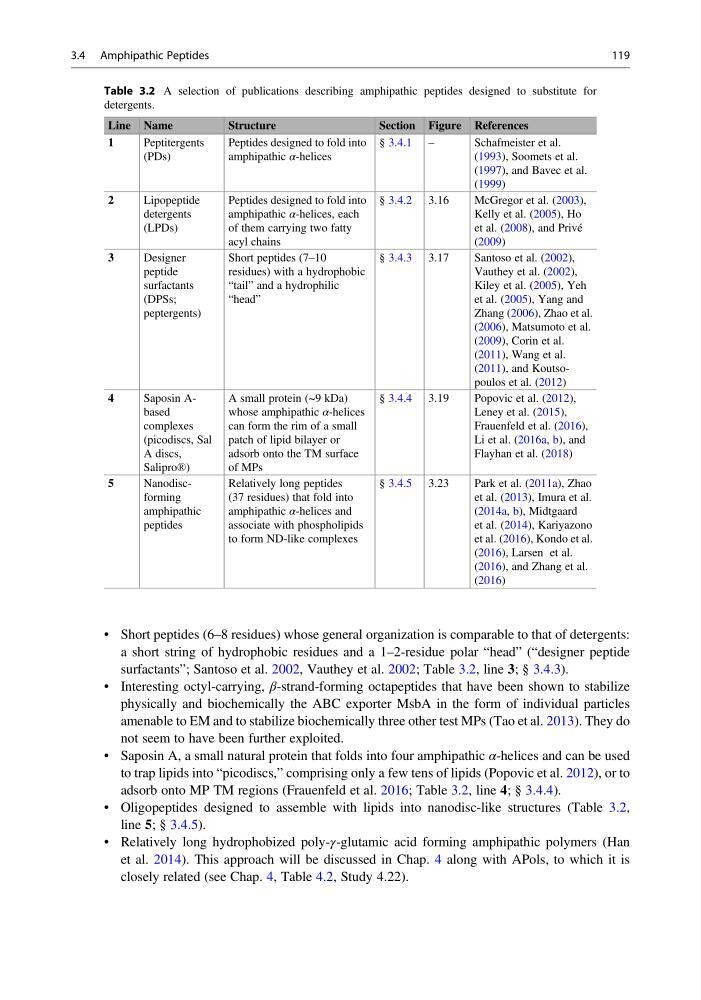
Table 3.2 A selection of publications describing amphipathic peptides designed to substitute for
detergents.
Line Name
Structure
Section Figure References
1
Peptitergents
(PDs)
Peptides designed to fold into
amphipathic α-helices
§ 3.4.1 –
Schafmeister et al.
(1993), Soomets et al.
(1997), and Bavec et al.
(1999)
2
Lipopeptide
detergents
(LPDs)
Peptides designed to fold into
amphipathic α-helices, each
of them carrying two fatty
acyl chains
§ 3.4.2 3.16
McGregor et al. (2003),
Kelly et al. (2005), Ho
et al. (2008), and Privé
(2009)
3
Designer
peptide
surfactants
(DPSs;
peptergents)
Short peptides (7–10
residues) with a hydrophobic
“tail” and a hydrophilic
“head”
§ 3.4.3 3.17
Santoso et al. (2002),
Vauthey et al. (2002),
Kiley et al. (2005), Yeh
et al. (2005), Yang and
Zhang (2006), Zhao et al.
(2006), Matsumoto et al.
(2009), Corin et al.
(2011), Wang et al.
(2011), and Koutsopoulos et al. (2012)
4
Saposin Abased
complexes
(picodiscs, Sal
A discs,
Salipro®)
A small protein (~9 kDa)
whose amphipathic α-helices
can form the rim of a small
patch of lipid bilayer or
adsorb onto the TM surface
of MPs
§ 3.4.4 3.19
Popovic et al. (2012),
Leney et al. (2015),
Frauenfeld et al. (2016),
Li et al. (2016a, b), and
Flayhan et al. (2018)
5
Nanodiscforming
amphipathic
peptides
Relatively long peptides
(37 residues) that fold into
amphipathic α-helices and
associate with phospholipids
to form ND-like complexes
§ 3.4.5 3.23
Park et al. (2011a), Zhao
et al. (2013), Imura et al.
(2014a, b), Midtgaard
et al. (2014), Kariyazono
et al. (2016), Kondo et al.
(2016), Larsen et al.
(2016), and Zhang et al.
(2016)
3.4 Amphipathic Peptides
119
a short string of hydrophobic residues and a 1–2-residue polar “head” (“designer peptide
surfactants”; Santoso et al. 2002, Vauthey et al. 2002; Table 3.2, line 3; § 3.4.3).
• Interesting octyl-carrying, β-strand-forming octapeptides that have been shown to stabilize
physically and biochemically the ABC exporter MsbA in the form of individual particles
amenable to EM and to stabilize biochemically three other test MPs (Tao et al. 2013). They do
not seem to have been further exploited.
• Saposin A, a small natural protein that folds into four amphipathic α-helices and can be used
to trap lipids into “picodiscs,” comprising only a few tens of lipids (Popovic et al. 2012), or to
adsorb onto MP TM regions (Frauenfeld et al. 2016; Table 3.2, line 4; § 3.4.4).
• Oligopeptides designed to assemble with lipids into nanodisc-like structures (Table 3.2,
line 5; § 3.4.5).
• Relatively long hydrophobized poly-γ-glutamic acid forming amphipathic polymers (Han
et al. 2014). This approach will be discussed in Chap. 4 along with APols, to which it is
closely related (see Chap. 4, Table 4.2, Study 4.22).
Table 3.2 A selection of publications describing amphipathic peptides designed to substitute for
detergents.
Line Name
Structure
Section Figure References
1
Peptitergents
(PDs)
Peptides designed to fold into
amphipathic α-helices
§ 3.4.1 –
Schafmeister et al.
(1993), Soomets et al.
(1997), and Bavec et al.
(1999)
2
Lipopeptide
detergents
(LPDs)
Peptides designed to fold into
amphipathic α-helices, each
of them carrying two fatty
acyl chains
§ 3.4.2 3.16
McGregor et al. (2003),
Kelly et al. (2005), Ho
et al. (2008), and Privé
(2009)
3
Designer
peptide
surfactants
(DPSs;
peptergents)
Short peptides (7–10
residues) with a hydrophobic
“tail” and a hydrophilic
“head”
§ 3.4.3 3.17
Santoso et al. (2002),
Vauthey et al. (2002),
Kiley et al. (2005), Yeh
et al. (2005), Yang and
Zhang (2006), Zhao et al.
(2006), Matsumoto et al.
(2009), Corin et al.
(2011), Wang et al.
(2011), and Koutsopoulos et al. (2012)
4
Saposin Abased
complexes
(picodiscs, Sal
A discs,
Salipro®)
A small protein (~9 kDa)
whose amphipathic α-helices
can form the rim of a small
patch of lipid bilayer or
adsorb onto the TM surface
of MPs
§ 3.4.4 3.19
Popovic et al. (2012),
Leney et al. (2015),
Frauenfeld et al. (2016),
Li et al. (2016a, b), and
Flayhan et al. (2018)
5
Nanodiscforming
amphipathic
peptides
Relatively long peptides
(37 residues) that fold into
amphipathic α-helices and
associate with phospholipids
to form ND-like complexes
§ 3.4.5 3.23
Park et al. (2011a), Zhao
et al. (2013), Imura et al.
(2014a, b), Midtgaard
et al. (2014), Kariyazono
et al. (2016), Kondo et al.
(2016), Larsen et al.
(2016), and Zhang et al.
(2016)
3.4 Amphipathic Peptides
119