

[129]. Transfection of sperm almost always resulted in significant loss of motility
and necessitated artificial fertilization through intracytoplasmic sperm injection.
Thus, there is a need to improve the transfection method of sperm without using
electroporation or lipofection.
The successful use of NPs to introduce foreign DNA into somatic and stem cells
has brought new perspectives for production of transgenic embryos via SMGT. In a
recent study, Kim et al. [130] showed that MNPs can be successfully used for
introducing genes into pig sperm. The DNA-loaded MNPs bound ejaculated
spermatozoa at a higher efficiency than those obtained by using DNA alone or
lipofection. Clusters of MNPs were detected both in the sperm nucleus and at the
inner surface of the plasma membrane. In vitro fertilization (IVF) of oocytes with
transfected sperm resulted in successful production of transgenic embryos – a
method named nanoSMGT. Similar results were also obtained by Campos et al.
[131] for cattle sperm. Campos et al. [131] used NanoFect Transfection Reagent
(Qiagen) for nanoSMGT in cattle sperm and observed that nanopolymer efficiently
introduced exogenous DNA into the sperm and resulted in successful production of
transgenic embryos. Interestingly, unlike other methods, nanoSMGT was not
affected by DNA preparation methods and parameters such as the linear-to-circular
DNA ratio. The ratio of linear-to-circular DNA can influence exogenous DNA
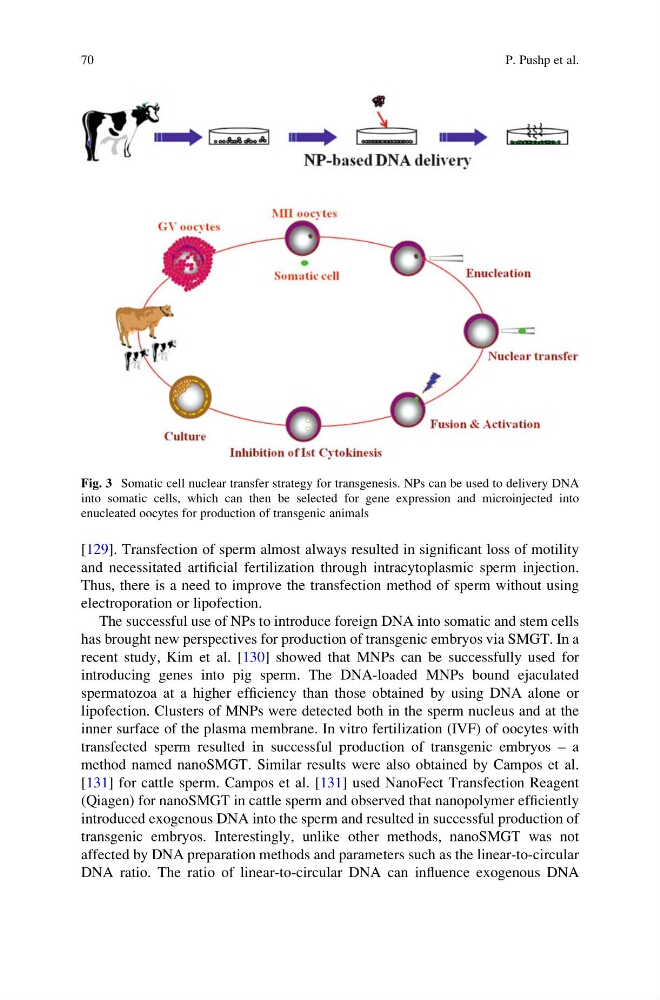
Fig. 3 Somatic cell nuclear transfer strategy for transgenesis. NPs can be used to delivery DNA
into somatic cells, which can then be selected for gene expression and microinjected into
enucleated oocytes for production of transgenic animals
70
P. Pushp et al.
and necessitated artificial fertilization through intracytoplasmic sperm injection.
Thus, there is a need to improve the transfection method of sperm without using
electroporation or lipofection.
The successful use of NPs to introduce foreign DNA into somatic and stem cells
has brought new perspectives for production of transgenic embryos via SMGT. In a
recent study, Kim et al. [130] showed that MNPs can be successfully used for
introducing genes into pig sperm. The DNA-loaded MNPs bound ejaculated
spermatozoa at a higher efficiency than those obtained by using DNA alone or
lipofection. Clusters of MNPs were detected both in the sperm nucleus and at the
inner surface of the plasma membrane. In vitro fertilization (IVF) of oocytes with
transfected sperm resulted in successful production of transgenic embryos – a
method named nanoSMGT. Similar results were also obtained by Campos et al.
[131] for cattle sperm. Campos et al. [131] used NanoFect Transfection Reagent
(Qiagen) for nanoSMGT in cattle sperm and observed that nanopolymer efficiently
introduced exogenous DNA into the sperm and resulted in successful production of
transgenic embryos. Interestingly, unlike other methods, nanoSMGT was not
affected by DNA preparation methods and parameters such as the linear-to-circular
DNA ratio. The ratio of linear-to-circular DNA can influence exogenous DNA
Fig. 3 Somatic cell nuclear transfer strategy for transgenesis. NPs can be used to delivery DNA
into somatic cells, which can then be selected for gene expression and microinjected into
enucleated oocytes for production of transgenic animals
70
P. Pushp et al.