

drying conditions such as solid content of the dryer and processing temperature.
The functionality of the wall material is particularly important and the most
effective materials will have high solubility in water, low viscosity at high
concentrations and effective emulsifying and film-forming properties [44, 45]. If
solubility in water is limited, capsules will adapt a matrix-type structure, whereby
small particles of the core material are imbedded throughout a coating material
matrix. Even under high viscosity interface during the atomization process, bulky
and elongated droplets are formed, which affects adversely at the drying rate [46].
Spray drying is widely used in the food industry due the many advantages
offered by the method [47]. The chief advantages are the relatively low process
cost, flexibility in allowing various coating materials to be used and adaptability to
commonly used equipment. In terms of large-scale production, spray drying can be
operated in continuous mode, allowing effortless incorporation into many industrial
processes. Furthermore, the method is suitable for heat-labile substances because
core materials are exposed to lower temperatures [47].
Spray drying, however, is limited to liquid feeds and therefore coating materials
must be water-soluble and have low viscosity at high concentrations. Typical shell
materials include gum acacia, maltodextrin and hydrophobic modified starches.
Whey proteins and alginate have also been used; however, their solubility in water
is much reduced, requiring a greater volume of water to be evaporated. For
example, mesquite gum has been shown to impart better stability to oil/water
emulsions and provide higher encapsulation efficiencies than gum acacia. Soybean
soluble polysaccharide proved to be an advanced emulsifier over gum Arabic in
retaining microencapsulated ethyl butyrate during spray drying [48].
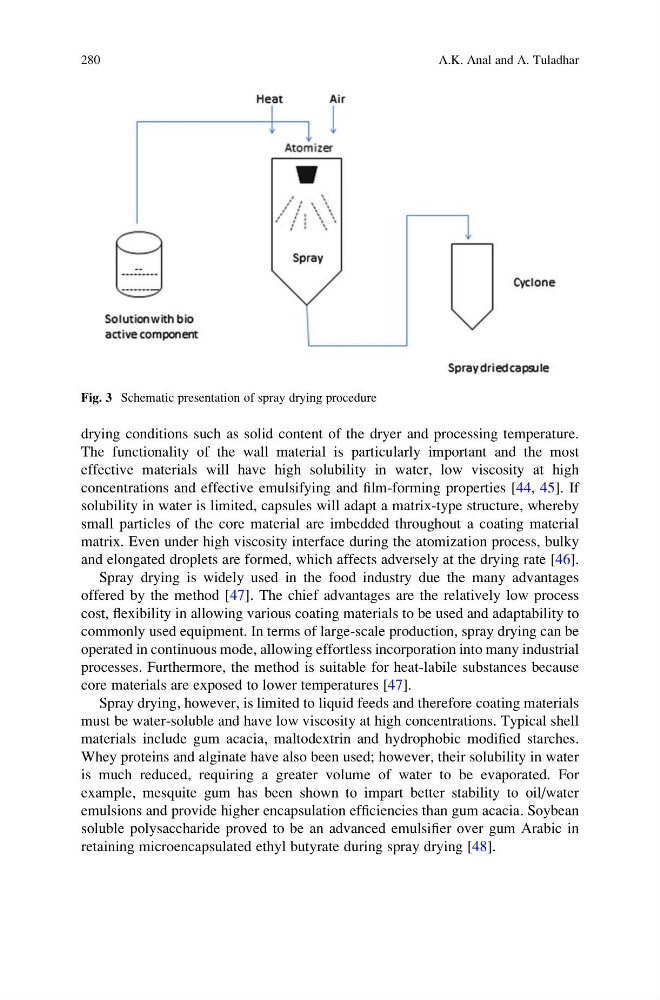
Fig. 3 Schematic presentation of spray drying procedure
280
A.K. Anal and A. Tuladhar
The functionality of the wall material is particularly important and the most
effective materials will have high solubility in water, low viscosity at high
concentrations and effective emulsifying and film-forming properties [44, 45]. If
solubility in water is limited, capsules will adapt a matrix-type structure, whereby
small particles of the core material are imbedded throughout a coating material
matrix. Even under high viscosity interface during the atomization process, bulky
and elongated droplets are formed, which affects adversely at the drying rate [46].
Spray drying is widely used in the food industry due the many advantages
offered by the method [47]. The chief advantages are the relatively low process
cost, flexibility in allowing various coating materials to be used and adaptability to
commonly used equipment. In terms of large-scale production, spray drying can be
operated in continuous mode, allowing effortless incorporation into many industrial
processes. Furthermore, the method is suitable for heat-labile substances because
core materials are exposed to lower temperatures [47].
Spray drying, however, is limited to liquid feeds and therefore coating materials
must be water-soluble and have low viscosity at high concentrations. Typical shell
materials include gum acacia, maltodextrin and hydrophobic modified starches.
Whey proteins and alginate have also been used; however, their solubility in water
is much reduced, requiring a greater volume of water to be evaporated. For
example, mesquite gum has been shown to impart better stability to oil/water
emulsions and provide higher encapsulation efficiencies than gum acacia. Soybean
soluble polysaccharide proved to be an advanced emulsifier over gum Arabic in
retaining microencapsulated ethyl butyrate during spray drying [48].
Fig. 3 Schematic presentation of spray drying procedure
280
A.K. Anal and A. Tuladhar