

4 Toxicological Evaluation
Nanomaterials have evolved as a revolutionary technology in various realms of
medicine ranging from drug or gene encapsulation and delivery to tissue engineering and medical diagnosis and therapy. This intensive expansion of nanotechnology
in the pharmaceutical industries and medical field necessitates an understanding of
the potential toxicity of engineered nanomaterials, i.e., their biokinetic evaluation.
The toxicity concerns about nanomaterials remain one of the major hurdles in the
translation of nanomedicines for human use and this involves physiological, physicochemical, and molecular considerations [141–143].
Material characteristics such as size, shape, chemical composition, surface
chemistry, roughness, and surface functionalizations profoundly influence the
interactions that occur at the interface between nanomaterials and biological
systems (proteins, membranes, endocytic vesicles, organelles, DNA, and biological
fluids). Evidence from the literature suggests that the biodistribution of nanosized
carriers to specific sites is mostly dictated by the physicochemical characteristics of
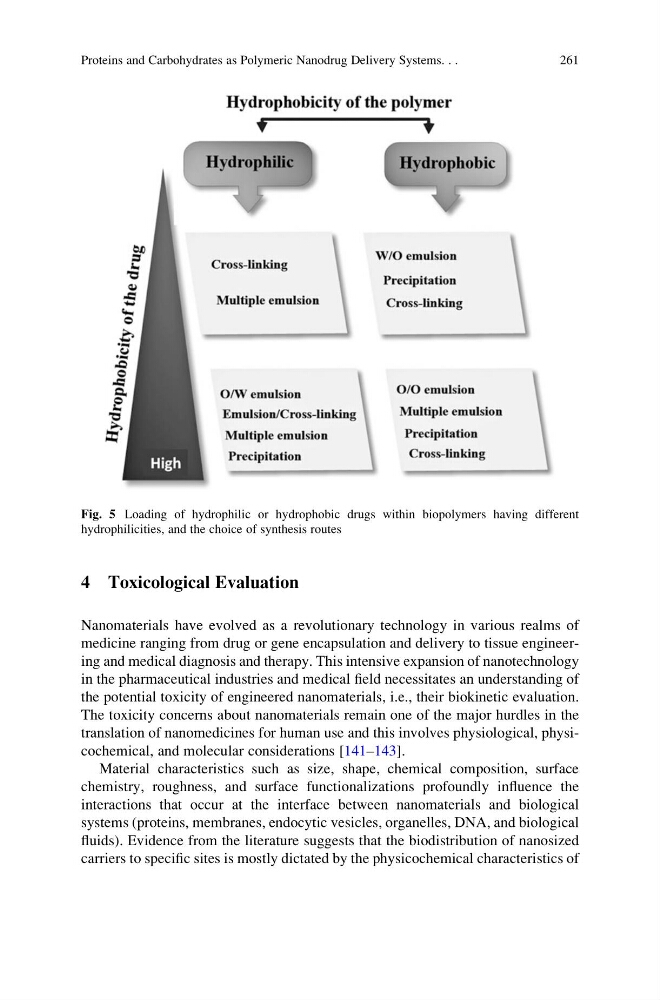
Fig. 5 Loading of hydrophilic or hydrophobic drugs within biopolymers having different
hydrophilicities, and the choice of synthesis routes
Proteins and Carbohydrates as Polymeric Nanodrug Delivery Systems. . .
261
Nanomaterials have evolved as a revolutionary technology in various realms of
medicine ranging from drug or gene encapsulation and delivery to tissue engineering and medical diagnosis and therapy. This intensive expansion of nanotechnology
in the pharmaceutical industries and medical field necessitates an understanding of
the potential toxicity of engineered nanomaterials, i.e., their biokinetic evaluation.
The toxicity concerns about nanomaterials remain one of the major hurdles in the
translation of nanomedicines for human use and this involves physiological, physicochemical, and molecular considerations [141–143].
Material characteristics such as size, shape, chemical composition, surface
chemistry, roughness, and surface functionalizations profoundly influence the
interactions that occur at the interface between nanomaterials and biological
systems (proteins, membranes, endocytic vesicles, organelles, DNA, and biological
fluids). Evidence from the literature suggests that the biodistribution of nanosized
carriers to specific sites is mostly dictated by the physicochemical characteristics of
Fig. 5 Loading of hydrophilic or hydrophobic drugs within biopolymers having different
hydrophilicities, and the choice of synthesis routes
Proteins and Carbohydrates as Polymeric Nanodrug Delivery Systems. . .
261