

20 Bath Correlation Effects on Inelastic Charge Transport
371
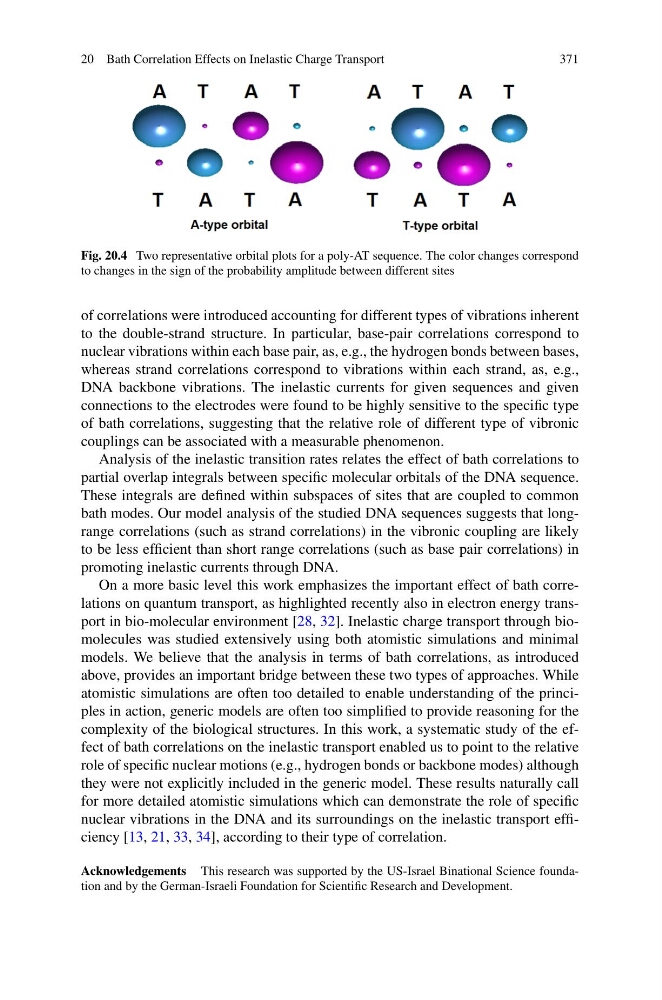
Fig. 20.4 Two representative orbital plots for a poly-AT sequence. The color changes correspond
to changes in the sign of the probability amplitude between different sites
of correlations were introduced accounting for different types of vibrations inherent
to the double-strand structure. In particular, base-pair correlations correspond to
nuclear vibrations within each base pair, as, e.g., the hydrogen bonds between bases,
whereas strand correlations correspond to vibrations within each strand, as, e.g.,
DNA backbone vibrations. The inelastic currents for given sequences and given
connections to the electrodes were found to be highly sensitive to the specific type
of bath correlations, suggesting that the relative role of different type of vibronic
couplings can be associated with a measurable phenomenon.
Analysis of the inelastic transition rates relates the effect of bath correlations to
partial overlap integrals between specific molecular orbitals of the DNA sequence.
These integrals are defined within subspaces of sites that are coupled to common
bath modes. Our model analysis of the studied DNA sequences suggests that longrange correlations (such as strand correlations) in the vibronic coupling are likely
to be less efficient than short range correlations (such as base pair correlations) in
promoting inelastic currents through DNA.
On a more basic level this work emphasizes the important effect of bath correlations on quantum transport, as highlighted recently also in electron energy transport in bio-molecular environment [28, 32]. Inelastic charge transport through biomolecules was studied extensively using both atomistic simulations and minimal
models. We believe that the analysis in terms of bath correlations, as introduced
above, provides an important bridge between these two types of approaches. While
atomistic simulations are often too detailed to enable understanding of the principles in action, generic models are often too simplified to provide reasoning for the
complexity of the biological structures. In this work, a systematic study of the effect of bath correlations on the inelastic transport enabled us to point to the relative
role of specific nuclear motions (e.g., hydrogen bonds or backbone modes) although
they were not explicitly included in the generic model. These results naturally call
for more detailed atomistic simulations which can demonstrate the role of specific
nuclear vibrations in the DNA and its surroundings on the inelastic transport efficiency [13, 21, 33, 34], according to their type of correlation.
Acknowledgements This research was supported by the US-Israel Binational Science foundation and by the German-Israeli Foundation for Scientific Research and Development.
371
Fig. 20.4 Two representative orbital plots for a poly-AT sequence. The color changes correspond
to changes in the sign of the probability amplitude between different sites
of correlations were introduced accounting for different types of vibrations inherent
to the double-strand structure. In particular, base-pair correlations correspond to
nuclear vibrations within each base pair, as, e.g., the hydrogen bonds between bases,
whereas strand correlations correspond to vibrations within each strand, as, e.g.,
DNA backbone vibrations. The inelastic currents for given sequences and given
connections to the electrodes were found to be highly sensitive to the specific type
of bath correlations, suggesting that the relative role of different type of vibronic
couplings can be associated with a measurable phenomenon.
Analysis of the inelastic transition rates relates the effect of bath correlations to
partial overlap integrals between specific molecular orbitals of the DNA sequence.
These integrals are defined within subspaces of sites that are coupled to common
bath modes. Our model analysis of the studied DNA sequences suggests that longrange correlations (such as strand correlations) in the vibronic coupling are likely
to be less efficient than short range correlations (such as base pair correlations) in
promoting inelastic currents through DNA.
On a more basic level this work emphasizes the important effect of bath correlations on quantum transport, as highlighted recently also in electron energy transport in bio-molecular environment [28, 32]. Inelastic charge transport through biomolecules was studied extensively using both atomistic simulations and minimal
models. We believe that the analysis in terms of bath correlations, as introduced
above, provides an important bridge between these two types of approaches. While
atomistic simulations are often too detailed to enable understanding of the principles in action, generic models are often too simplified to provide reasoning for the
complexity of the biological structures. In this work, a systematic study of the effect of bath correlations on the inelastic transport enabled us to point to the relative
role of specific nuclear motions (e.g., hydrogen bonds or backbone modes) although
they were not explicitly included in the generic model. These results naturally call
for more detailed atomistic simulations which can demonstrate the role of specific
nuclear vibrations in the DNA and its surroundings on the inelastic transport efficiency [13, 21, 33, 34], according to their type of correlation.
Acknowledgements This research was supported by the US-Israel Binational Science foundation and by the German-Israeli Foundation for Scientific Research and Development.