

186
Y. Dong et al.
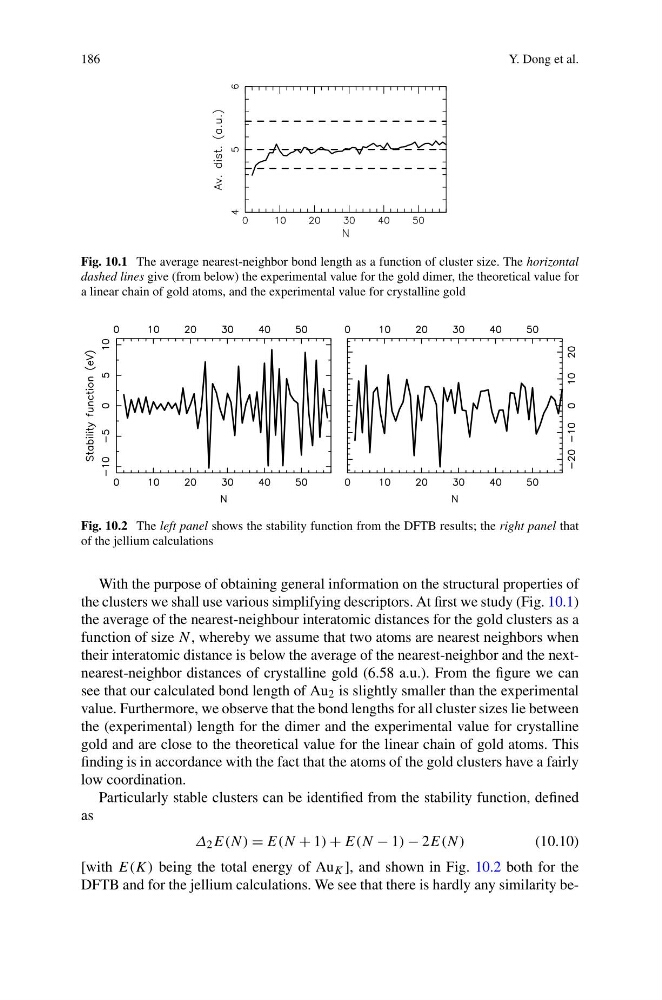
Fig. 10.1 The average nearest-neighbor bond length as a function of cluster size. The horizontal
dashed lines give (from below) the experimental value for the gold dimer, the theoretical value for
a linear chain of gold atoms, and the experimental value for crystalline gold
Fig. 10.2 The left panel shows the stability function from the DFTB results; the right panel that
of the jellium calculations
With the purpose of obtaining general information on the structural properties of
the clusters we shall use various simplifying descriptors. At first we study (Fig. 10.1)
the average of the nearest-neighbour interatomic distances for the gold clusters as a
function of size N , whereby we assume that two atoms are nearest neighbors when
their interatomic distance is below the average of the nearest-neighbor and the nextnearest-neighbor distances of crystalline gold (6.58 a.u.). From the figure we can
see that our calculated bond length of Au 2 is slightly smaller than the experimental
value. Furthermore, we observe that the bond lengths for all cluster sizes lie between
the (experimental) length for the dimer and the experimental value for crystalline
gold and are close to the theoretical value for the linear chain of gold atoms. This
finding is in accordance with the fact that the atoms of the gold clusters have a fairly
low coordination.
Particularly stable clusters can be identified from the stability function, defined
as
Δ 2 E(N) = E(N + 1) + E(N − 1) − 2E(N)
(10.10)
[with E(K) being the total energy of Au K ], and shown in Fig. 10.2 both for the
DFTB and for the jellium calculations. We see that there is hardly any similarity be-
Y. Dong et al.
Fig. 10.1 The average nearest-neighbor bond length as a function of cluster size. The horizontal
dashed lines give (from below) the experimental value for the gold dimer, the theoretical value for
a linear chain of gold atoms, and the experimental value for crystalline gold
Fig. 10.2 The left panel shows the stability function from the DFTB results; the right panel that
of the jellium calculations
With the purpose of obtaining general information on the structural properties of
the clusters we shall use various simplifying descriptors. At first we study (Fig. 10.1)
the average of the nearest-neighbour interatomic distances for the gold clusters as a
function of size N , whereby we assume that two atoms are nearest neighbors when
their interatomic distance is below the average of the nearest-neighbor and the nextnearest-neighbor distances of crystalline gold (6.58 a.u.). From the figure we can
see that our calculated bond length of Au 2 is slightly smaller than the experimental
value. Furthermore, we observe that the bond lengths for all cluster sizes lie between
the (experimental) length for the dimer and the experimental value for crystalline
gold and are close to the theoretical value for the linear chain of gold atoms. This
finding is in accordance with the fact that the atoms of the gold clusters have a fairly
low coordination.
Particularly stable clusters can be identified from the stability function, defined
as
Δ 2 E(N) = E(N + 1) + E(N − 1) − 2E(N)
(10.10)
[with E(K) being the total energy of Au K ], and shown in Fig. 10.2 both for the
DFTB and for the jellium calculations. We see that there is hardly any similarity be-