

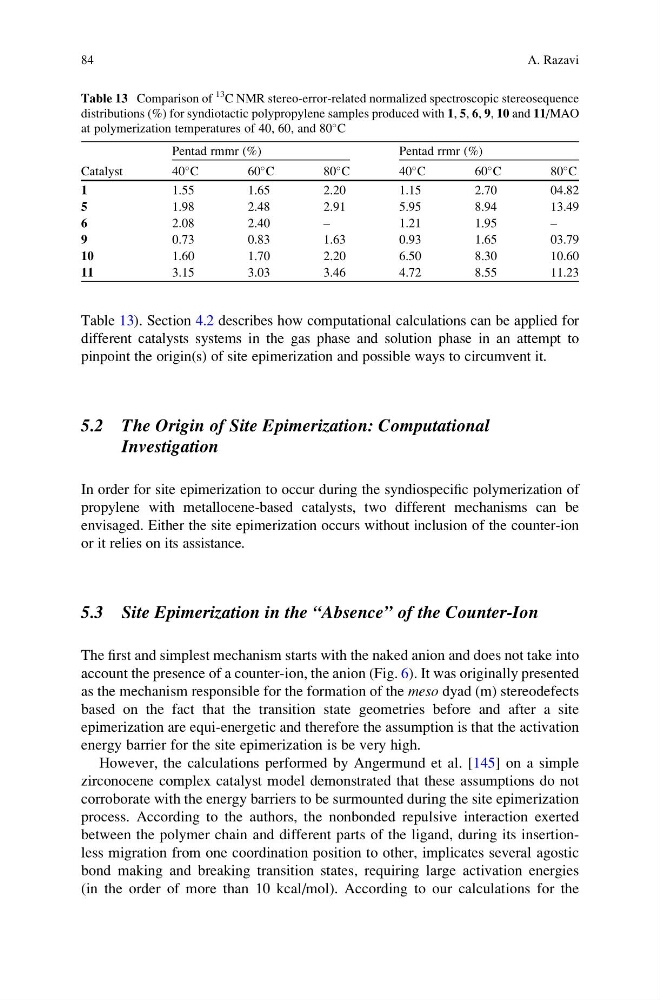
Table 13). Section 4.2 describes how computational calculations can be applied for
different catalysts systems in the gas phase and solution phase in an attempt to
pinpoint the origin(s) of site epimerization and possible ways to circumvent it.
5.2 The Origin of Site Epimerization: Computational
Investigation
In order for site epimerization to occur during the syndiospecific polymerization of
propylene with metallocene-based catalysts, two different mechanisms can be
envisaged. Either the site epimerization occurs without inclusion of the counter-ion
or it relies on its assistance.
5.3 Site Epimerization in the “Absence” of the Counter-Ion
The first and simplest mechanism starts with the naked anion and does not take into
account the presence of a counter-ion, the anion (Fig. 6). It was originally presented
as the mechanism responsible for the formation of the meso dyad (m) stereodefects
based on the fact that the transition state geometries before and after a site
epimerization are equi-energetic and therefore the assumption is that the activation
energy barrier for the site epimerization is be very high.
However, the calculations performed by Angermund et al. [145] on a simple
zirconocene complex catalyst model demonstrated that these assumptions do not
corroborate with the energy barriers to be surmounted during the site epimerization
process. According to the authors, the nonbonded repulsive interaction exerted
between the polymer chain and different parts of the ligand, during its insertionless migration from one coordination position to other, implicates several agostic
bond making and breaking transition states, requiring large activation energies
(in the order of more than 10 kcal/mol). According to our calculations for the
Table 13 Comparison of
13
C NMR stereo-error-related normalized spectroscopic stereosequence
distributions (%) for syndiotactic polypropylene samples produced with 1, 5, 6, 9, 10 and 11/MAO
at polymerization temperatures of 40, 60, and 80
C
Catalyst
Pentad rmmr (%)
Pentad rrmr (%)
40
C
6 0
C
8 0
C
4 0
C
6 0
C
8 0
C
1
1.55
1.65
2.20
1.15
2.70
04.82
5
1.98
2.48
2.91
5.95
8.94
13.49
6
2.08
2.40
–
1.21
1.95
–
9
0.73
0.83
1.63
0.93
1.65
03.79
10
1.60
1.70
2.20
6.50
8.30
10.60
11
3.15
3.03
3.46
4.72
8.55
11.23
84
A. Razavi
different catalysts systems in the gas phase and solution phase in an attempt to
pinpoint the origin(s) of site epimerization and possible ways to circumvent it.
5.2 The Origin of Site Epimerization: Computational
Investigation
In order for site epimerization to occur during the syndiospecific polymerization of
propylene with metallocene-based catalysts, two different mechanisms can be
envisaged. Either the site epimerization occurs without inclusion of the counter-ion
or it relies on its assistance.
5.3 Site Epimerization in the “Absence” of the Counter-Ion
The first and simplest mechanism starts with the naked anion and does not take into
account the presence of a counter-ion, the anion (Fig. 6). It was originally presented
as the mechanism responsible for the formation of the meso dyad (m) stereodefects
based on the fact that the transition state geometries before and after a site
epimerization are equi-energetic and therefore the assumption is that the activation
energy barrier for the site epimerization is be very high.
However, the calculations performed by Angermund et al. [145] on a simple
zirconocene complex catalyst model demonstrated that these assumptions do not
corroborate with the energy barriers to be surmounted during the site epimerization
process. According to the authors, the nonbonded repulsive interaction exerted
between the polymer chain and different parts of the ligand, during its insertionless migration from one coordination position to other, implicates several agostic
bond making and breaking transition states, requiring large activation energies
(in the order of more than 10 kcal/mol). According to our calculations for the
Table 13 Comparison of
13
C NMR stereo-error-related normalized spectroscopic stereosequence
distributions (%) for syndiotactic polypropylene samples produced with 1, 5, 6, 9, 10 and 11/MAO
at polymerization temperatures of 40, 60, and 80
C
Catalyst
Pentad rmmr (%)
Pentad rrmr (%)
40
C
6 0
C
8 0
C
4 0
C
6 0
C
8 0
C
1
1.55
1.65
2.20
1.15
2.70
04.82
5
1.98
2.48
2.91
5.95
8.94
13.49
6
2.08
2.40
–
1.21
1.95
–
9
0.73
0.83
1.63
0.93
1.65
03.79
10
1.60
1.70
2.20
6.50
8.30
10.60
11
3.15
3.03
3.46
4.72
8.55
11.23
84
A. Razavi