

their activated forms as catalysts would produce very similar, if not identical, s-PP
chains when polymerizing propylene. Correspondingly, after activation with MAO
or other ethylating/ionizing agents, complexes 6 and 7 are transformed into
excellent catalysts for promoting the polymerization of propylene to highly
syndiotactic polypropylene. Table 5 presents the polymerization conditions, results,
and polymer analysis for (6 and 7)/MAO catalyst systems. Table 6 compares
the microtacticities of s-PP produced with catalyst systems (6 and 7)/MAO and
(1 and 2)/MAO at different polymerization temperatures.
A cursory comparison of the data given in Table 5 for s-PP samples produced with
complexes (6 and 7)/MAO and the data in Table 1 for complexes (1 and 2)/MAO
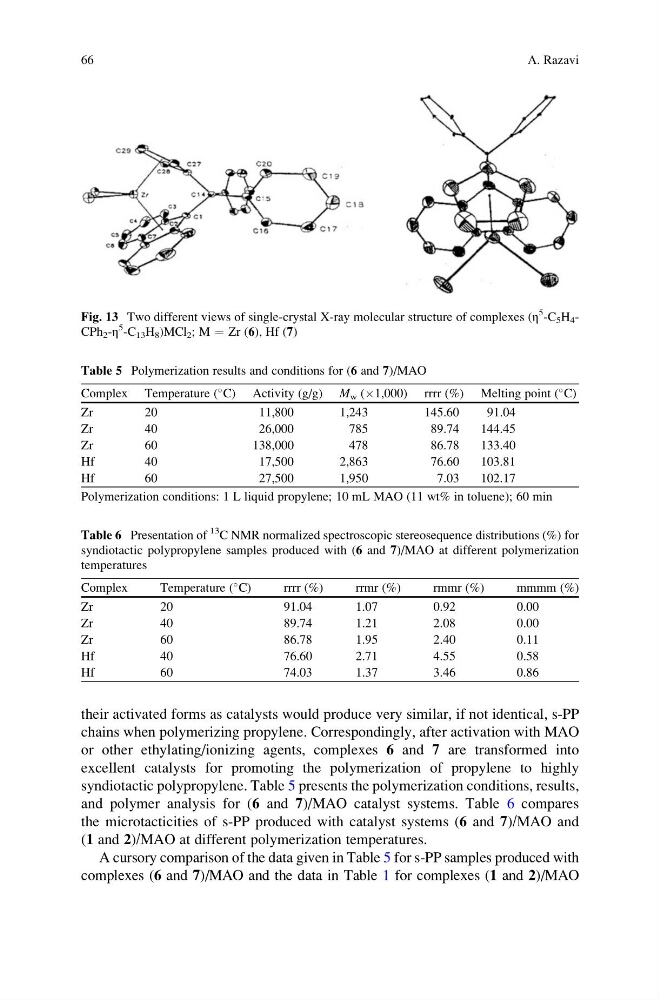
Fig. 13 Two different views of single-crystal X-ray molecular structure of complexes (η
5
-C 5 H 4 -
CPh 2 -η
5
-C 13 H 8 )MCl 2 ; M ¼ Zr (6), Hf (7)
Table 5 Polymerization results and conditions for (6 and 7)/MAO
Complex Temperature (
C) Activity (g/g) M w (Â1,000) rrrr (%) Melting point (
C)
Zr
20
11,800
1,243
145.60
91.04
Zr
40
26,000
785
89.74
144.45
Zr
60
138,000
478
86.78
133.40
Hf
40
17,500
2,863
76.60
103.81
Hf
60
27,500
1,950
7.03
102.17
Polymerization conditions: 1 L liquid propylene; 10 mL MAO (11 wt% in toluene); 60 min
Table 6 Presentation of
13
C NMR normalized spectroscopic stereosequence distributions (%) for
syndiotactic polypropylene samples produced with (6 and 7)/MAO at different polymerization
temperatures
Complex
Temperature (
C)
rrrr (%)
rrmr (%)
rmmr (%)
mmmm (%)
Zr
20
91.04
1.07
0.92
0.00
Zr
40
89.74
1.21
2.08
0.00
Zr
60
86.78
1.95
2.40
0.11
Hf
40
76.60
2.71
4.55
0.58
Hf
60
74.03
1.37
3.46
0.86
66
A. Razavi
chains when polymerizing propylene. Correspondingly, after activation with MAO
or other ethylating/ionizing agents, complexes 6 and 7 are transformed into
excellent catalysts for promoting the polymerization of propylene to highly
syndiotactic polypropylene. Table 5 presents the polymerization conditions, results,
and polymer analysis for (6 and 7)/MAO catalyst systems. Table 6 compares
the microtacticities of s-PP produced with catalyst systems (6 and 7)/MAO and
(1 and 2)/MAO at different polymerization temperatures.
A cursory comparison of the data given in Table 5 for s-PP samples produced with
complexes (6 and 7)/MAO and the data in Table 1 for complexes (1 and 2)/MAO
Fig. 13 Two different views of single-crystal X-ray molecular structure of complexes (η
5
-C 5 H 4 -
CPh 2 -η
5
-C 13 H 8 )MCl 2 ; M ¼ Zr (6), Hf (7)
Table 5 Polymerization results and conditions for (6 and 7)/MAO
Complex Temperature (
C) Activity (g/g) M w (Â1,000) rrrr (%) Melting point (
C)
Zr
20
11,800
1,243
145.60
91.04
Zr
40
26,000
785
89.74
144.45
Zr
60
138,000
478
86.78
133.40
Hf
40
17,500
2,863
76.60
103.81
Hf
60
27,500
1,950
7.03
102.17
Polymerization conditions: 1 L liquid propylene; 10 mL MAO (11 wt% in toluene); 60 min
Table 6 Presentation of
13
C NMR normalized spectroscopic stereosequence distributions (%) for
syndiotactic polypropylene samples produced with (6 and 7)/MAO at different polymerization
temperatures
Complex
Temperature (
C)
rrrr (%)
rrmr (%)
rmmr (%)
mmmm (%)
Zr
20
91.04
1.07
0.92
0.00
Zr
40
89.74
1.21
2.08
0.00
Zr
60
86.78
1.95
2.40
0.11
Hf
40
76.60
2.71
4.55
0.58
Hf
60
74.03
1.37
3.46
0.86
66
A. Razavi