

N CH2OH was demonstrated. Activities, as well as incorporation of functionalized
monomers, of bimetallic catalysts were three- to fourfold higher than that of the
monometallic analogue in identical conditions. Interestingly, the molar masses of
copolymers were similar to those of copolymers of ethene with norbornene.
Attempts to copolymerize N COOH failed because the high acidity of the comonomer
leads to catalyst deactivation.
Nickel complexes with α-iminocarboxamide ligands were intensively investigated
in the copolymerization of ethene with functionalized norbornene derivatives N OH
and N OAc [121]. Complex IX-1 activated by [Ni(cod) 2 ] as scavenger of PMe 3 yielded
P(E-co-N AC ) copolymers containing 4–17 mol% incorporation of N AC with excellent
molar masses (M n ¼ 30–110 kg mol
À1
). Catalyst IX-1 preserved the ability to
promote the controlled polymerization of ethene even in presence of N AC , as
confirmed by the linear time dependence of molar mass and the narrow molar mass
distribution, even after 90 min of reaction [122]. Also, the hydroxyl-functionalized
N OH is readily incorporated into polyethene backbone, affording P(E-co-N OH )
copolymers with an incorporation of N OH ranging from 5 to 18 mol% and possessing
M n ¼ 11–56 kg mol
À1
. Since hydroxyl functionality resulted in more poisoning than
an acetyl group, the molar masses and activities were lower than those observed in
E-co-N AC copolymerization. In addition, the controlled nature of copolymerization
was absent, as revealed by the nonlinear increase in molar masses with increasing
reaction time as well as by the broader molar mass distributions. Very interestingly,
catalyst IX-1/[Ni(cod) 2 ] was exploited to prepare P(E-co-N AC ) copolymers
with decreasing content of polar monomer. Thanks to the controlled nature of
copolymerization and through complete conversion of N AC it was possible to prepare
“polar–apolar” block-copolymers that showed microphase separation [115].
Complexes IX-1 and IX-4–IX-9/[Ni(cod) 2 ] were exploited as catalysts for the
copolymerization of ethene with N AC to investigate eventual steric and perturbative
effects of the group adjacent to imine (R2), by keeping the same bulky 2,6-iPrC 6 H 4 as
aryl frameworks. Both activity and incorporation of comonomer were sensitive to this
modification. Productivity increased with increasing bulkiness of alkyl groups in the
order iPr (IX-6) > iBu (IX-5) > Et (IX-4) > Me whereas incorporation behaved
oppositely. In the series of aromatic substituents, i.e., complexes IX-7–IX-9, the
higher the electron-withdrawing power the lower the activity. Incorporation was less
influenced though lower than the alkyl-substituted analogues.
X
N OH
:
N COOMe :
N CH2OH :
N OAc
:
N CH2OAc :
N COOH :
COO
t Bu
COO
t
Bu
COO
t
Bu
O
O
O
N
O
O
n Bu
X = OH
X = COOMe
X = CH 2OH
X = OAc
X = CH2OAc
X = COOH
TCN COOt Bu
TCN (COOt Bu)2
TCN AN
TCN IM
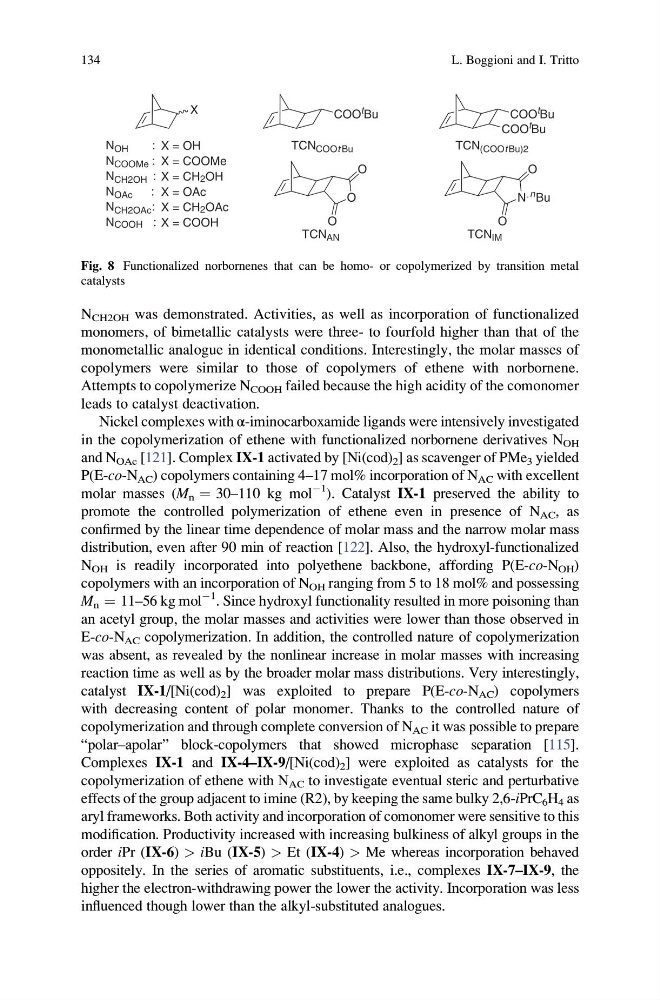
Fig. 8 Functionalized norbornenes that can be homo- or copolymerized by transition metal
catalysts
134
L. Boggioni and I. Tritto
monomers, of bimetallic catalysts were three- to fourfold higher than that of the
monometallic analogue in identical conditions. Interestingly, the molar masses of
copolymers were similar to those of copolymers of ethene with norbornene.
Attempts to copolymerize N COOH failed because the high acidity of the comonomer
leads to catalyst deactivation.
Nickel complexes with α-iminocarboxamide ligands were intensively investigated
in the copolymerization of ethene with functionalized norbornene derivatives N OH
and N OAc [121]. Complex IX-1 activated by [Ni(cod) 2 ] as scavenger of PMe 3 yielded
P(E-co-N AC ) copolymers containing 4–17 mol% incorporation of N AC with excellent
molar masses (M n ¼ 30–110 kg mol
À1
). Catalyst IX-1 preserved the ability to
promote the controlled polymerization of ethene even in presence of N AC , as
confirmed by the linear time dependence of molar mass and the narrow molar mass
distribution, even after 90 min of reaction [122]. Also, the hydroxyl-functionalized
N OH is readily incorporated into polyethene backbone, affording P(E-co-N OH )
copolymers with an incorporation of N OH ranging from 5 to 18 mol% and possessing
M n ¼ 11–56 kg mol
À1
. Since hydroxyl functionality resulted in more poisoning than
an acetyl group, the molar masses and activities were lower than those observed in
E-co-N AC copolymerization. In addition, the controlled nature of copolymerization
was absent, as revealed by the nonlinear increase in molar masses with increasing
reaction time as well as by the broader molar mass distributions. Very interestingly,
catalyst IX-1/[Ni(cod) 2 ] was exploited to prepare P(E-co-N AC ) copolymers
with decreasing content of polar monomer. Thanks to the controlled nature of
copolymerization and through complete conversion of N AC it was possible to prepare
“polar–apolar” block-copolymers that showed microphase separation [115].
Complexes IX-1 and IX-4–IX-9/[Ni(cod) 2 ] were exploited as catalysts for the
copolymerization of ethene with N AC to investigate eventual steric and perturbative
effects of the group adjacent to imine (R2), by keeping the same bulky 2,6-iPrC 6 H 4 as
aryl frameworks. Both activity and incorporation of comonomer were sensitive to this
modification. Productivity increased with increasing bulkiness of alkyl groups in the
order iPr (IX-6) > iBu (IX-5) > Et (IX-4) > Me whereas incorporation behaved
oppositely. In the series of aromatic substituents, i.e., complexes IX-7–IX-9, the
higher the electron-withdrawing power the lower the activity. Incorporation was less
influenced though lower than the alkyl-substituted analogues.
X
N OH
:
N COOMe :
N CH2OH :
N OAc
:
N CH2OAc :
N COOH :
COO
t Bu
COO
t
Bu
COO
t
Bu
O
O
O
N
O
O
n Bu
X = OH
X = COOMe
X = CH 2OH
X = OAc
X = CH2OAc
X = COOH
TCN COOt Bu
TCN (COOt Bu)2
TCN AN
TCN IM
Fig. 8 Functionalized norbornenes that can be homo- or copolymerized by transition metal
catalysts
134
L. Boggioni and I. Tritto