

4 Nanocomposites
The general class of rubber nanocomposites has attracted many researchers due to
their unique properties. Composites are two phase materials; matrix component
holding the other constituent, which in turn is responsible for the reinforcement of
the matrix often called filler. When the size of the filler used is of the order of nm
dimension, it is called as ‘nanocomposite’. Nanocomposites differ from conventional composites by exhibiting better properties than expected from the additive/
mixture rule; so called synergistic effect, appears due to exceptionally high surface
to volume ratio of the reinforcing phase and/or its exceptionally high aspect ratio
[58–61]. Large quantity of filler in conventional composites, required to create a
sufficient interface, is now replaced with a few percentages of nanofiller which are
able to generate in nanocomposites and, thereby improve the efficacy of the system.
It is well known that many rubber nanocomposites with their improved properties
are being used nowadays in various products.
4.1 Preparation of Nanocomposites
Several methods have been reported to prepare elastomer nanocomposites. The
preparation techniques are divided into three types based on the elastomer and
processing conditions.
4.1.1 Solution Casting Method
The nanocomposites of elastomers were prepared through solution route by
dissolving elastomer in the dispersion of 1D filler. Shankar et al. has prepared
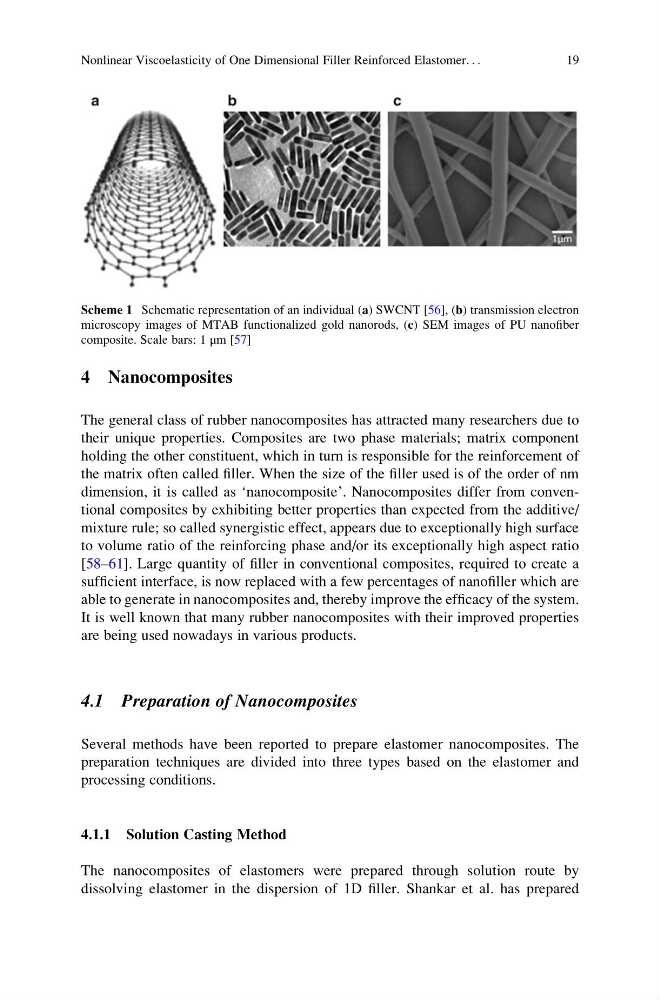
Scheme 1 Schematic representation of an individual (a) SWCNT [56], (b) transmission electron
microscopy images of MTAB functionalized gold nanorods, (c) SEM images of PU nanofiber
composite. Scale bars: 1 μm [57]
Nonlinear Viscoelasticity of One Dimensional Filler Reinforced Elastomer. . .
19
The general class of rubber nanocomposites has attracted many researchers due to
their unique properties. Composites are two phase materials; matrix component
holding the other constituent, which in turn is responsible for the reinforcement of
the matrix often called filler. When the size of the filler used is of the order of nm
dimension, it is called as ‘nanocomposite’. Nanocomposites differ from conventional composites by exhibiting better properties than expected from the additive/
mixture rule; so called synergistic effect, appears due to exceptionally high surface
to volume ratio of the reinforcing phase and/or its exceptionally high aspect ratio
[58–61]. Large quantity of filler in conventional composites, required to create a
sufficient interface, is now replaced with a few percentages of nanofiller which are
able to generate in nanocomposites and, thereby improve the efficacy of the system.
It is well known that many rubber nanocomposites with their improved properties
are being used nowadays in various products.
4.1 Preparation of Nanocomposites
Several methods have been reported to prepare elastomer nanocomposites. The
preparation techniques are divided into three types based on the elastomer and
processing conditions.
4.1.1 Solution Casting Method
The nanocomposites of elastomers were prepared through solution route by
dissolving elastomer in the dispersion of 1D filler. Shankar et al. has prepared
Scheme 1 Schematic representation of an individual (a) SWCNT [56], (b) transmission electron
microscopy images of MTAB functionalized gold nanorods, (c) SEM images of PU nanofiber
composite. Scale bars: 1 μm [57]
Nonlinear Viscoelasticity of One Dimensional Filler Reinforced Elastomer. . .
19