

prevented the addition of excess polymer to the polyplexes but did not seem to
hinder the complexation/condensation with DNA and even seemed to have a
beneficial effect. The performances of these PEG-containing copolymers were
better than for the PDMAEMA homopolymer at monomer:nucleotide ratio above
that needed for neutralization as regards complexation in the EtBr displacement
assay as well as the condensation properties (as illustrated by the nanoparticle size).
As pointed out by the authors, the presence of a highly hydrophilic and
non-condensing PEG block in the copolymer may be expected to decrease the
affinity for binding DNA due to an unfavorable entropy change [183]. However,
enhanced binding may be connected to a local crowding effect of the PEG chain
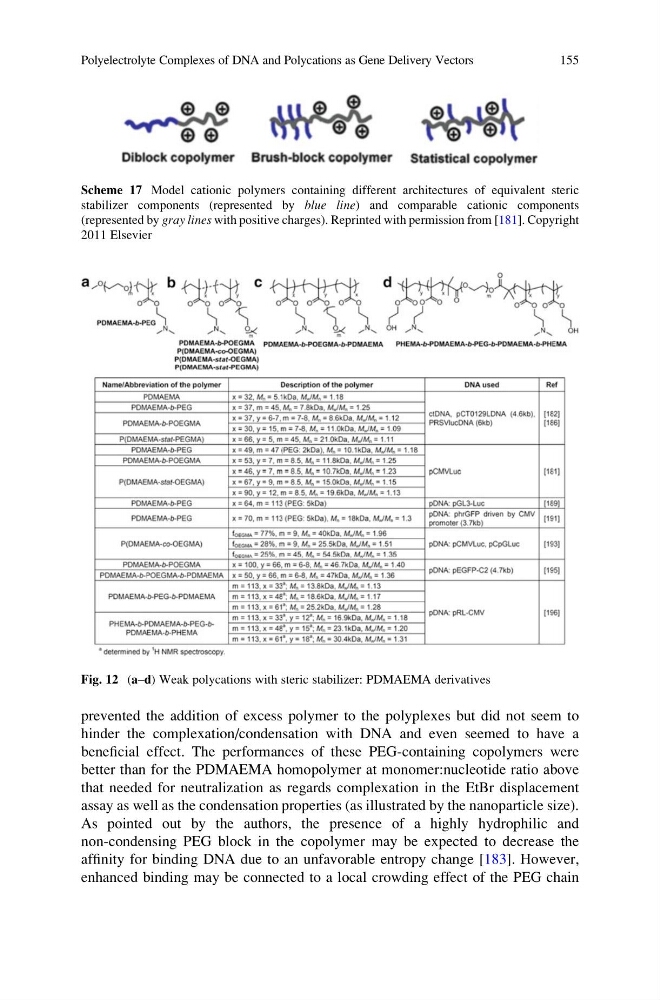
Scheme 17 Model cationic polymers containing different architectures of equivalent steric
stabilizer components (represented by blue line) and comparable cationic components
(represented by gray lines with positive charges). Reprinted with permission from [181]. Copyright
2011 Elsevier
Fig. 12 (a–d) Weak polycations with steric stabilizer: PDMAEMA derivatives
Polyelectrolyte Complexes of DNA and Polycations as Gene Delivery Vectors
155
hinder the complexation/condensation with DNA and even seemed to have a
beneficial effect. The performances of these PEG-containing copolymers were
better than for the PDMAEMA homopolymer at monomer:nucleotide ratio above
that needed for neutralization as regards complexation in the EtBr displacement
assay as well as the condensation properties (as illustrated by the nanoparticle size).
As pointed out by the authors, the presence of a highly hydrophilic and
non-condensing PEG block in the copolymer may be expected to decrease the
affinity for binding DNA due to an unfavorable entropy change [183]. However,
enhanced binding may be connected to a local crowding effect of the PEG chain
Scheme 17 Model cationic polymers containing different architectures of equivalent steric
stabilizer components (represented by blue line) and comparable cationic components
(represented by gray lines with positive charges). Reprinted with permission from [181]. Copyright
2011 Elsevier
Fig. 12 (a–d) Weak polycations with steric stabilizer: PDMAEMA derivatives
Polyelectrolyte Complexes of DNA and Polycations as Gene Delivery Vectors
155