

A low molecular weight PAGA (Fig. 10h) has also been tested [170]. The
structure of PAGA is similar to PLL except for the backbone linkages, which are
ester bonds for PAGA and peptide bonds (amide) for PLL. PAGA strongly
condensed DNA at a charge ratio of less than 2 (<10% EtBr fluorescence), with a
charge ratio of around 1 causing 50% reduction in EtBr fluorescence (results in the
same order as PLL). The fast degradation of PAGA compared to PLL was
suggested to be a way to reduce toxicity and lead to a faster release of DNA from
the polyplexes after internalization by the cells, and was confirmed in 293 cells. The
transfection efficiency of PAGA was indeed three times higher than PLL under
optimized conditions (PLL, charge ratio 6; PAGA, charge ratio 60). According to
the authors, the tenfold charge ratio required for PAGA compared to that for PLL
was the result of the premature degradation of PAGA.
Poly(4-hydroxy-L-proline ester) (Fig. 10j) of low molecular weight, another
polyester based on amino acids, was also hypothesized as a good candidate due
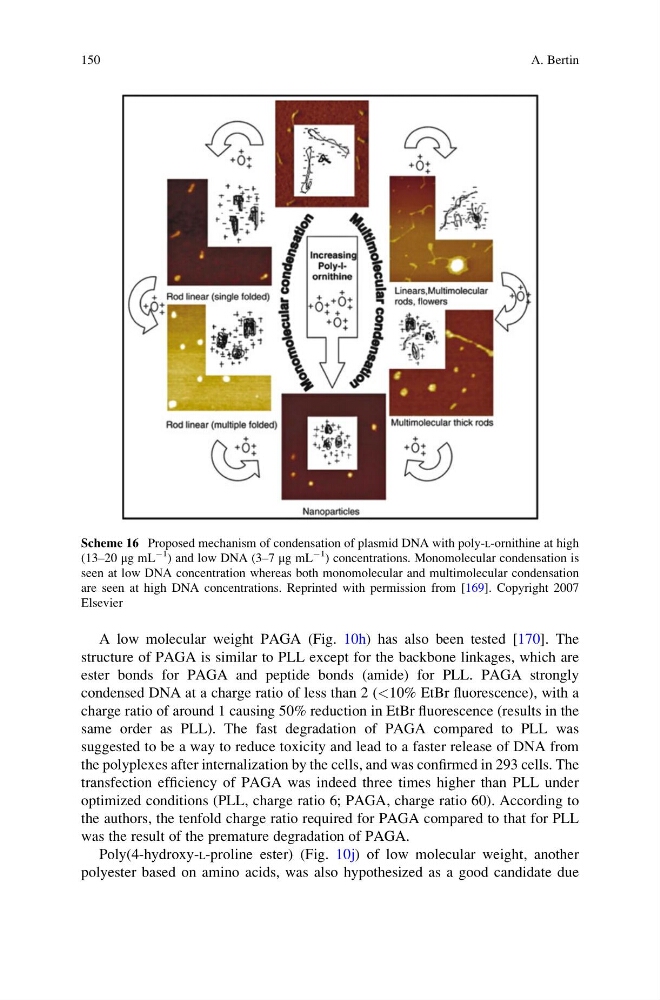
Scheme 16 Proposed mechanism of condensation of plasmid DNA with poly-L-ornithine at high
(13–20 μg mL
À1
) and low DNA (3–7 μg mL
À1
) concentrations. Monomolecular condensation is
seen at low DNA concentration whereas both monomolecular and multimolecular condensation
are seen at high DNA concentrations. Reprinted with permission from [169]. Copyright 2007
Elsevier
150
A. Bertin
structure of PAGA is similar to PLL except for the backbone linkages, which are
ester bonds for PAGA and peptide bonds (amide) for PLL. PAGA strongly
condensed DNA at a charge ratio of less than 2 (<10% EtBr fluorescence), with a
charge ratio of around 1 causing 50% reduction in EtBr fluorescence (results in the
same order as PLL). The fast degradation of PAGA compared to PLL was
suggested to be a way to reduce toxicity and lead to a faster release of DNA from
the polyplexes after internalization by the cells, and was confirmed in 293 cells. The
transfection efficiency of PAGA was indeed three times higher than PLL under
optimized conditions (PLL, charge ratio 6; PAGA, charge ratio 60). According to
the authors, the tenfold charge ratio required for PAGA compared to that for PLL
was the result of the premature degradation of PAGA.
Poly(4-hydroxy-L-proline ester) (Fig. 10j) of low molecular weight, another
polyester based on amino acids, was also hypothesized as a good candidate due
Scheme 16 Proposed mechanism of condensation of plasmid DNA with poly-L-ornithine at high
(13–20 μg mL
À1
) and low DNA (3–7 μg mL
À1
) concentrations. Monomolecular condensation is
seen at low DNA concentration whereas both monomolecular and multimolecular condensation
are seen at high DNA concentrations. Reprinted with permission from [169]. Copyright 2007
Elsevier
150
A. Bertin