

further influencing its biodistribution, cell internalization, and trafficking
properties), it is of prime importance to engineer the polyplex (polymer/DNA
complex) in terms of chemical structure, molecular weight, hydrophilicity/
hydrophobicity, size, surface groups, charge density, and concentration. This is
the main aspect that will be treated in this review, i.e., the chemical engineering
of polycations and the physico-chemical aspects of polyplexes. Various
publications address the topic of structure–property relationships by modification
of the polymer via processes such as acetylation [103, 104], introduction of an
hydrophilic block through PEGylation [105, 106], control of charge density
[102, 107], incorporation of hydrogen bonding [107, 108], or varying the topology
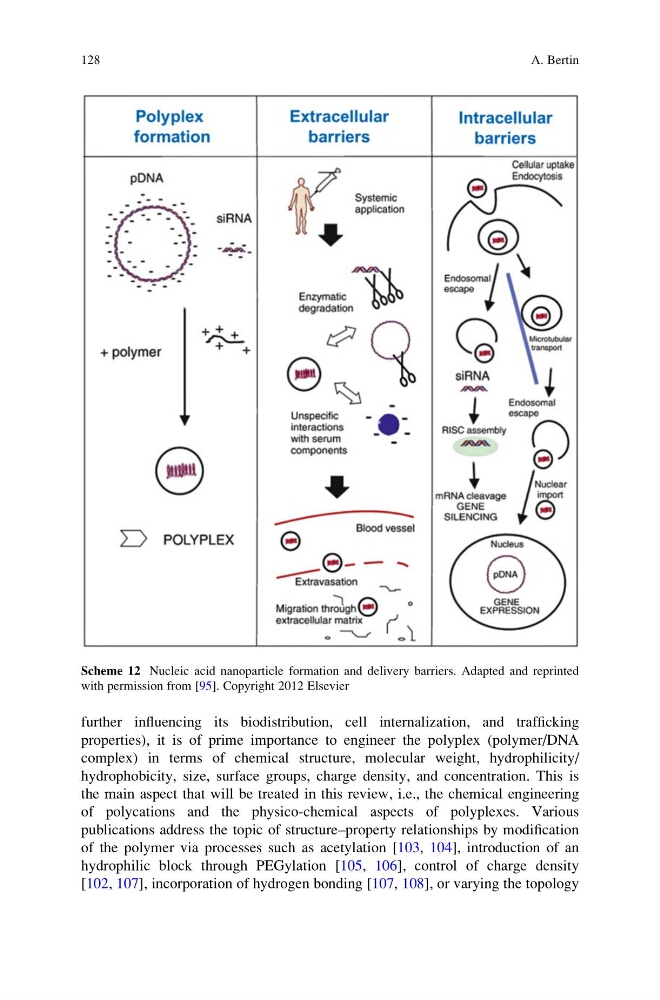
Scheme 12 Nucleic acid nanoparticle formation and delivery barriers. Adapted and reprinted
with permission from [95]. Copyright 2012 Elsevier
128
A. Bertin
properties), it is of prime importance to engineer the polyplex (polymer/DNA
complex) in terms of chemical structure, molecular weight, hydrophilicity/
hydrophobicity, size, surface groups, charge density, and concentration. This is
the main aspect that will be treated in this review, i.e., the chemical engineering
of polycations and the physico-chemical aspects of polyplexes. Various
publications address the topic of structure–property relationships by modification
of the polymer via processes such as acetylation [103, 104], introduction of an
hydrophilic block through PEGylation [105, 106], control of charge density
[102, 107], incorporation of hydrogen bonding [107, 108], or varying the topology
Scheme 12 Nucleic acid nanoparticle formation and delivery barriers. Adapted and reprinted
with permission from [95]. Copyright 2012 Elsevier
128
A. Bertin