

Cooperative Versus Non-cooperative Binding
The binding itself can occur either via cooperative or non-cooperative binding
(Scheme 6). A macromolecule (DNA, protein, synthetic polymer) exhibits cooperative binding if its affinity for its ligand changes with the amount of ligand already
bound. The cooperativity is positive if the binding of ligand at one site increases the
affinity for ligand at another site, whereas the cooperativity is negative if the
binding of ligand at one site lowers the affinity for ligand at another site.
A macromolecule exhibits non-cooperative binding if the ligand binds at each
site independently.
In complexation of DNA with polycations, both scenarios can be found. In the
case of cooperative binding, some of the DNA is totally complexed, while the rest
of DNA is left “naked.” In the case of non-cooperative binding, all individual DNA
chains are roughly equally complexed by polycations.
1.3.3 Structure of Polyplexes
Condensates of polycation with DNA (polyplexes) can adopt various shapes, the
most commonly observed being toroidal, rod-like, and globular (examples of some
of these structures are presented in Scheme 7) [68–71]. The different structures
that IPECs can adopt can be categorized into different subtypes: water-soluble,
colloidally stable, and insoluble. The type of complex formed is governed by all
the factors mentioned in the previous paragraphs. Moreover, it should be noted that
the polycation/DNA charge ratio influences the size, charge, and solubility of the
polyplexes. As a consequence, in some cases, the polyplexes can be consecutively
water soluble, then colloidally stable, and eventually precipitate.
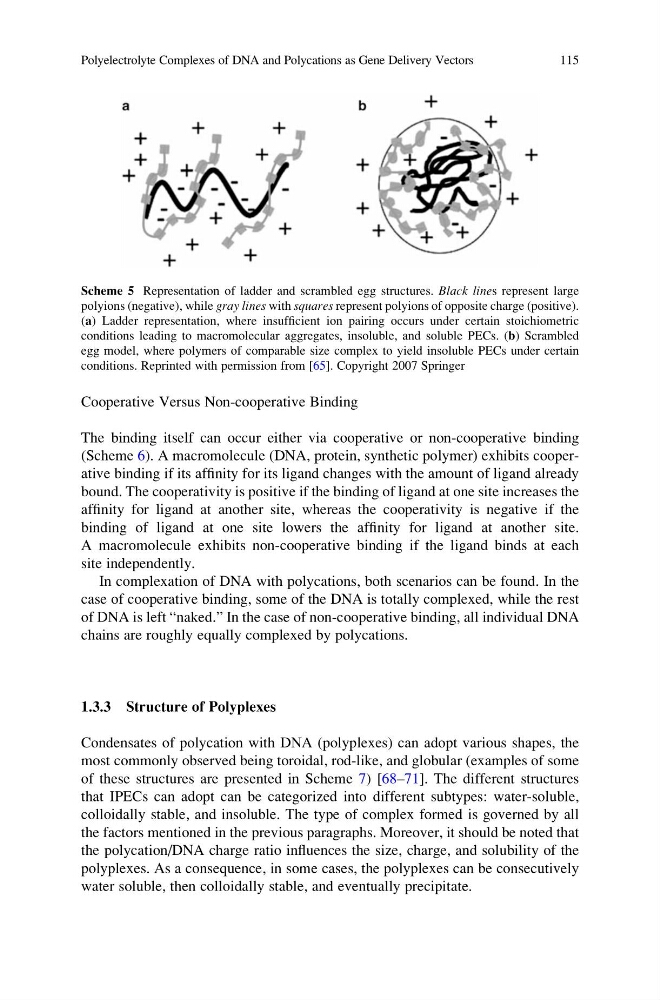
Scheme 5 Representation of ladder and scrambled egg structures. Black lines represent large
polyions (negative), while gray lines with squares represent polyions of opposite charge (positive).
(a) Ladder representation, where insufficient ion pairing occurs under certain stoichiometric
conditions leading to macromolecular aggregates, insoluble, and soluble PECs. (b) Scrambled
egg model, where polymers of comparable size complex to yield insoluble PECs under certain
conditions. Reprinted with permission from [65]. Copyright 2007 Springer
Polyelectrolyte Complexes of DNA and Polycations as Gene Delivery Vectors
115
The binding itself can occur either via cooperative or non-cooperative binding
(Scheme 6). A macromolecule (DNA, protein, synthetic polymer) exhibits cooperative binding if its affinity for its ligand changes with the amount of ligand already
bound. The cooperativity is positive if the binding of ligand at one site increases the
affinity for ligand at another site, whereas the cooperativity is negative if the
binding of ligand at one site lowers the affinity for ligand at another site.
A macromolecule exhibits non-cooperative binding if the ligand binds at each
site independently.
In complexation of DNA with polycations, both scenarios can be found. In the
case of cooperative binding, some of the DNA is totally complexed, while the rest
of DNA is left “naked.” In the case of non-cooperative binding, all individual DNA
chains are roughly equally complexed by polycations.
1.3.3 Structure of Polyplexes
Condensates of polycation with DNA (polyplexes) can adopt various shapes, the
most commonly observed being toroidal, rod-like, and globular (examples of some
of these structures are presented in Scheme 7) [68–71]. The different structures
that IPECs can adopt can be categorized into different subtypes: water-soluble,
colloidally stable, and insoluble. The type of complex formed is governed by all
the factors mentioned in the previous paragraphs. Moreover, it should be noted that
the polycation/DNA charge ratio influences the size, charge, and solubility of the
polyplexes. As a consequence, in some cases, the polyplexes can be consecutively
water soluble, then colloidally stable, and eventually precipitate.
Scheme 5 Representation of ladder and scrambled egg structures. Black lines represent large
polyions (negative), while gray lines with squares represent polyions of opposite charge (positive).
(a) Ladder representation, where insufficient ion pairing occurs under certain stoichiometric
conditions leading to macromolecular aggregates, insoluble, and soluble PECs. (b) Scrambled
egg model, where polymers of comparable size complex to yield insoluble PECs under certain
conditions. Reprinted with permission from [65]. Copyright 2007 Springer
Polyelectrolyte Complexes of DNA and Polycations as Gene Delivery Vectors
115