

inside the pore walls is only a small share of the whole volume of liquid soaked up
by such polymer materials. The net amount of the free liquid is determined by the
inner volume of the large pores, which depends on the total mass of solvent crystals
formed in the system during the cryotropic gelation process and, to a certain extent,
on the size of these crystals. The liquid from the capillaries of the sponge-like
cryogels can be squeezed off by mechanical compression, sometimes almost
completely [46], whereas the solvate fraction can only be removed from the
polymer matrix by intense drying, i.e., by heating under reduced pressure. Thus,
the total volumetric swelling degree does not characterize the osmotic properties of
the gel pore walls in the wide-pore cryogels. However, in some cases, comparison
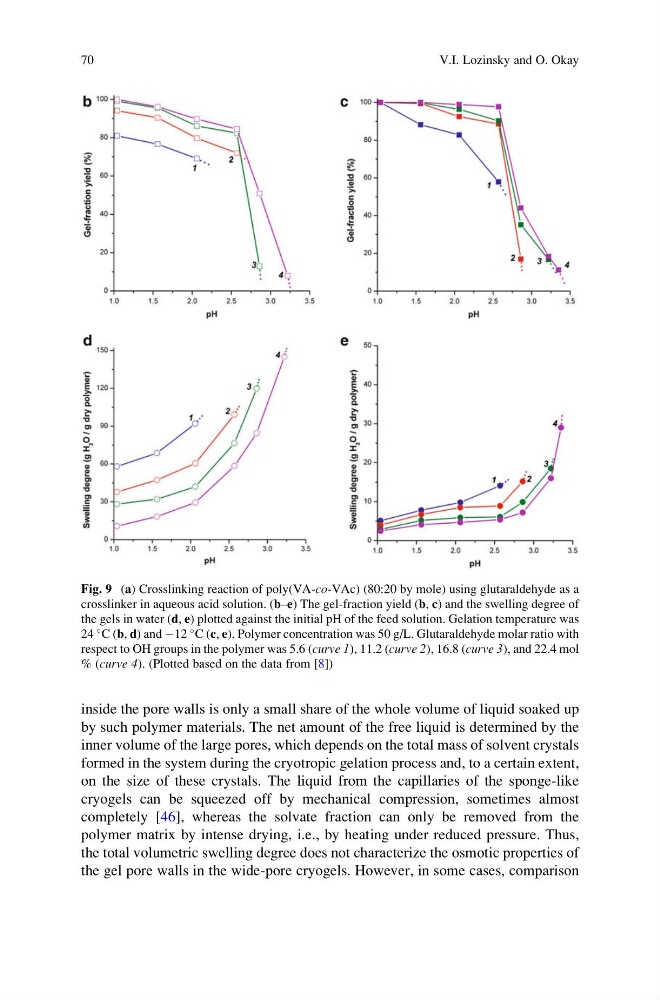
Fig. 9 (a) Crosslinking reaction of poly(VA-co-VAc) (80:20 by mole) using glutaraldehyde as a
crosslinker in aqueous acid solution. (b–e) The gel-fraction yield (b, c) and the swelling degree of
the gels in water (d, e) plotted against the initial pH of the feed solution. Gelation temperature was
24
C (b, d) and À12
C (c, e). Polymer concentration was 50 g/L. Glutaraldehyde molar ratio with
respect to OH groups in the polymer was 5.6 (curve 1), 11.2 (curve 2), 16.8 (curve 3), and 22.4 mol
% (curve 4). (Plotted based on the data from [8])
70
V.I. Lozinsky and O. Okay
by such polymer materials. The net amount of the free liquid is determined by the
inner volume of the large pores, which depends on the total mass of solvent crystals
formed in the system during the cryotropic gelation process and, to a certain extent,
on the size of these crystals. The liquid from the capillaries of the sponge-like
cryogels can be squeezed off by mechanical compression, sometimes almost
completely [46], whereas the solvate fraction can only be removed from the
polymer matrix by intense drying, i.e., by heating under reduced pressure. Thus,
the total volumetric swelling degree does not characterize the osmotic properties of
the gel pore walls in the wide-pore cryogels. However, in some cases, comparison
Fig. 9 (a) Crosslinking reaction of poly(VA-co-VAc) (80:20 by mole) using glutaraldehyde as a
crosslinker in aqueous acid solution. (b–e) The gel-fraction yield (b, c) and the swelling degree of
the gels in water (d, e) plotted against the initial pH of the feed solution. Gelation temperature was
24
C (b, d) and À12
C (c, e). Polymer concentration was 50 g/L. Glutaraldehyde molar ratio with
respect to OH groups in the polymer was 5.6 (curve 1), 11.2 (curve 2), 16.8 (curve 3), and 22.4 mol
% (curve 4). (Plotted based on the data from [8])
70
V.I. Lozinsky and O. Okay