

2.2 Precipitated and Co-precipitated Cryogels
Another method for the preparation of multicomponent oxide materials via cryogels
is the co-precipitation process. In this process, multicomponent aqueous solutions
containing cations in the stoichiometric ratio required for the final material are
mixed with a solution of precipitant. This results in intense simultaneous precipitation of the poorly soluble compounds, i.e., hydroxides, carbonates, or oxalates of
target cations. Due to the small but different solubility of the precipitates formed by
different cations, as well as due to the different rates of their precipitation from
solution, the first and the last portions of the precipitate are enriched by different
components. Although this nano-inhomogeneity was postulated a long time ago,
modern experimental methods like high resolution electron microscopy have
recently allowed the observation of this difference experimentally [26]. The products of co-precipitation are used mostly as precursors for the synthesis of complex
oxides by means of thermal decomposition. According to numerous experimental
results, the chemical inhomogeneity of the co-precipitation products at the
nanolevel is almost negligible for solid state reactions at elevated temperatures.
From a practical point of view, multicomponent cryogels are excellent precursors
for the synthesis of multicomponent oxide compounds.
Another essential feature of cryogel precursors is their low level of particle
agglomeration. Common atmospheric drying, especially at elevated temperatures,
usually results in the formation of undesirable interparticle bridges and formation of
dense and strong agglomerates that are retained in the course of further thermal
processing. Capillary effects during the removal of liquid water at atmospheric
pressure cause a substantial densification of the residue and a significant reduction
in the mean distance between separate particles due to elimination of largest pores.
Smaller distances between particles promote better grain growth during thermal
processing of precursors and as-obtained oxide powders.
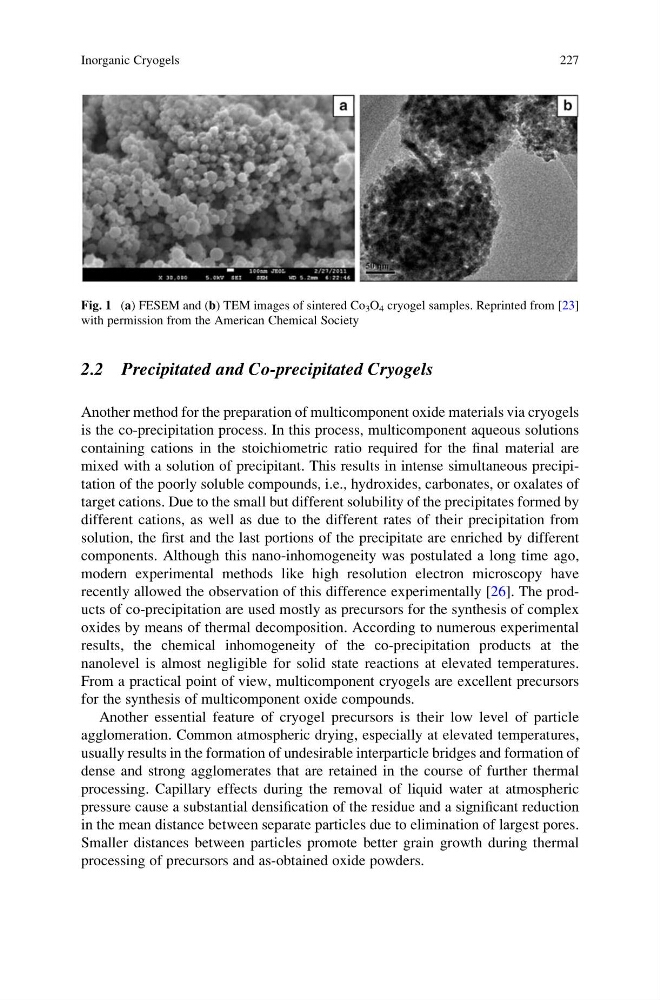
Fig. 1 (a) FESEM and (b) TEM images of sintered Co 3 O 4 cryogel samples. Reprinted from [23]
with permission from the American Chemical Society
Inorganic Cryogels
227
Another method for the preparation of multicomponent oxide materials via cryogels
is the co-precipitation process. In this process, multicomponent aqueous solutions
containing cations in the stoichiometric ratio required for the final material are
mixed with a solution of precipitant. This results in intense simultaneous precipitation of the poorly soluble compounds, i.e., hydroxides, carbonates, or oxalates of
target cations. Due to the small but different solubility of the precipitates formed by
different cations, as well as due to the different rates of their precipitation from
solution, the first and the last portions of the precipitate are enriched by different
components. Although this nano-inhomogeneity was postulated a long time ago,
modern experimental methods like high resolution electron microscopy have
recently allowed the observation of this difference experimentally [26]. The products of co-precipitation are used mostly as precursors for the synthesis of complex
oxides by means of thermal decomposition. According to numerous experimental
results, the chemical inhomogeneity of the co-precipitation products at the
nanolevel is almost negligible for solid state reactions at elevated temperatures.
From a practical point of view, multicomponent cryogels are excellent precursors
for the synthesis of multicomponent oxide compounds.
Another essential feature of cryogel precursors is their low level of particle
agglomeration. Common atmospheric drying, especially at elevated temperatures,
usually results in the formation of undesirable interparticle bridges and formation of
dense and strong agglomerates that are retained in the course of further thermal
processing. Capillary effects during the removal of liquid water at atmospheric
pressure cause a substantial densification of the residue and a significant reduction
in the mean distance between separate particles due to elimination of largest pores.
Smaller distances between particles promote better grain growth during thermal
processing of precursors and as-obtained oxide powders.
Fig. 1 (a) FESEM and (b) TEM images of sintered Co 3 O 4 cryogel samples. Reprinted from [23]
with permission from the American Chemical Society
Inorganic Cryogels
227