

layer did not hinder the diffusion of nutrient and fermentation products. In this case,
ethanol production was up to 77 % of the theoretical yield.
Photocrosslinked PEO cryogel was investigated as carrier for different
xenobiotic-degrading bacteria [31, 32]. The cryogel exhibited good mechanical
strength, nontoxicity, and high biocompatibility with bacteria. It was found that the
enzyme activity of immobilized bacteria is many times higher than that of the free
culture.
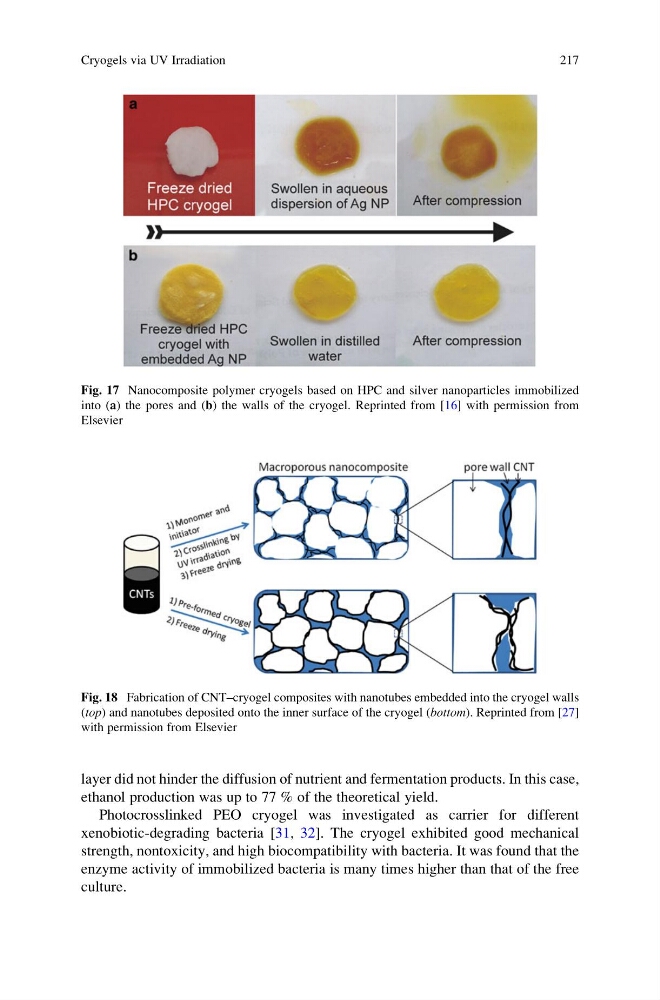
Fig. 17 Nanocomposite polymer cryogels based on HPC and silver nanoparticles immobilized
into (a) the pores and (b) the walls of the cryogel. Reprinted from [16] with permission from
Elsevier
Fig. 18 Fabrication of CNT–cryogel composites with nanotubes embedded into the cryogel walls
(top) and nanotubes deposited onto the inner surface of the cryogel (bottom). Reprinted from [27]
with permission from Elsevier
Cryogels via UV Irradiation
217
ethanol production was up to 77 % of the theoretical yield.
Photocrosslinked PEO cryogel was investigated as carrier for different
xenobiotic-degrading bacteria [31, 32]. The cryogel exhibited good mechanical
strength, nontoxicity, and high biocompatibility with bacteria. It was found that the
enzyme activity of immobilized bacteria is many times higher than that of the free
culture.
Fig. 17 Nanocomposite polymer cryogels based on HPC and silver nanoparticles immobilized
into (a) the pores and (b) the walls of the cryogel. Reprinted from [16] with permission from
Elsevier
Fig. 18 Fabrication of CNT–cryogel composites with nanotubes embedded into the cryogel walls
(top) and nanotubes deposited onto the inner surface of the cryogel (bottom). Reprinted from [27]
with permission from Elsevier
Cryogels via UV Irradiation
217