

4.1 Quasi-equilibrium Kinetics of PEO-PPO-PEO
in Temperature-Jump Experiments
The kinetics of poly(ethylene oxide)–poly(propylene oxide)–poly(ethylene oxide)
(PEO-PPO-PEO) triblock copolymers have been intensively studied by T-jump
experiments with light scattering detection [115, 126–130]. PEO-PPO-PEO
triblock copolymers form micelles in aqueous solution, with PPO as the core
forming hydrophobic block. Above the critical micelle concentration (cmc) and
critical micelle temperature there exists a transition region of ΔT % 10–15
C where
single chains disappear in favor of micellar aggregates. The temperature jumps of
typically 1–2
C are performed in the transition region, leading to a change in the
degree of aggregation and, consequently, to a variation in the scattered intensity.
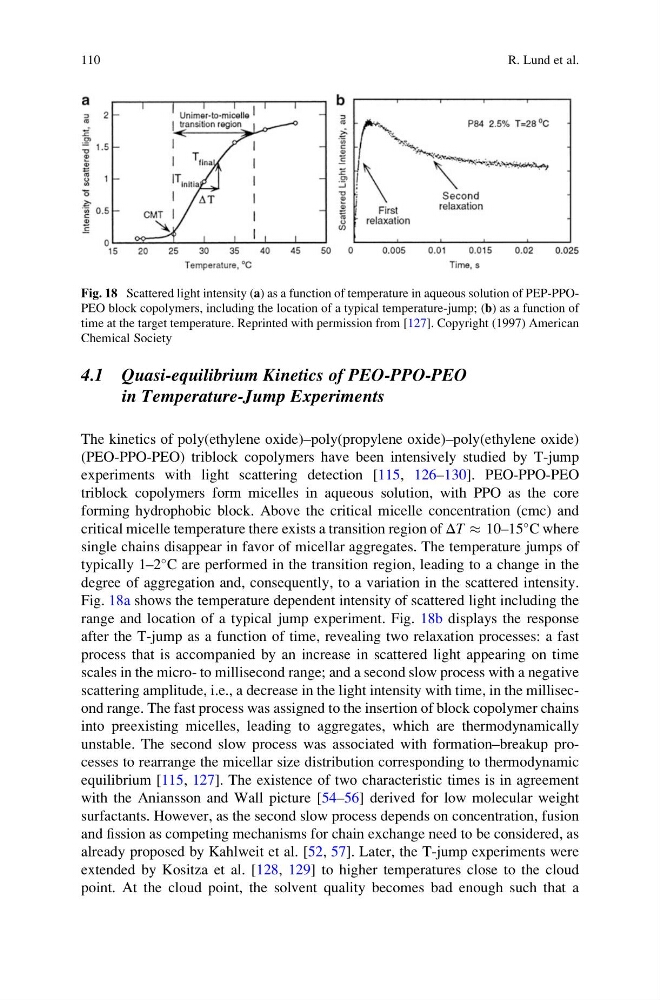
Fig. 18a shows the temperature dependent intensity of scattered light including the
range and location of a typical jump experiment. Fig. 18b displays the response
after the T-jump as a function of time, revealing two relaxation processes: a fast
process that is accompanied by an increase in scattered light appearing on time
scales in the micro- to millisecond range; and a second slow process with a negative
scattering amplitude, i.e., a decrease in the light intensity with time, in the millisecond range. The fast process was assigned to the insertion of block copolymer chains
into preexisting micelles, leading to aggregates, which are thermodynamically
unstable. The second slow process was associated with formation–breakup processes to rearrange the micellar size distribution corresponding to thermodynamic
equilibrium [115, 127]. The existence of two characteristic times is in agreement
with the Aniansson and Wall picture [54–56] derived for low molecular weight
surfactants. However, as the second slow process depends on concentration, fusion
and fission as competing mechanisms for chain exchange need to be considered, as
already proposed by Kahlweit et al. [52, 57]. Later, the T-jump experiments were
extended by Kositza et al. [128, 129] to higher temperatures close to the cloud
point. At the cloud point, the solvent quality becomes bad enough such that a
Fig. 18 Scattered light intensity (a) as a function of temperature in aqueous solution of PEP-PPOPEO block copolymers, including the location of a typical temperature-jump; (b) as a function of
time at the target temperature. Reprinted with permission from [127]. Copyright (1997) American
Chemical Society
110
R. Lund et al.
in Temperature-Jump Experiments
The kinetics of poly(ethylene oxide)–poly(propylene oxide)–poly(ethylene oxide)
(PEO-PPO-PEO) triblock copolymers have been intensively studied by T-jump
experiments with light scattering detection [115, 126–130]. PEO-PPO-PEO
triblock copolymers form micelles in aqueous solution, with PPO as the core
forming hydrophobic block. Above the critical micelle concentration (cmc) and
critical micelle temperature there exists a transition region of ΔT % 10–15
C where
single chains disappear in favor of micellar aggregates. The temperature jumps of
typically 1–2
C are performed in the transition region, leading to a change in the
degree of aggregation and, consequently, to a variation in the scattered intensity.
Fig. 18a shows the temperature dependent intensity of scattered light including the
range and location of a typical jump experiment. Fig. 18b displays the response
after the T-jump as a function of time, revealing two relaxation processes: a fast
process that is accompanied by an increase in scattered light appearing on time
scales in the micro- to millisecond range; and a second slow process with a negative
scattering amplitude, i.e., a decrease in the light intensity with time, in the millisecond range. The fast process was assigned to the insertion of block copolymer chains
into preexisting micelles, leading to aggregates, which are thermodynamically
unstable. The second slow process was associated with formation–breakup processes to rearrange the micellar size distribution corresponding to thermodynamic
equilibrium [115, 127]. The existence of two characteristic times is in agreement
with the Aniansson and Wall picture [54–56] derived for low molecular weight
surfactants. However, as the second slow process depends on concentration, fusion
and fission as competing mechanisms for chain exchange need to be considered, as
already proposed by Kahlweit et al. [52, 57]. Later, the T-jump experiments were
extended by Kositza et al. [128, 129] to higher temperatures close to the cloud
point. At the cloud point, the solvent quality becomes bad enough such that a
Fig. 18 Scattered light intensity (a) as a function of temperature in aqueous solution of PEP-PPOPEO block copolymers, including the location of a typical temperature-jump; (b) as a function of
time at the target temperature. Reprinted with permission from [127]. Copyright (1997) American
Chemical Society
110
R. Lund et al.