

phenylselenyl chloride gave a diastereomeric ratio of 3:1 (trans/cis). That finding
prompted the examination of bulkier, substituted phenylselenyl halides in order
to increase the diastereoselectivity. Treatment of hydroxy alkene 67 with
2,4,6-triisopropylphenylselenyl bromide afforded the desired 2,6-trans
tetrahydropyran 68 in 65 % yield with a dr of 88:12 (Scheme 23). The trans
stereoselectivity can be rationalized by conformational analysis whereby the selenide complexes to the allylic strain minimized alkene from the less hindered re face
(that of the methoxy group) forcing attack of the alcohol to occur from the si face.
Lucas and Burke reported on a Pd(0)-catalyzed asymmetric allylic etherification/
desymmetrization of meso substrates by double cyclizations to the bis-THP subunit
of phorboxazoles A and B [51]. Based on Trost and Toste’s transition state model
for the diphenylphosphino benzoic acid (DPPBA) ligand system [52], Burke rationalized that cyclization of tetraol 69 with (R,R)-DPPBA ligand would effect the
double cyclization to give the trans-A ring and cis-B ring in bis-THP 70
(Scheme 24). Under optimized conditions, tetraol 69 was converted to 70 in 75 %
OH O
OR
MeO
OH
OMOM
A
B
OR
O
O
OR
MeO
OAc
OMOM
A
OR
OH
1) Hg(OAc) 2
THF/MeOH, then KCl
2) AcCl, Py, CH 2 Cl 2
3) NaBH 4 , O 2 , DMF
64%
63
64 (dr = 1:1)
R = TBDPS
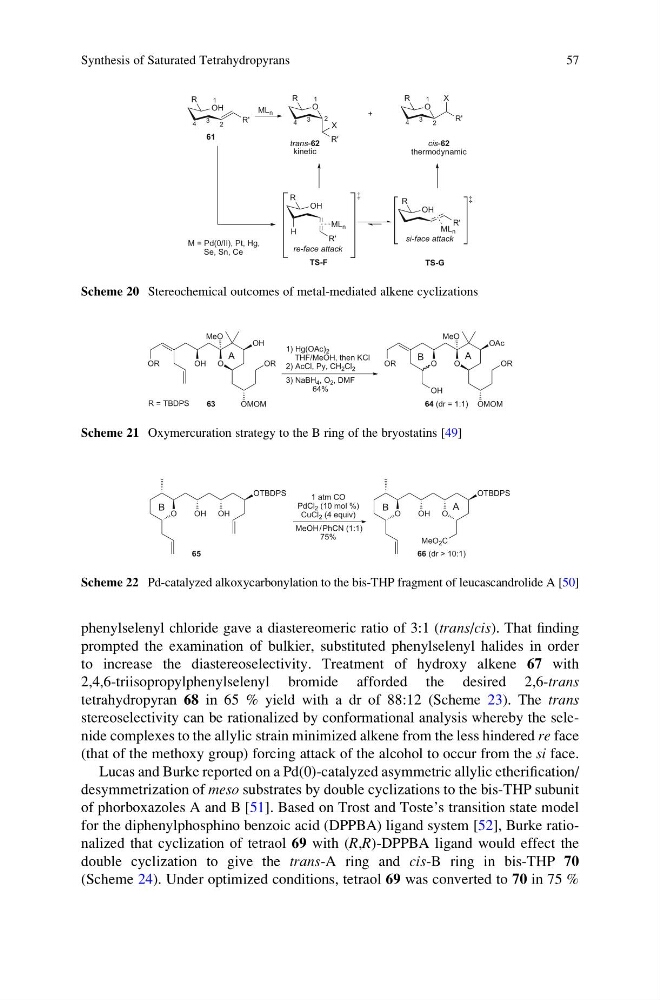
Scheme 21 Oxymercuration strategy to the B ring of the bryostatins [49]
O
OH O
OTBDPS
A
B
MeO 2 C
O
OH OH
OTBDPS
B
1 atm CO
PdCl 2 (10 mol %)
CuCl 2 (4 equiv)
MeOH / PhCN (1:1)
75%
65
66 (dr > 10:1)
Scheme 22 Pd-catalyzed alkoxycarbonylation to the bis-THP fragment of leucascandrolide A [50]
1
2
3
4
ML n
trans-62
kinetic
cis-62
thermodynamic
OH
R
R'
1
2
3
4
O
R
1
2
3
4
O
R
R'
OH
R
R'
OH
R
R'
TS-F
TS-G
H
+
R'
X
X
ML n
M = Pd(0/II), Pt, Hg,
Se, Sn, Ce
ML n
re-face attack
si-face attack
‡
‡
61
Scheme 20 Stereochemical outcomes of metal-mediated alkene cyclizations
Synthesis of Saturated Tetrahydropyrans
57
prompted the examination of bulkier, substituted phenylselenyl halides in order
to increase the diastereoselectivity. Treatment of hydroxy alkene 67 with
2,4,6-triisopropylphenylselenyl bromide afforded the desired 2,6-trans
tetrahydropyran 68 in 65 % yield with a dr of 88:12 (Scheme 23). The trans
stereoselectivity can be rationalized by conformational analysis whereby the selenide complexes to the allylic strain minimized alkene from the less hindered re face
(that of the methoxy group) forcing attack of the alcohol to occur from the si face.
Lucas and Burke reported on a Pd(0)-catalyzed asymmetric allylic etherification/
desymmetrization of meso substrates by double cyclizations to the bis-THP subunit
of phorboxazoles A and B [51]. Based on Trost and Toste’s transition state model
for the diphenylphosphino benzoic acid (DPPBA) ligand system [52], Burke rationalized that cyclization of tetraol 69 with (R,R)-DPPBA ligand would effect the
double cyclization to give the trans-A ring and cis-B ring in bis-THP 70
(Scheme 24). Under optimized conditions, tetraol 69 was converted to 70 in 75 %
OH O
OR
MeO
OH
OMOM
A
B
OR
O
O
OR
MeO
OAc
OMOM
A
OR
OH
1) Hg(OAc) 2
THF/MeOH, then KCl
2) AcCl, Py, CH 2 Cl 2
3) NaBH 4 , O 2 , DMF
64%
63
64 (dr = 1:1)
R = TBDPS
Scheme 21 Oxymercuration strategy to the B ring of the bryostatins [49]
O
OH O
OTBDPS
A
B
MeO 2 C
O
OH OH
OTBDPS
B
1 atm CO
PdCl 2 (10 mol %)
CuCl 2 (4 equiv)
MeOH / PhCN (1:1)
75%
65
66 (dr > 10:1)
Scheme 22 Pd-catalyzed alkoxycarbonylation to the bis-THP fragment of leucascandrolide A [50]
1
2
3
4
ML n
trans-62
kinetic
cis-62
thermodynamic
OH
R
R'
1
2
3
4
O
R
1
2
3
4
O
R
R'
OH
R
R'
OH
R
R'
TS-F
TS-G
H
+
R'
X
X
ML n
M = Pd(0/II), Pt, Hg,
Se, Sn, Ce
ML n
re-face attack
si-face attack
‡
‡
61
Scheme 20 Stereochemical outcomes of metal-mediated alkene cyclizations
Synthesis of Saturated Tetrahydropyrans
57