

The diastereoselectivity was significantly diminished when the hydroxyl was
replaced with an ether or by hydrogen. Based on this and DFT calculations, the
authors propose a counterion-directed reaction where acetate both coordinates to the
allyl cation hydrogen atom and the hydroxyl group as illustrated in 283.
Chan and coworkers have examined a sequential Brønsted acid, halocyclization
of cyclopropyl methanol substrates to generate tetrahydrofurans (Scheme 75)
[81]. The one-pot, two-step cyclization protocol involved initially subjecting 286
to TfOH and H 2 O followed by treating the resulting alkene with NIS to give
substituted tetrahydrofurans 287. This reaction requires that tertiary alcohols be
used and was selective for the formation of the isomer having the larger substituent
and the halogen cis to one another. The authors showed that the reaction proceeds
via homoallylic alcohol 288.
CO 2 Et
CO 2 Et
Y
HO
R 1 R 2
X
+
ZnBr 2 (0.2 equiv)
ClCH 2 CH 2 Cl, 80 °C
O
X
R 1
R 2
Y
EtO 2 C
EtO 2 C
via:
302 (Y = CO 2 Et, COPh, Ph) 303 (X = SiR 3 , CO 2 Et, H)
(R
1
, R
2 = alkyl, H)
O
X
R 1
R 2
Y
O
EtO
R
O
ZnL n
H
CO 2 Et
CO 2 Et
Y
HO
CO 2 Me
+
SnCl 4 (0.2 equiv)
CH 2 Cl 2 , rt
O
R 1
R 2
Y
EtO 2 C
EtO 2 C
via:
306 (Y = CO 2 Et, COPh)
O
R 1
R 2
Y
O
EtO
R
O
MeO 2 C
O
L n
Sn
H
304
305
307
308
309
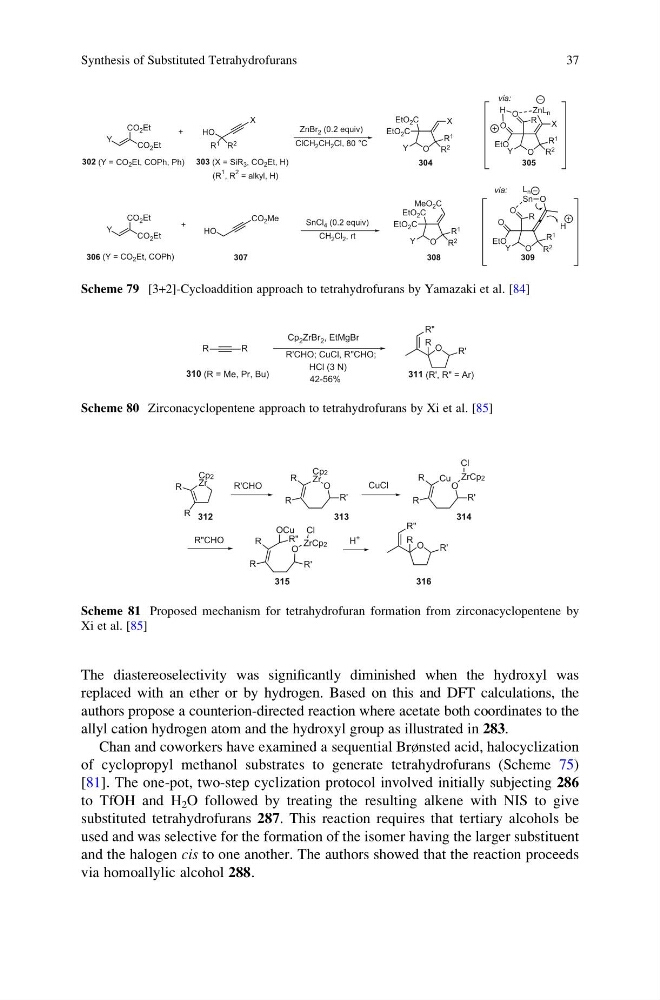
Scheme 79 [3+2]-Cycloaddition approach to tetrahydrofurans by Yamazaki et al. [84]
R
R
Cp 2 ZrBr 2 , EtMgBr
R'CHO; CuCl, R"CHO;
HCl (3 N)
O
R'
R
R"
42-56%
310 (R = Me, Pr, Bu)
311 (R', R" = Ar)
Scheme 80 Zirconacyclopentene approach to tetrahydrofurans by Xi et al. [85]
Cp2
Zr
R
R
R'CHO
O
Cp2
Zr
R
R
R'
CuCl
O
R
R
R'
ZrCp2
Cl
Cu
R"CHO
O
R
R
R'
ZrCp2
Cl
OCu
R"
H
+
O
R'
R
R"
312
313
314
315
316
Scheme 81 Proposed mechanism for tetrahydrofuran formation from zirconacyclopentene by
Xi et al. [85]
Synthesis of Substituted Tetrahydrofurans
37
replaced with an ether or by hydrogen. Based on this and DFT calculations, the
authors propose a counterion-directed reaction where acetate both coordinates to the
allyl cation hydrogen atom and the hydroxyl group as illustrated in 283.
Chan and coworkers have examined a sequential Brønsted acid, halocyclization
of cyclopropyl methanol substrates to generate tetrahydrofurans (Scheme 75)
[81]. The one-pot, two-step cyclization protocol involved initially subjecting 286
to TfOH and H 2 O followed by treating the resulting alkene with NIS to give
substituted tetrahydrofurans 287. This reaction requires that tertiary alcohols be
used and was selective for the formation of the isomer having the larger substituent
and the halogen cis to one another. The authors showed that the reaction proceeds
via homoallylic alcohol 288.
CO 2 Et
CO 2 Et
Y
HO
R 1 R 2
X
+
ZnBr 2 (0.2 equiv)
ClCH 2 CH 2 Cl, 80 °C
O
X
R 1
R 2
Y
EtO 2 C
EtO 2 C
via:
302 (Y = CO 2 Et, COPh, Ph) 303 (X = SiR 3 , CO 2 Et, H)
(R
1
, R
2 = alkyl, H)
O
X
R 1
R 2
Y
O
EtO
R
O
ZnL n
H
CO 2 Et
CO 2 Et
Y
HO
CO 2 Me
+
SnCl 4 (0.2 equiv)
CH 2 Cl 2 , rt
O
R 1
R 2
Y
EtO 2 C
EtO 2 C
via:
306 (Y = CO 2 Et, COPh)
O
R 1
R 2
Y
O
EtO
R
O
MeO 2 C
O
L n
Sn
H
304
305
307
308
309
Scheme 79 [3+2]-Cycloaddition approach to tetrahydrofurans by Yamazaki et al. [84]
R
R
Cp 2 ZrBr 2 , EtMgBr
R'CHO; CuCl, R"CHO;
HCl (3 N)
O
R'
R
R"
42-56%
310 (R = Me, Pr, Bu)
311 (R', R" = Ar)
Scheme 80 Zirconacyclopentene approach to tetrahydrofurans by Xi et al. [85]
Cp2
Zr
R
R
R'CHO
O
Cp2
Zr
R
R
R'
CuCl
O
R
R
R'
ZrCp2
Cl
Cu
R"CHO
O
R
R
R'
ZrCp2
Cl
OCu
R"
H
+
O
R'
R
R"
312
313
314
315
316
Scheme 81 Proposed mechanism for tetrahydrofuran formation from zirconacyclopentene by
Xi et al. [85]
Synthesis of Substituted Tetrahydrofurans
37