

Robertson et al. [141] have used an intramolecular epoxide ring-opening in their
studies toward the sawaranospirolides (Scheme 68). Treatment of the intermediate
acid 271 with m-CPBA gave, after spontaneous spirocyclization, spirolactone 272 in
low yield over four steps. Removal of the TIPS- and benzyl protecting groups then
afforded the enantiomer of the natural product sawaranospirolide C, 273.
A similar epoxidation–spirocyclization method has been used recently by Denmark et al. [142, 143] in their synthesis of papulacandin D, as well as in an
independent study [144] toward papulacandin analogues (Scheme 69).
The epoxidation had to be carried out under basic conditions to prevent premature acid-catalyzed spirocyclization of the glycal 274. The spiroacetals were
obtained as mixtures of anomers, but treatment with catalytic acid induced complete epimerization to the desired anomeric spiroacetal 275.
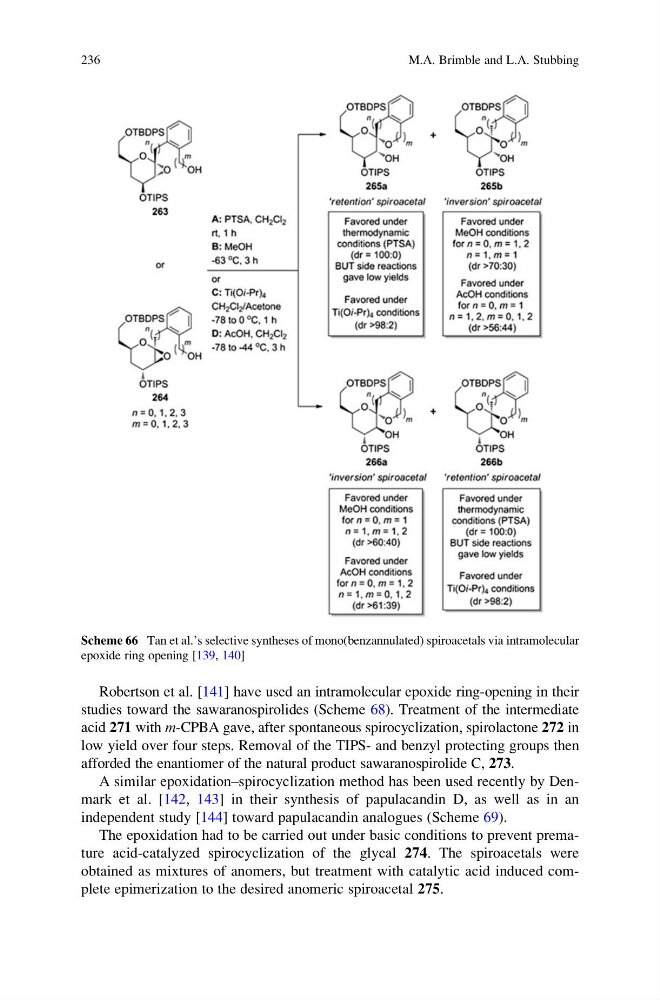
Scheme 66 Tan et al.’s selective syntheses of mono(benzannulated) spiroacetals via intramolecular
epoxide ring opening [139, 140]
236
M.A. Brimble and L.A. Stubbing
studies toward the sawaranospirolides (Scheme 68). Treatment of the intermediate
acid 271 with m-CPBA gave, after spontaneous spirocyclization, spirolactone 272 in
low yield over four steps. Removal of the TIPS- and benzyl protecting groups then
afforded the enantiomer of the natural product sawaranospirolide C, 273.
A similar epoxidation–spirocyclization method has been used recently by Denmark et al. [142, 143] in their synthesis of papulacandin D, as well as in an
independent study [144] toward papulacandin analogues (Scheme 69).
The epoxidation had to be carried out under basic conditions to prevent premature acid-catalyzed spirocyclization of the glycal 274. The spiroacetals were
obtained as mixtures of anomers, but treatment with catalytic acid induced complete epimerization to the desired anomeric spiroacetal 275.
Scheme 66 Tan et al.’s selective syntheses of mono(benzannulated) spiroacetals via intramolecular
epoxide ring opening [139, 140]
236
M.A. Brimble and L.A. Stubbing